
Tag Archives: Entertainment

The Kids Are All Right (2010)

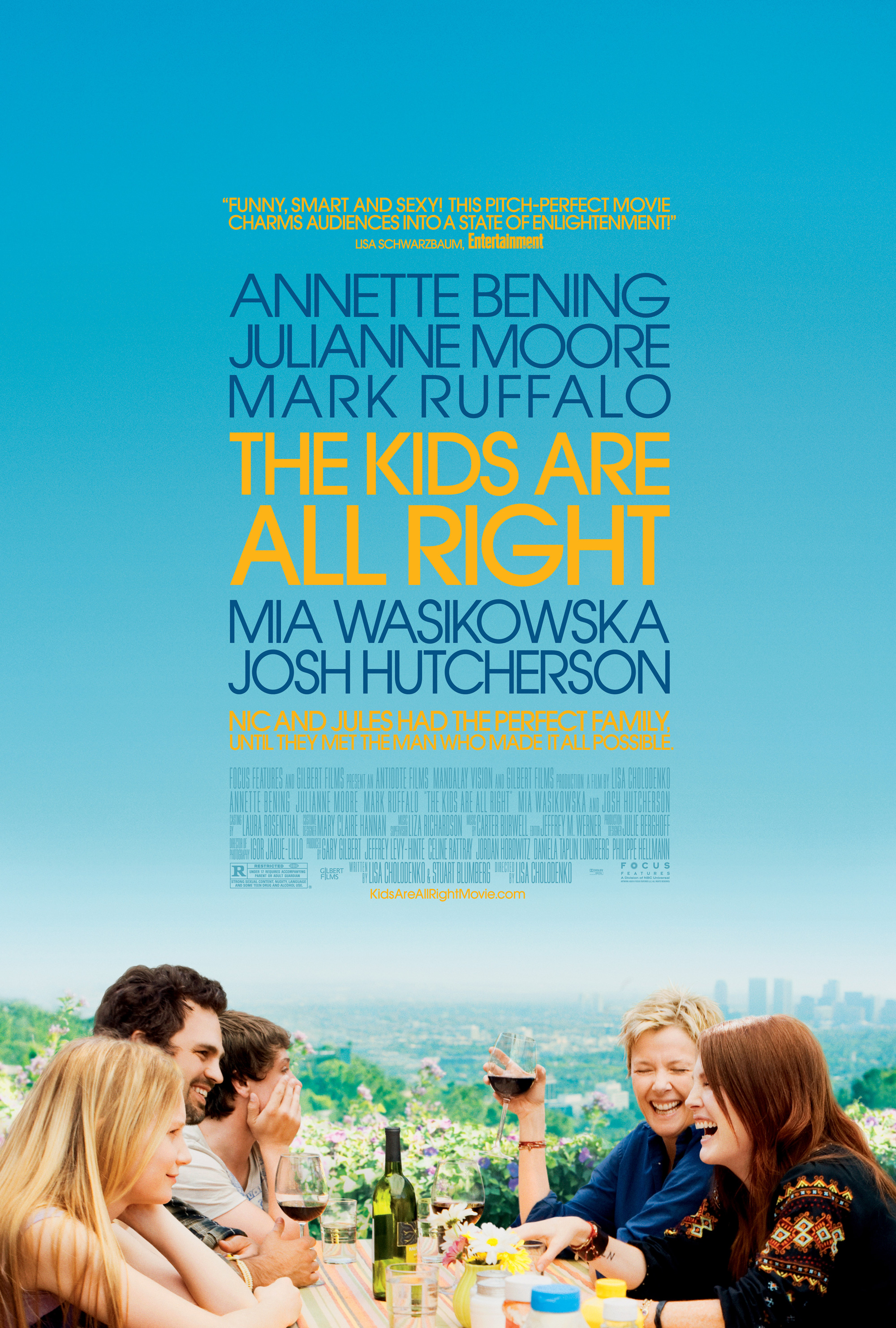
It’s a fucking marathon,” says Julianne Moore‘s Jules of marriage in The Kids Are All Right. You stop seeing the other person. You just see weird projections of your own junk.” This is nothing new, this stripped down reveal of the intimacies of marriage. If anything, the big screen is prime real estate for bared souls and uncomfortable break downs. Though Kids centers on a lesbian couple, the big picture problems of this marriage are no different then any other. Nor are the struggles with raising children ultimately any stranger. No, what makes Writer/Director Lisa Cholodenko‘s film worth watching is the monkey wrench of a sperm donor and the complexity of a family making room for one more.

Continue reading

Biutiful (2010)

People always say that movies are a means of escape. Whether science fiction or a love story, the dark of a movie theater allows us a respite from the monotony of everyday life, right? If so, then where does Biutiful fit in? Who could call this an escape? Surely there’s drama here, and a kind of kineticism that’s as exciting as it is alarming, but the grief is almost too much to bear; a degree of sprawling sadness no one could ever be thrilled by or even prepared for. There’s little point to telling a story so heartbreaking that we as the audience are taken past our limits, nor is there much to be said for exercises in extremes. No, to justify doling out anguish with such abandon there must be a point. Grasping the purpose of Biutiful is a bit like pulling out a thoroughly-embedded splinter, and in the end, just as satisfying.

Continue reading

Another Year (2010)

Zero Stars

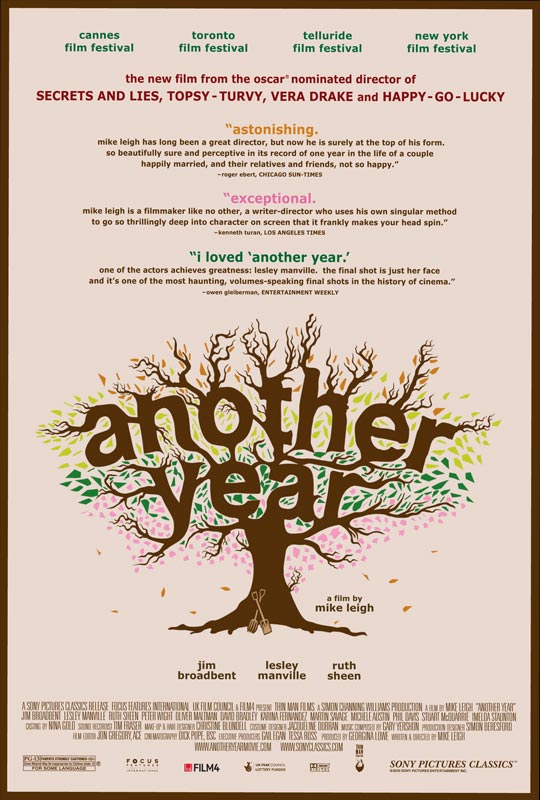
I generally avoid reading reviews until I’ve made my own conclusions. It’s a precaution against accidental plagiarism or having my opinion subtly altered. In the case of Another Year though, I felt safe. I was so convinced of my position, so sure of my assessment, I didn’t feel the usual need for prudence. I couldn’t imagine that the professionals would really have such a different viewpoint then my own. This assumption lead me to the Rotten Tomatoes rating of this film: 92%. It led me to rave reviews from Ebert and Travers and Scott. And more than anything, it entrenched my position that Mike Leigh‘s Another Year is one of the worst movies I’ve seen in a good long while. It is as smug and self-satisfied as its two chief characters, and leaves the viewer with nothing but questions. I don’t know what movie everybody else is watching, but Writer/Director Mike Leigh’s latest is a pretentious cipher of a film and, to put it plainly, not worth the film it was printed on.

Continue reading

Restrepo (2010)

60 Second Reviews

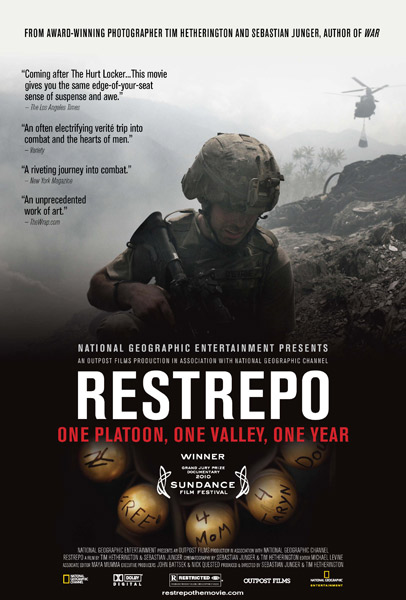
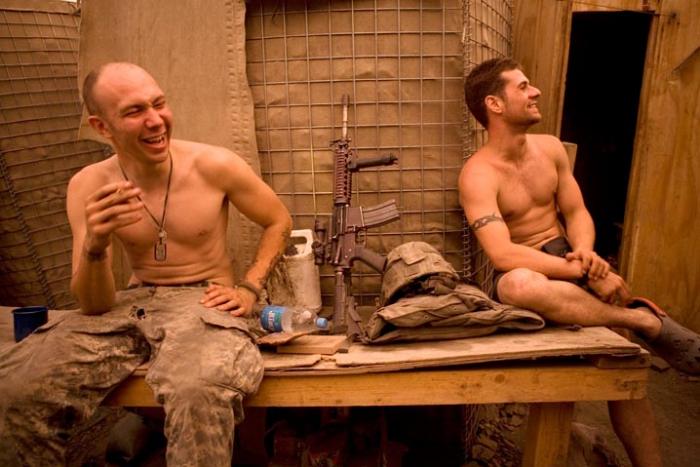
Restrepo-titled after the documentary’s pivotal outpost, which is named for PFC Juan Restrepo, a casualty of the war–tells the story of the armed forces men stationed in the Korangal Valley in Afghanistan and their agonizing day-to-day. The Korangal has been called the deadliest place on earth, and while filmmakers Tim Hetherington and Sebastian Junger don’t shy away from the awful reality, it’s the human side of a serviceman’s life that ends up being documented most effectively.

As documentaries go, Restrepo is unique, if not terribly complex. Unlike so many documentaries that tell a story by editing together footage and interviews for the most compelling result, here the chronology drives the story. Like any war hero recounting a tale, the story moves in a straight line, from beginning to end. Along with the directors’ hands-off approach to the editing of plot, they employ an interview style that allows the interviewees a remarkable amount of freedom. These men aren’t giving an account of events as much as they’re giving an account of their emotional and mental journeys. This flexibility of topic means the men spend as much time talking about each other and their lives back home as they do the war itself and life in the Korangal.

We’ve all heard stories of disturbed vets; men unable to extract themselves from war without massive mental trauma. These are those men. The soldiers from the Korangal have seen death in war, and have killed, and trying to return to a life that doesn’t account for these two extremes seems to be as draining as the war itself. What Restrepo does so well is let the men tell their own stories without interfering. While the film does take a stance, it doesn’t manufacture one, and perhaps that is more impressive then anything else about it.

A beautifully heartbreaking and wholly true story, Retrespo is shocking in both its content and its lack of manipulation.

Inception (2010)

Sometimes, in some ways, it feels as though Christopher Nolan might be tricking us. After Inception‘s release there were endless conversations and references made to the film’s strenuous complexity. People spoke of it as though it were as mysterious as Lost, when the reality is that it just sort of feels that way. Sure, Nolan is weaving a complicated fiction, but are there really that many stones left unturned? Are there really that many elements of this story left ambiguous? It seems much more the case that Nolan has simply done a masterful job of convincing us that if we want to appreciate this story, we had better stay on our toes. Meanwhile, as we kill ourselves trying to appreciate every last technical tidbit, we become immersed in this: an astonishing action movie with a broken heart.

Continue reading

The Beach (2000)

60 Second Reviews

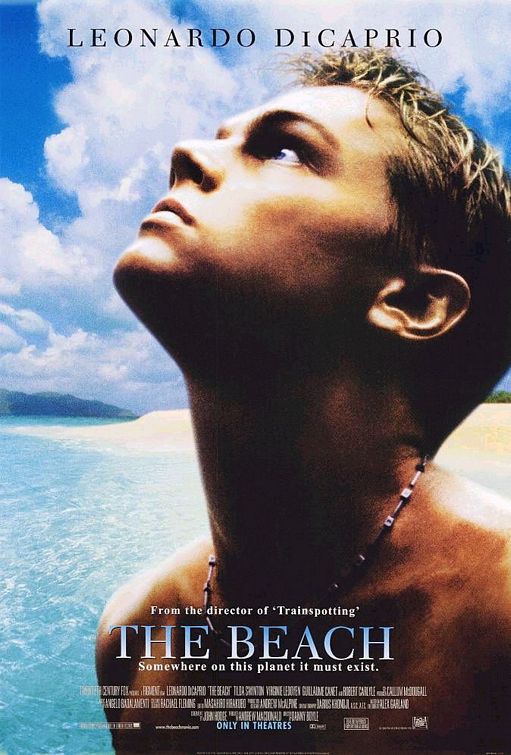
Despite the fact that its two leads-Leonardo DiCaprio and Danny Boyle-have been such significant and consistent contributors to the film culture, The Beach is simply not a very good movie. It’s familiar as Boyle’s work, but untidy, and DiCaprio is getting in his very last performance as a precocious kid before Gangs of New York and Catch Me If You Can made his adulthood official.

Movies and books are different enough mediums that, when someone does a half-assed job of adapting a book into a screenplay, it can be terribly evident; The Beach‘s most glaring issue. There’s way too much happening here for the story to feel cohesive. There are suggestions of a love story and attempts at comedy. There’s blood and mania enough that it could even be called a psychological thriller. I can’t say if I would rather a film have too much going on or not enough, but in either case it’s not a minor trouble. It gives you the persistent feeling of having missed something vital, and once you realize that’s just the nature of the film, you’re more frustrated then you were before.

At it’s core the story is about hedonism, and hedonism needing limits; an admirable sentiment, but the film’s handling of this notion leaves much to be desired. The hedonists themselves are a collection of dogmatic hippies who bound around like they’re at summer camp. Frankly, you don’t have to subtly convince me not to like these people. Still, taking it for granted that this is the filmmakers intent, the consequences simply don’t make sense. Moving into the third act Leo’s Richard, separated from the beach people, suddenly begins a rapid descent into jungle madness, a consequence of his mistakes. But are two or three days of solitude enough to drive a person insane? Only if you’re rushing to get to the point.

The Beach is an interesting moment in the careers of these two giants, and though at the time it must have seemed a passion project, it has now become a dated mess.

Cloudy with a Chance of Meatballs (2009)

60 Second Review

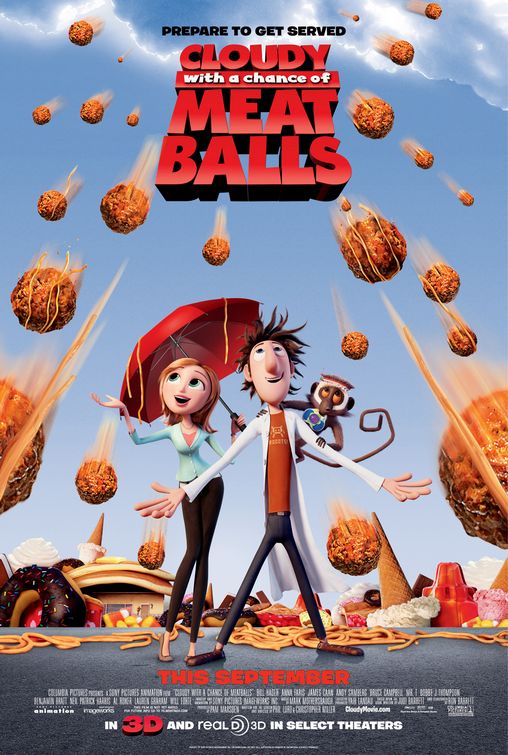
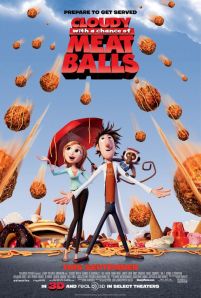
Being surprised by a film happens less and less these days, with trailers and film blogs and the rest. Even with all the good things I had heard about Cloudy with a Chance of Meatballs, all I really knew about it or expected was another non-Pixar CG kids film. And so, Cloudy‘s abundance of humor and visual spectacle caught me off-guard in the best way possible.

Visually, Cloudy is as good as any of the best Pixar films, which have become the gold-standard. The characters are cartoons to be sure, but in a lively way, with elastic features and dinner-plate eyes. And the film’s action sequences are some of the best I’ve seen in an animated film. What’s exciting about animation is the limitless space these films have to work with, and Cloudy takes full advantage of that space. The scale of some of these scenes is genuinely staggering and the scenes themselves are an absolute blast to watch.

Still, despite being a treat for the eyes, it’s Cloudy‘s humor that surprised me the most. The standard for kid’s films these days is to show the whole family a good time, with jokes for kids and parents, but the humor in this script isn’t typical. Though Toy Story 3 or Shrek have their share of well-constructed jokes, Cloudy‘s sense of humor is much more inherent. Surely the casting helps, with nearly all the main performances coming from established comedians: Bill Hader, Anna Faris, and Andy Samberg. What’s most evident though is that this is a script devoted to humor first and foremost, and written by people who are surely funny in real life. While Pixar may have the market cornered on touching our hearts, perhaps Sony Pictures Animation can focus on our funny bones.

Cloudy with a Chance of Meatballs is, in addition to being a total blast for the family, a bona fide comedy and an indication that great computer-animated films aren’t the exclusive precinct of Pixar anymore.

The Green Hornet (2011)

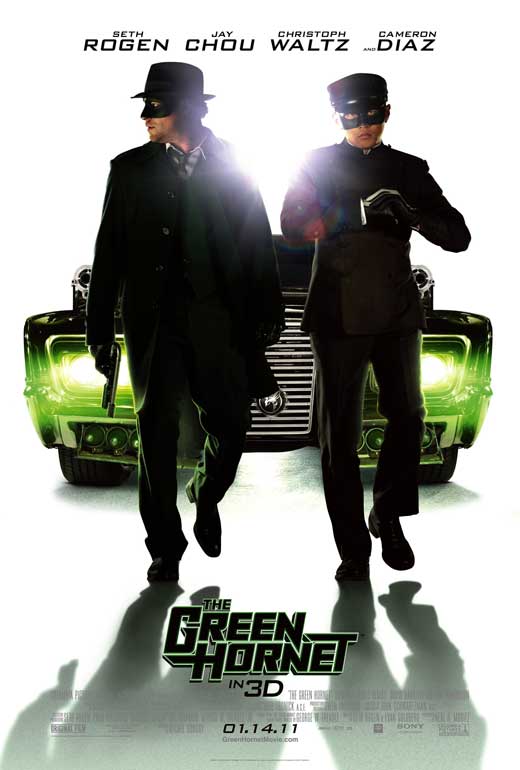
If you need any proof that Seth Rogen and writing partner Evan Goldberg are BFF, just watch one of their movies. Thus far their three major titles-Superbad, Pineapple Express and now The Green Hornetare all built up from a premise along the lines of, “so there are these two guys…” This is a charming conceit at first. Certainly in the case of those first two films the bromance was both the glue of the story and the vehicle for developing its two main characters. Meanwhile, it can actually be really sweet watching two regular dudes realize they have real love for another person. This formula had to lose its edge at some point though, and it seems to have happened smack dab in the middle of The Green Hornet.

Continue reading

Blue Valentine (2010)

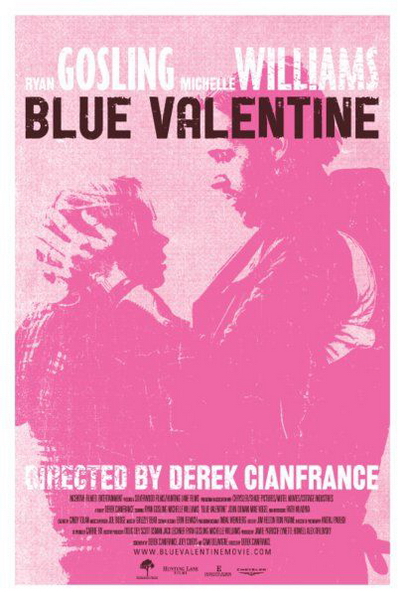
As someone who is lucky enough to have found love and held on to it, I find myself particularly struck by Blue Valentine. It’s not that a solitary individual will take nothing from the film, but it helps vastly to have some evocative experience with the love and salience of a relationship. At the core of the film is love, but in larger doses reside the blights of distrust and doubt, the arsenic of fear. So much of this experience is visceral that it’s no wonder the film has garnered a reputation as an emotional wrecking ball. While it certainly has its agonies, Blue Valentine is far from a one-note melancholic. There’s a lot of beauty in this film, and it’s delivered with equal sincerity.

Continue reading

Moon (2009)

60 Second Review

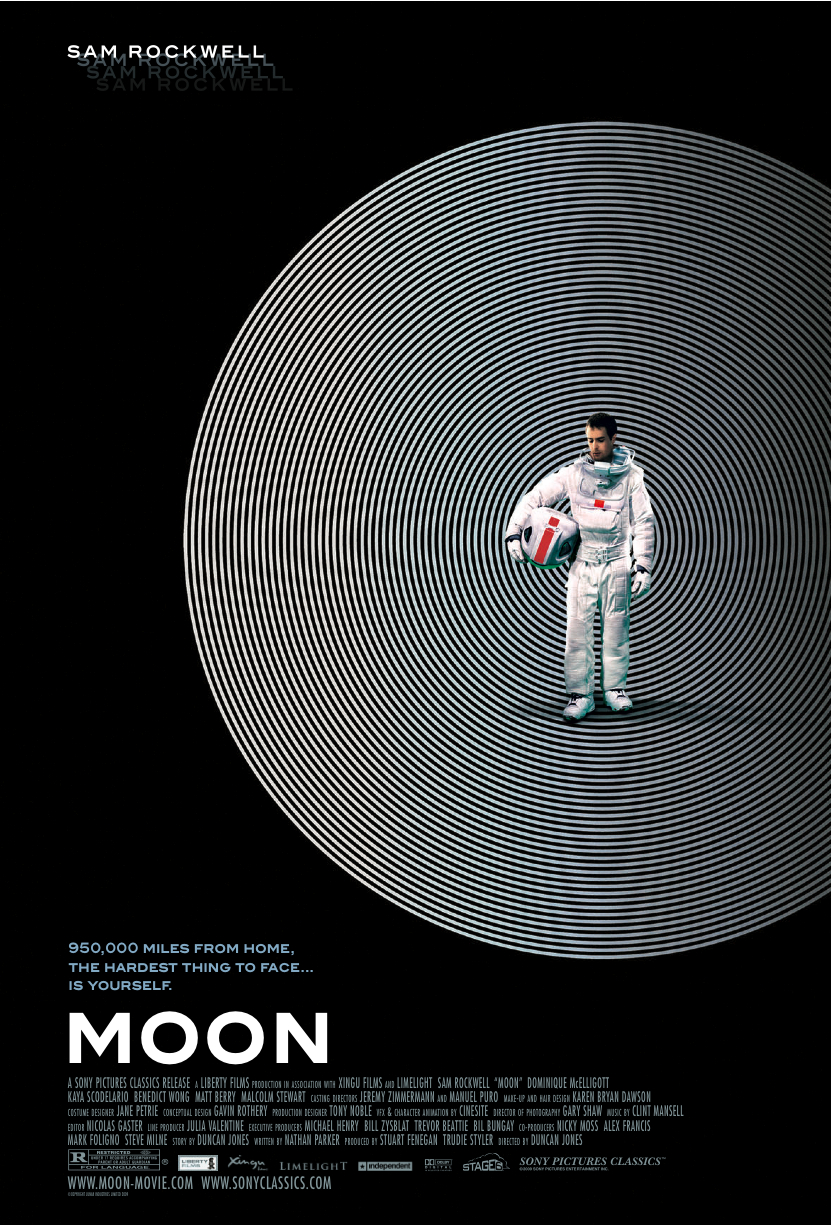
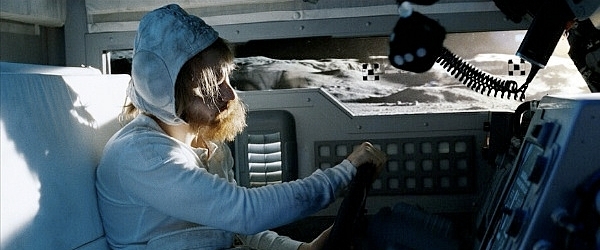
It took me too long to see Moon, and the Sam Rockwell/Duncan Jones project ended up suffering for it. Though I was able to remark on the genuine craft of the film, the many conversations I had had prior to this viewing gave me all sorts of ideas as to what it probably was or could be. The real problem though is that this seems to be the way the film is set up: to give audiences ahead of time the notion that there will be a grand reveal. But when the film’s grand reveal comes about halfway through, you spend the rest of the time wondering if there’s going to be another one or if the tone of the film has simply shifted for good.

A truly inspired piece of Moon is the photography. The surface of the moon is dark and industrial, set like a beautifully still version of David Lynch’s Eraserhead. And Sam Rockwell’s contribution can’t be understated, as he more or less carries the film from beginning to end.

To get briefly into SPOILERS, ahem-

It turns out that Sam Rockwell is not an individual human man on a solo moon mission, but one of an endless number of clones. Watching two very different versions of the same man bicker and (attempt to) relate, recalls not only Rockwell’s range but some of his better and less notable roles: The Green Mile‘s Wild Bill or Chuck in Confessions of a Dangerous Mind. He’s as good in Moon as he’s ever been, and that’s saying something. As for Duncan Jones, his first film is certainly a memorable experience and ardently made. If it occasionally lacks thematic cohesion, it’s a good example of filmmaking with heart. And the future? Source Code is next, and we’ll see if it carries any momentum from Duncan Jones’ lead off.

Despite the miscues, Jones and Rockwell seem personally and passionately invested in Moon, and this more than any of its faults is the residue left over at the film’s completion.