
Tag Archives: Reviews

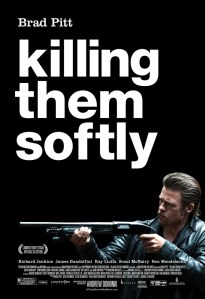
Killing Them Softly (2012)

killingthemposter

threehalf

We like to imagine that we’ve cleared the orbit of the circle of life. That we’ve achieved a degree of self-awareness far greater than that of our savage forbears, and a good distance from the antiquated notion of hunters and prey. The reality is that we’ve created a new circle of life, one in which we are the sole patrons, and the money is the mission. This is the world according to Writer/Director Andrew Dominik‘s latest, Killing Them Softly, a film as well-made and intriguing as it is heavy-handed and bleak. Softly is a gritty crime allegory, allowing a hierarchy of gangsters to stand in for our nation’s government and its people, and as the film unfolds it expends loads of energy conveying this connection, asking blood and gore to serve as a proxy for dollars and cents.
Continue reading

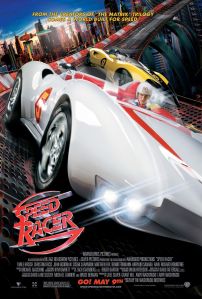
Speed Racer (2008)

speedracerposter

four

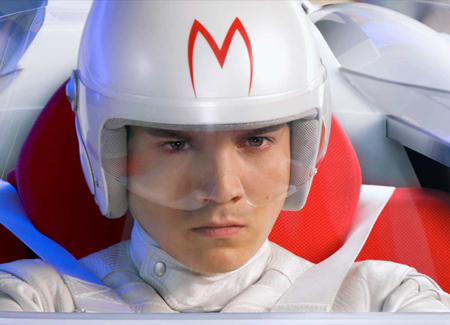
To make a kid’s movie that isn’t just a kid’s movie, you have to establish a balance between the simple stuff that appeals to kids on an instinctual level, and the more complex, allegorical stuff that parents want their kids to see. Speed Racer is a boisterous example of this, coupling a potent visual experience with themes of family and honor. At the film’s heart is Speed Racer (Emile Hirsch), a once-in-a-generation driver whose love of the sport is matched only by a steadfast devotion to family. When his roots put him at odds with a corrupt sponsor (Roger Allam), Speed is forced to defy his father (John Goodman) and follow in the footsteps of his disreputable older brother (Scott Porter), threatening his own standing in a series of dangerous, underground races. Along with most of the film’s race sequences, these less-than scrupulous events provide the film’s most exciting moments, and reveal the Wachowskis as not just dynamic, but remarkably efficient filmmakers.

speedracer1

Watch it with kids or don’t, but understand that Speed Racer was created with them in mind. It’s a film with a heart, and a lesson: through anything and everything, your family will be there for you, and you must be there for them.

Rebecca (1940)

rebeccaposter

four

While plenty of Alfred Hitchcock‘s films deal directly with death and murder, Rebecca is far subtler, exposing the auteur’s affinity for meticulously composed tension and manifest paranoia. Joan Fontaine plays the film’s endearingly naive protagonist, an orphan working as a companion to a haughty socialite (Florence Bates). When she meets the tall, dark, and handsome Maximilian de Winter (Laurence Olivier), the two fall into a whirlwind romance and an impromptu wedding, before journeying to Maxim’s sepulchral Manderley estate in the south of England. Here, happiness is impossible, as the new Mrs. de Winter can’t enter a room or open a drawer without uncovering evidence of Maxim’s late wife, Rebecca. Fontaine’s Mrs. de Winter is a meek innocent, trapped by love and a hostile housekeeper—played with thrilling eccentricity by Judith Anderson— craving nothing but the affection of her mysteriously distant husband.

rebecca1

Rebecca is a laborious tale that unfolds like a film noir, while releasing a steady drip of anxiety that maintains the essence of a thriller. It profits from a strong script and a bevy of grand performances, but is, first and foremost, a Hitchcock film; languishing in the sort of visceral angst that thrives in our everyday fears.

Life of Pi (2012)

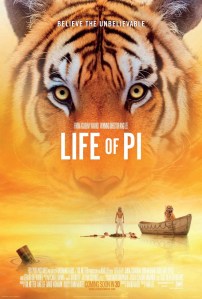
There’s something terribly thrilling about a character stranded in a lifeboat, adrift on the perpetual sea. It’s a simple device, yet it contains the potential for all manner of tragedies and comedies, and so often with a necessarily limited number of characters to play out the action. Inside of these stories, the paltry refuge of a lifeboat becomes a metaphor for the world at large, and the characters within tend to serve as archetypes of our basest motives. The idea present in nearly all of these stories is simple: only when we are faced with our own mortality can we come to truly know ourselves. While this notion isn’t unique to the “lifeboat” story, it is rarely depicted with such purity. In Life of Pi, this conceit bears up most of the film, pitting the titular Pi against a Bengal tiger named Richard Parker, as they cling to life and hope, and to each other.

Continue reading

The Raid: Redemption (2011)

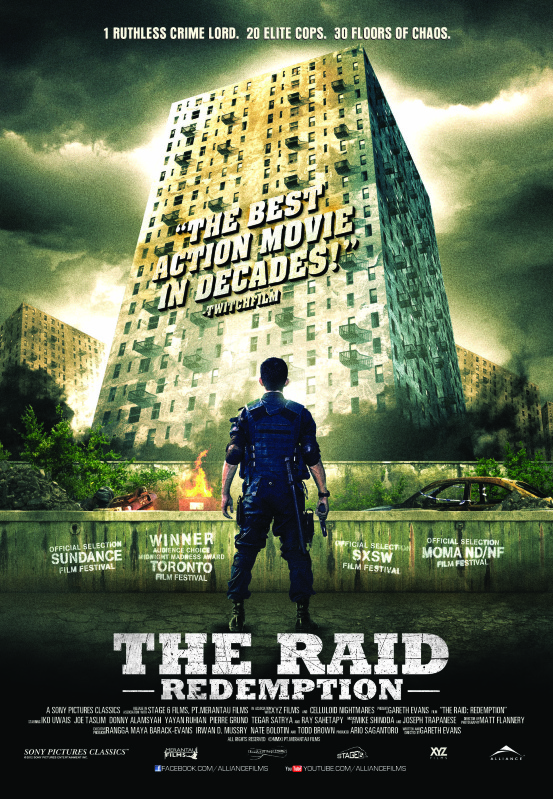
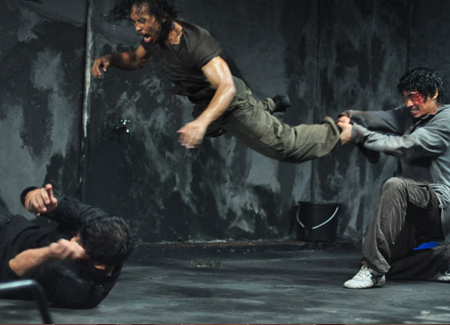
With ambitious technique and a feverish pace, The Raid: Redemption will stay in your head long after it’s done. Centering on an Indonesian swat team attempting to arrest the big boss of a criminal slum in Jakarta, Writer/Director Gareth Evans uses action set pieces and fight choreography the way Woody Allen uses dialogue: as a series of pivots the film hinges upon. Evan’s muse is Iko Uwais, a fresh-faced practitioner of the Indonesian martial art pencak silat, and the film’s protagonist–Rama. Uwais isn’t a terribly engaging presence when The Raid goes quiet, but in the midst of a fight he is simply remarkable, and he’s not alone. Donny Alamsyah plays Andi, Rama’s estranged, gangster brother, and Yayan Ruhian is Mad Dog, the big boss’s right hand man. In a scene as entrancing as it is exhausting, Rama and Andi battle the indomitable Mad Dog, and at well over five minutes of essentially non-stop brawling, it could have ended up feeling tedious. What keeps you in the action is Evans’ moving camera. All the action sequences are handheld, but more than that, the camera movements are often choreographed with the action, making for an utterly immersive experience.

The Raid: Redemption injects a lot of crime movie tropes, with plenty of double crossing and substantive revelations, but this mostly tends to get in the way. The reality is that The Raid doesn’t need to worry much about its plot, as it is so thoroughly founded in action. With such an abundance of breathtaking choreography and camera work, the rest is ornamental.

Singin’ in the Rain (1952)

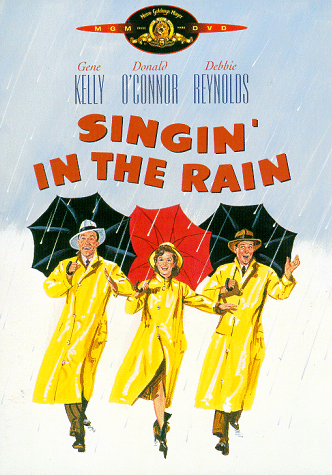
Singin’ in the Rain is not a complicated film. Like a circus or a carnival or a baby’s birthday, it bathes you in its technicolor glow with the sole purpose of bringing a smile to your face. Gene Kelly (a remarkably spry 40-year-old Gene Kelly, at that) plays Don Lockwood, a silent film A-lister unsettled in his success and longing for love. He bounces and grins and sings his heart out, enchantingly dedicated to creating a world where three friends doing an animated musical number at one in the morning is perfectly ordinary. And the result is astounding, as Singin’ in the Rain remains, all these years later, a paradigm of pure, effusive joy. The trio of Kelly and co-stars Donald O’Connor and Debbie Reynolds compliment each other beautifully, with each player’s standout talent given its moment in the spotlight, and each performance as effortlessly executed as it is technically incredible. O’Connor is Cosmo Brown, Lockwood’s cartoon of a best friend and fellow Hollywoodite, and a 19-year-old Debbie Reynolds plays Kathy, the doll-faced innocent whose talent and general abundance of personality (relative to 1952) ensorcel the romantic Don Lockwood.

Don and Kathy harmonize their way to a happy ending, and Singin’ in the Rain certainly charms its way into your heart, but the biggest takeaway for a modern audience has to be the joy of watching such deftly executed schmaltz. Like a few other Hollywood relics, this is a high point of an entirely extinct era of film, and remains a thoroughly delightful and utterly timeless flick.

Lincoln (2012)

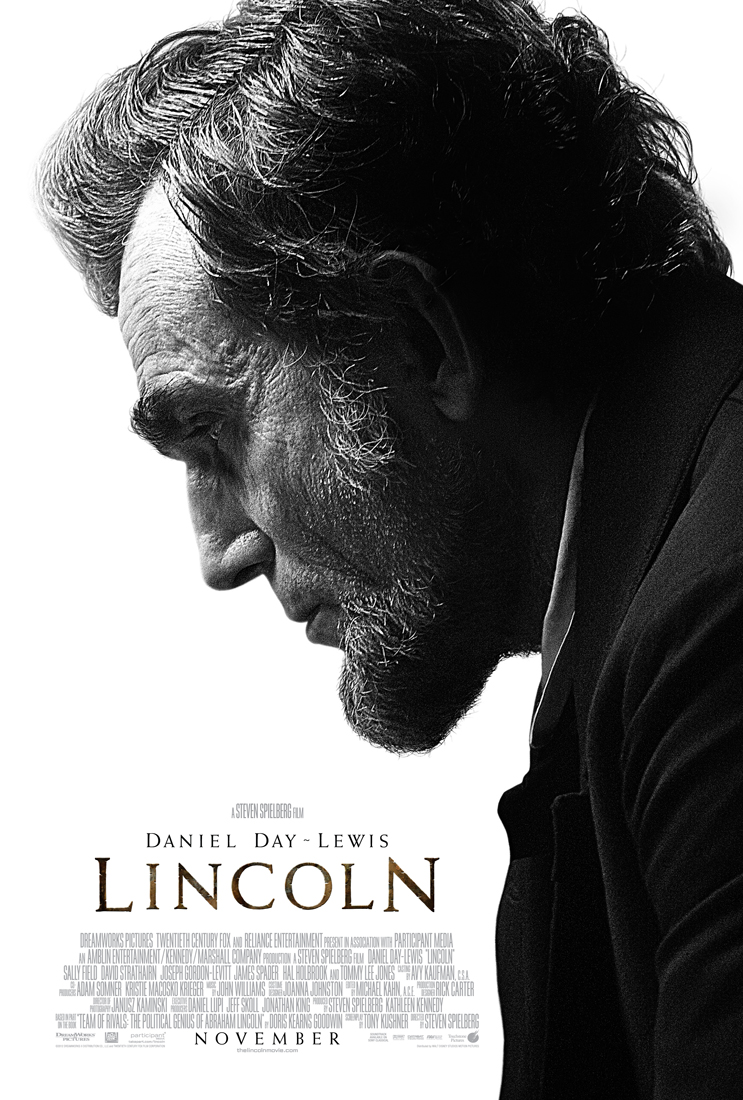
Telling the story of an historical icon is at once both daunting and simple. Daunting, because icons are owned by the masses, existing disparately in each of our imaginations. We own our icons, and when those icons are so thoroughly tied to our country’s history, we own them from a very young age. Yet this same disconnect between the truth of an individual and the public’s partial idea of that individual makes the task simple–take what you know to be fact and build on it. In LincolnSteven Spielberg has created a picture of the man established in fact, but accommodating of the Director’s own vision; a depiction that articulates the details of our nation’s greatest leader–from his spindly gait and agile mind to his quiet, cogent authority–while fully articulating the political swamp he navigated en route to one of our country’s most pivotal moments: the abolition of slavery with the 13th Amendment.

Continue reading

Flight (2012)

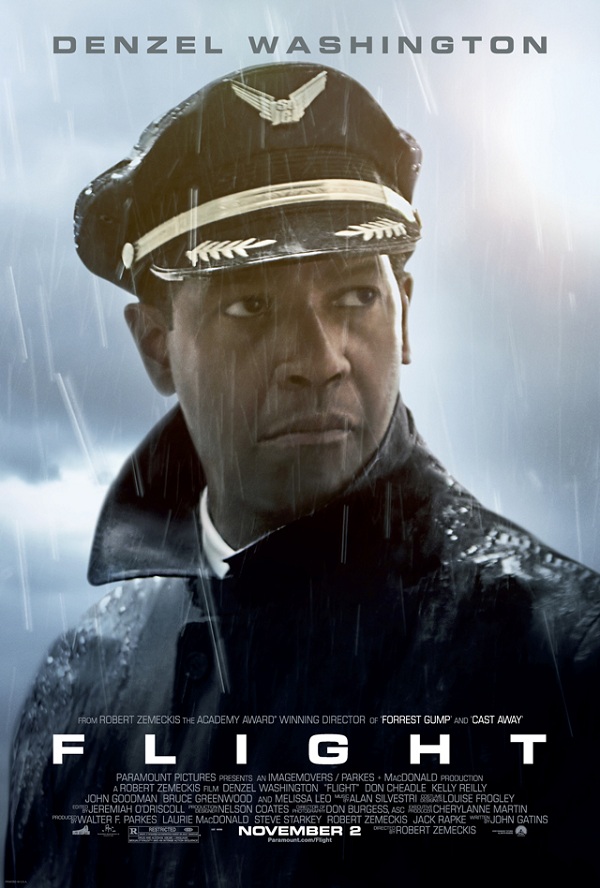
Without question, the most affecting moment in Flight is the pivotal crash sequence. Less than 15 minutes into the film we are immersed in the visceral bedlam of an airplane hurtling towards the ground. Director Robert Zemeckis points his camera at any and every element of the terrifying situation, from the malfunctioning engines, to the haywire instrument panels, to the panicked passengers, allowing his pilot protagonist—Whip Whitaker—to serve as the calm center. Frequent flyers will almost certainly recall this scene the next time their plane hits some turbulence—a testament to the pure, horrifying authenticity of Flight‘s instigating moment. Unfortunately, once their plane settles back into the clouds, they’ll be left to ponder the rest of the film, and how a stellar beginning could result in such a lackluster finish.

Continue reading

Cloud Atlas (2012)

People don’t tend to like it much when you wear your heart on your sleeve. This isn’t universally true, but seems to be a relatively persistent trend in modern culture. Pessimism is easier than optimism, and there’s something admittedly thrilling about a blasé cynic, which for me explains the tepid response to Cloud Atlas, an epic adaptation with three directors and a hearty interest in the workings of the heart. That’s not to say there aren’t valid criticisms to be made about Cloud Atlas, or that the general ambivalence around the film is coming exclusively from the heartless. But there’s a common refrain in these assessments—“It just didn’t work for me.”—that reveals a structural weakness: intellectual critiques of sentiment are inherently weak, because sentiment is not an intellectual mechanism. Whether or not you respond to it isn’t a a matter of what you think, but what you truly feel, and post-Cloud Atlas, I felt a great deal.

Continue reading

Prometheus (2012)

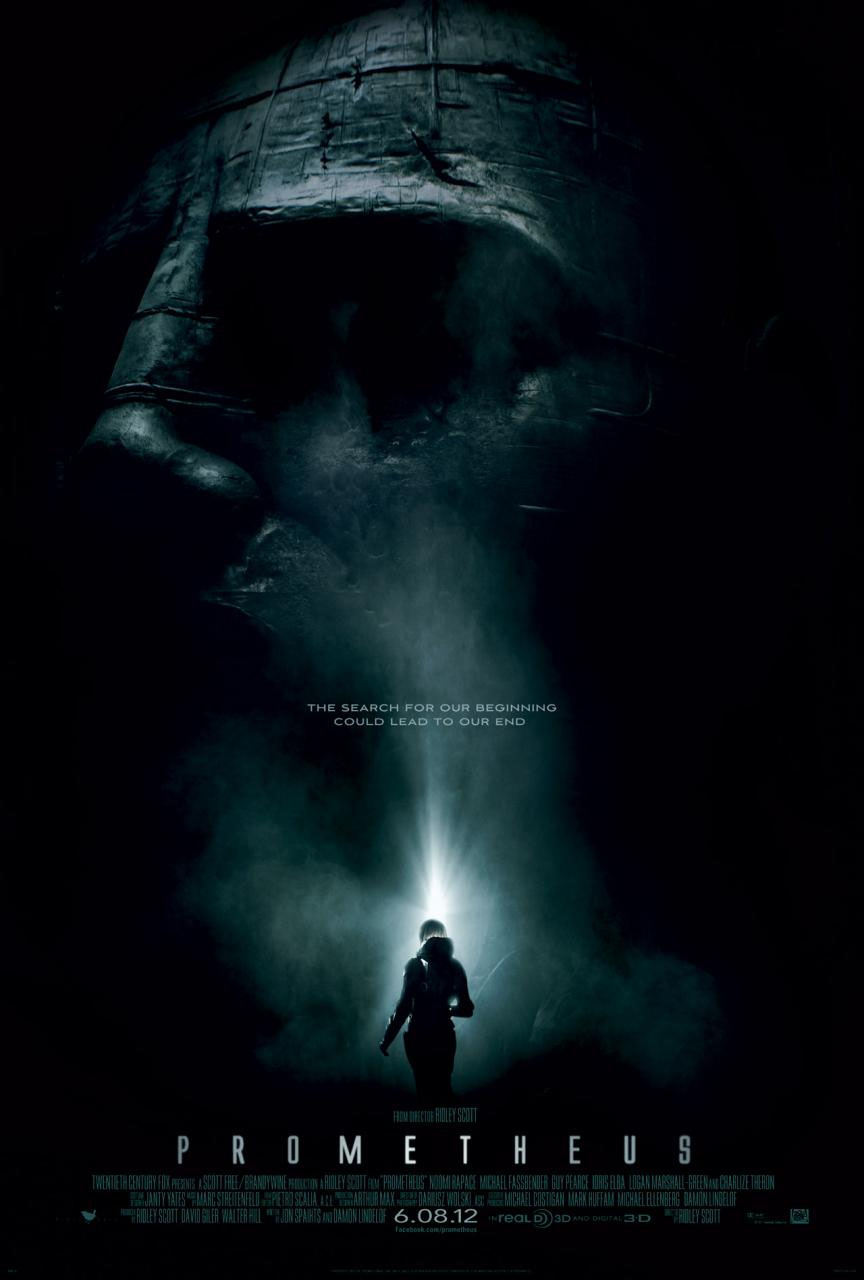
Playing witness to a long-standing director’s career can be fascinating, especially when said director enters his twilight years. While few of them would ever admit to it, any artist who has found an enduring critical success must eventually look at his oeuvre in terms of “legacy”, measuring his work against that of his peers and cinematic kin. For Ridley Scott, this self-evaluation brought him back to the bleakly-industrial and brilliant Alien, and a desire to see that world augmented. Like any artist with an eye trained on his own mortality, Scott chose to build on his Alien world existentially, and the resulting epic is Prometheus; a film somehow both ceaselessly mesmerizing and utterly baffling.

Continue reading