
Category Archives: DVD/Blu-Ray

Cloudy with a Chance of Meatballs (2009)

60 Second Review

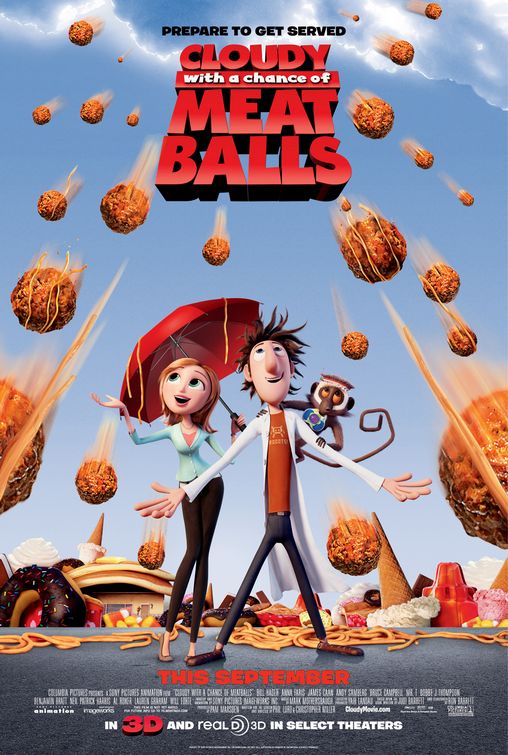
Being surprised by a film happens less and less these days, with trailers and film blogs and the rest. Even with all the good things I had heard about Cloudy with a Chance of Meatballs, all I really knew about it or expected was another non-Pixar CG kids film. And so, Cloudy‘s abundance of humor and visual spectacle caught me off-guard in the best way possible.

Visually, Cloudy is as good as any of the best Pixar films, which have become the gold-standard. The characters are cartoons to be sure, but in a lively way, with elastic features and dinner-plate eyes. And the film’s action sequences are some of the best I’ve seen in an animated film. What’s exciting about animation is the limitless space these films have to work with, and Cloudy takes full advantage of that space. The scale of some of these scenes is genuinely staggering and the scenes themselves are an absolute blast to watch.
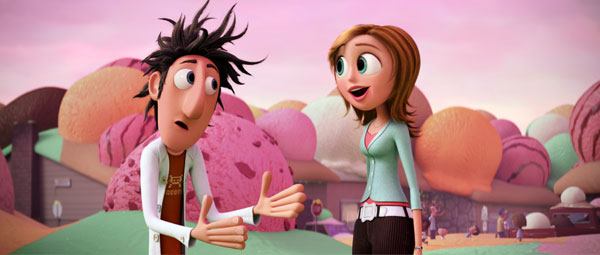
Still, despite being a treat for the eyes, it’s Cloudy‘s humor that surprised me the most. The standard for kid’s films these days is to show the whole family a good time, with jokes for kids and parents, but the humor in this script isn’t typical. Though Toy Story 3 or Shrek have their share of well-constructed jokes, Cloudy‘s sense of humor is much more inherent. Surely the casting helps, with nearly all the main performances coming from established comedians: Bill Hader, Anna Faris, and Andy Samberg. What’s most evident though is that this is a script devoted to humor first and foremost, and written by people who are surely funny in real life. While Pixar may have the market cornered on touching our hearts, perhaps Sony Pictures Animation can focus on our funny bones.

Cloudy with a Chance of Meatballs is, in addition to being a total blast for the family, a bona fide comedy and an indication that great computer-animated films aren’t the exclusive precinct of Pixar anymore.
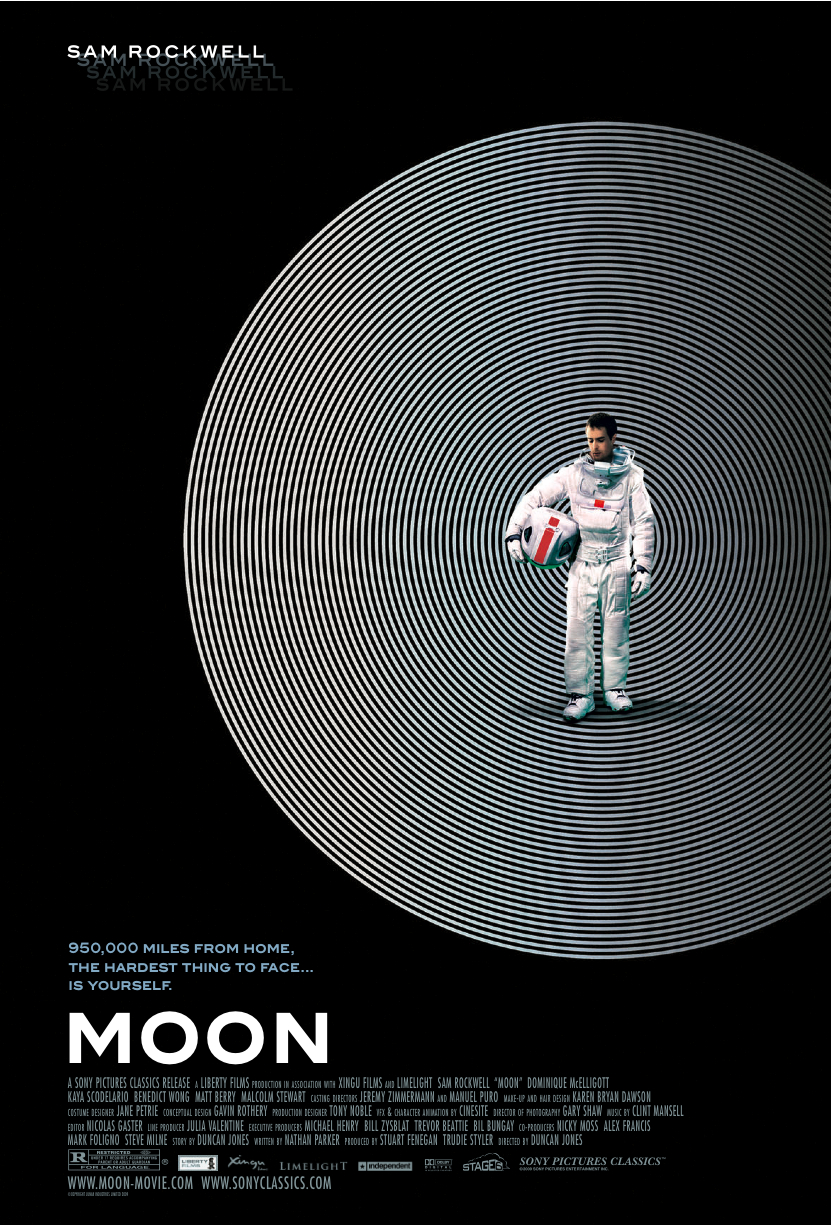

Moon (2009)

60 Second Review

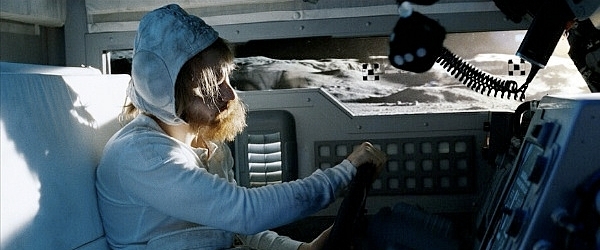
It took me too long to see Moon, and the Sam Rockwell/Duncan Jones project ended up suffering for it. Though I was able to remark on the genuine craft of the film, the many conversations I had had prior to this viewing gave me all sorts of ideas as to what it probably was or could be. The real problem though is that this seems to be the way the film is set up: to give audiences ahead of time the notion that there will be a grand reveal. But when the film’s grand reveal comes about halfway through, you spend the rest of the time wondering if there’s going to be another one or if the tone of the film has simply shifted for good.

A truly inspired piece of Moon is the photography. The surface of the moon is dark and industrial, set like a beautifully still version of David Lynch’s Eraserhead. And Sam Rockwell’s contribution can’t be understated, as he more or less carries the film from beginning to end.

To get briefly into SPOILERS, ahem-

It turns out that Sam Rockwell is not an individual human man on a solo moon mission, but one of an endless number of clones. Watching two very different versions of the same man bicker and (attempt to) relate, recalls not only Rockwell’s range but some of his better and less notable roles: The Green Mile‘s Wild Bill or Chuck in Confessions of a Dangerous Mind. He’s as good in Moon as he’s ever been, and that’s saying something. As for Duncan Jones, his first film is certainly a memorable experience and ardently made. If it occasionally lacks thematic cohesion, it’s a good example of filmmaking with heart. And the future? Source Code is next, and we’ll see if it carries any momentum from Duncan Jones’ lead off.

Despite the miscues, Jones and Rockwell seem personally and passionately invested in Moon, and this more than any of its faults is the residue left over at the film’s completion.

Beauty and the Beast (1991)

60 Second Review

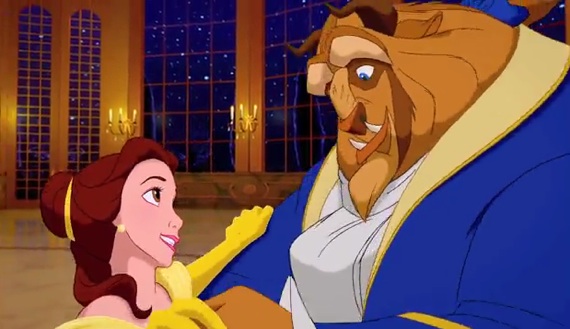
There are two kinds of movies. Movies that exist in the present, that you can consider and weigh and appraise impartially, and movies from your childhood; movies that have been a part of you since as far back as you can remember. Beauty and the Beast is squarely with the latter, insomuch as I don’t feel confident I can even have an objective response to it. This isn’t exclusively because I grew up with it, though that plays a huge role. Nearly as important is Disney’s masterful wielding of nostalgia. All of their films, even the ones you’re seeing for the first time, contain that magical schmaltz of childhood. Though every so often you get the feeling you’re being just a little bit manipulated, it’s easy enough to just go with it.

Beauty and the Beast really is a lovely little film, in spite of it’s tonally guiding hand. The music is as strong as any of Disney’s best films of that era, and the animation represents their highest tier work. Likewise the breakdown of characters is as solid a collection as any, with a hero and a villain and a beautiful princess who is, in fact, not a princess. If there’s a negative aspect to the film that has made itself more evident since childhood, it’s got to be the one-dimensionality of the characters. As with many Disney films, the secondary characters tend to have more personality then the primaries, and the starker the contrast between those two groups, the harder it is to ignore. Belle is boringly refined and and the Beast is more of an overgrown child then anything; certainly effective character types, but they don’t seem to grow in any other way than towards each other.

Nonetheless this is a fine entry into the Disney canon, and a more than vital contribution to their utter dominance of the nineties.

The Tourist (2010)

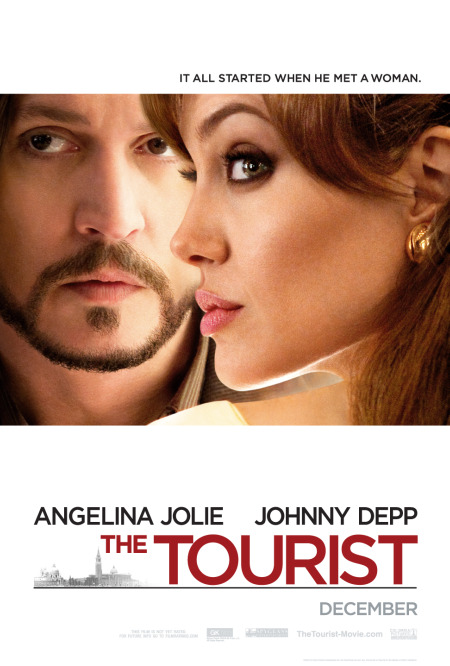
What was the last Johnny Depp movie that got you really excited?  Or Angelina Jolie for that matter?  With Ol’ John there’s a glimmer of hope coming in the form of the Hunter S. Thompson adaptation The Rum Diary.  Certainly Depp recalling his Gonzo in any way is good news for us.  Other than that, it’s just a new trio of Pirates movies, yet another Tim Burton thing, and rumors regarding Kathryn Bigelow’s next flick.  Things are even bleaker for Angie, with a reprisal of her Kung Fu Panda Tigress on the horizon, and little else.  My point here isn’t so much to rip into these actors’ future endeavors as it is to call attention to the strange turn their careers have taken.  Towards the beginning of their respective careers, Deep and Jolie both built their legacies on talent.  They may have started out as beautiful faces, but with roles in films like Gia and Girl, Interrupted, Edward Scissorhands and What’s Eating Gilbert Grape? they cemented respect from a critical audience.  And now it’s come to this.  The Tourist. Boringly predictable and occasionally incoherent, The Tourist gives Jolie and Depp the opportunity to spend some time in Venice, dress in overly elegant clothes, and be some mildly different version of their publicly banal selves.

Continue reading

Due Date (2010)

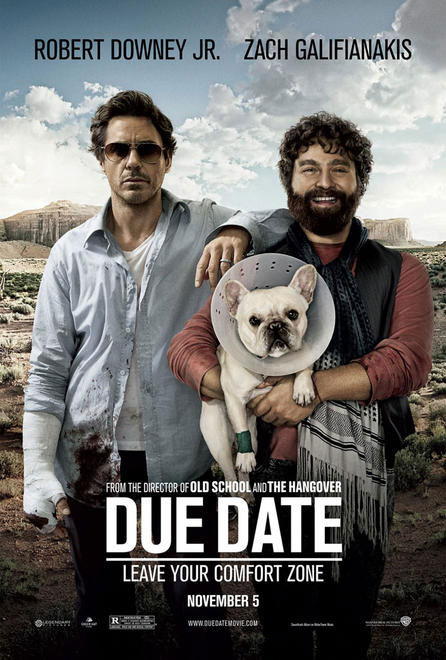
The average fan of a Todd Phillips movie probably wouldn’t recognize his name or be able to pick him out of a lineup.  This is surprising not only because he’s directed enough solid comedies to rival Judd Apatow (Road Trip, Old School, Starsky & Hutch, The Hangover), but because he’s appeared as some curly-headed oddball character in all of them.  The Hangover is Phillips’ biggest critical and financial success (the sequel is shooting now) and along with that movie’s breakout star Zach Galifianakis the reason Due Date is sure to bring a big Box Office.  In some ways Phillips’ latest feels a bit like the cocky follow up to a surprise hit, banking on names and humor and seeming just a bit too unconcerned with story.  And so, like any number of comedies, Due Date is a Yin and Yang of solid, absurdist comedy and weak, mailed-in plot.  Which way do the scales tip?  Guess.

Continue reading

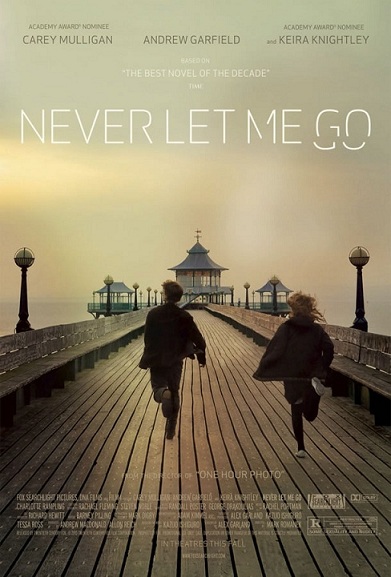
Never Let Me Go (2010)

I’m overwhelmed.  After a summer of crude, overly-budgeted nonsense, the last three weeks have found me in the theater watching films that were thoughtful, mature, and perhaps most resonantly, emotionally razing.  I’ll say again: I’m overwhelmed.  It’s exciting to arrive at this time of year as the mood starts to shift along with the caliber, but it’s also important to be prepared for it, and I can’t say that I have been.  I’ve gone head first into these films with little more than excitement to safeguard me.  Today, this trilogy of despair came to its logical conclusion with the lovingly crafted and deeply heartbreaking Never Let Me Go.

Continue reading

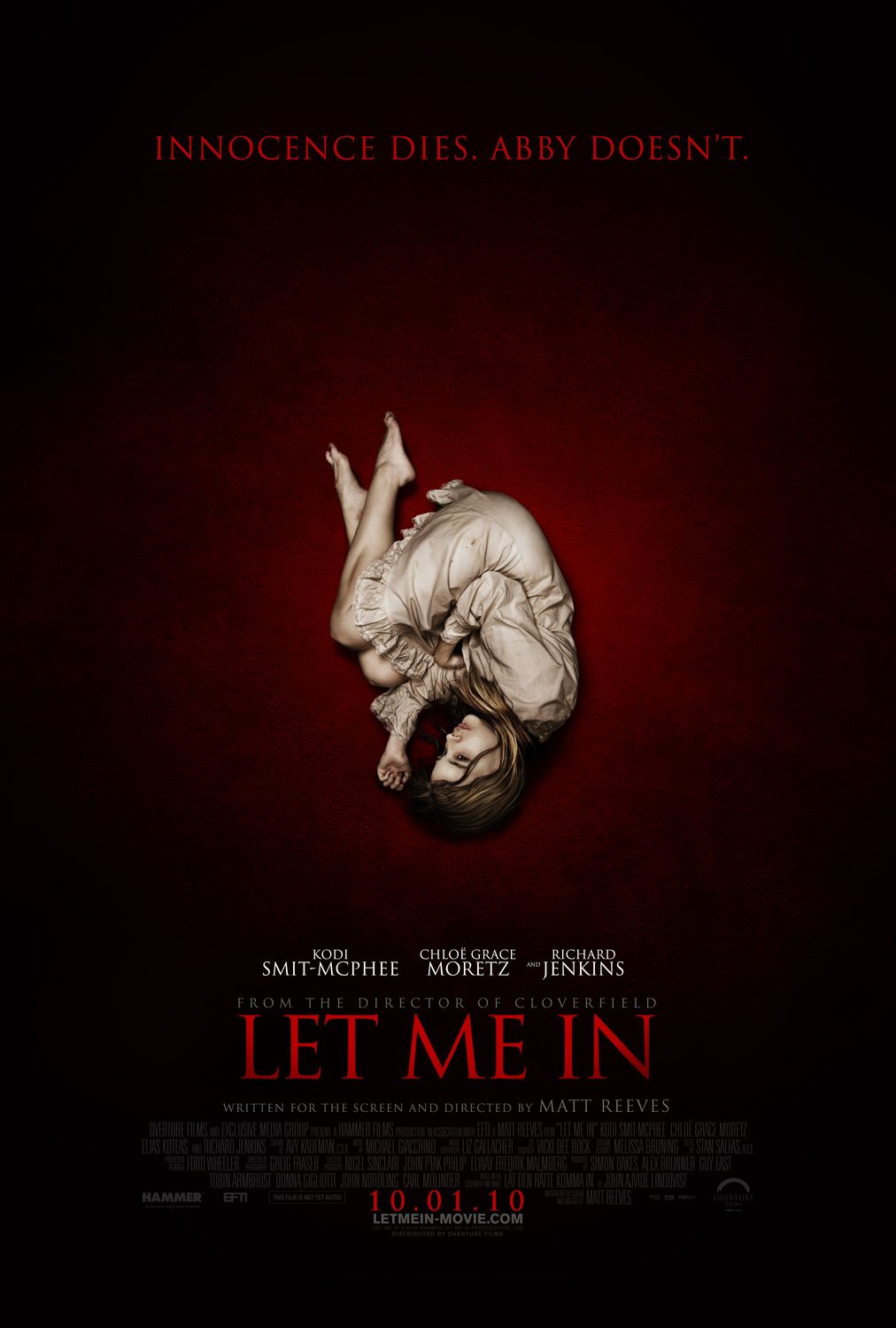
Let Me In (2010)

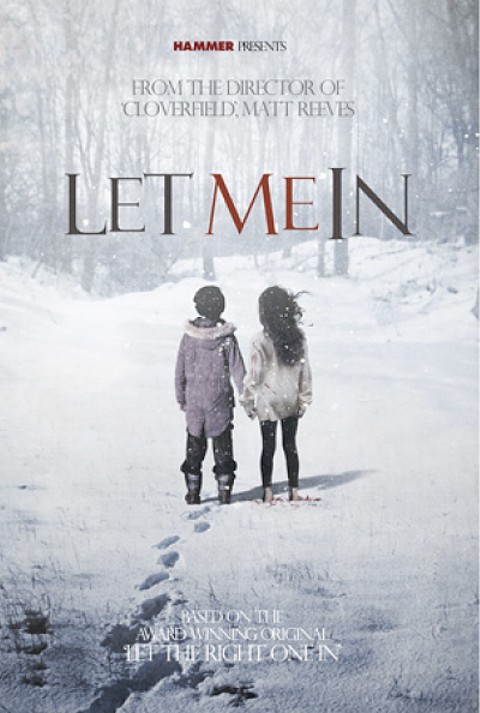
Let’s get it out of the way.  An American remake of 2008’s internationally successful Swedish film Let the Right One In was a bizarre choice and blatantly shallow.  I suppose one could say that the motivation for an Americanized version is based on the quantity of character and story, and not just that the film is marketable and vampires are hot right now.  Nonetheless, in the words of the original’s own director, “If one should remake a film, it’s because the original is bad, and I don’t think mine is.”  So then, a viewing of Matthew Reeves‘ less than scrupulous Let Me In can either be dismissed from square one, or it can be viewed and judged despite its bastardization.  Thankfully, I chose to do the latter.

Continue reading

Buried (2010)

What is it about claustrophobia that people find so terrifying?  Often it seems tied inherently to death, but in every case the two certainly aren’t connected, yet claustrophobia remains for many a nightmarish prospect.  The physical constriction.  The loss of the air.  The darkness.  It’s an entirely sensory experience and perhaps this is why it’s nearly impossible to rationalize.  And perhaps this is why up-and-comer Rodrigo CortésBuried is so intensely effecting.  While there may be time to think about what’s happening, there’s not all that much to think about, which means the viewer expends far more energy simply experiencing the film.  Bearing in mind the simplicity of this concept, the utter spareness of the production, and the reliance on the singular performance of Ryan Reynolds, Buried truly is something to see.  Or, more to the point, something to feel.

Continue reading

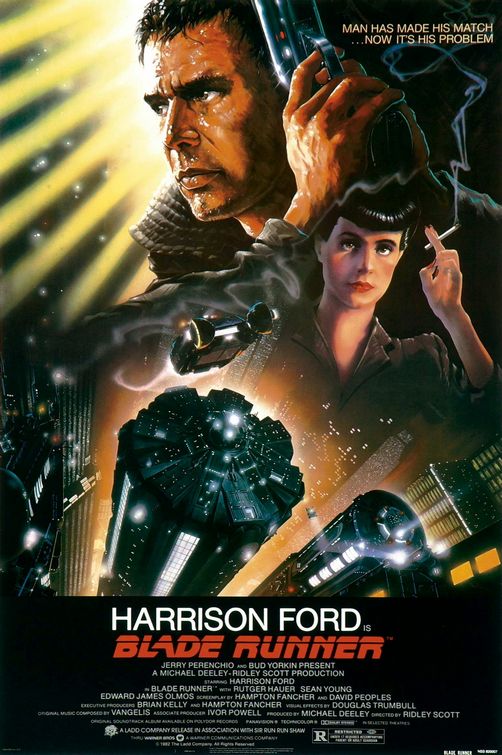
Blade Runner (1982)

What makes us human?” is one of those base existentialisms that we’re all a bit too cynical to actually consider.  It’s the type of query that for us to truly acknowledge the significance of, must be presented subtly and in the guise of “art.”  It is thusly that Ridley Scott‘s masterpiece Blade Runner is so successful in its theme.  Only once you have parted the curtains of a neo-noir and dystopic 2019 Los Angeles, only once you have passed through the door that is Scott’s and Douglas Trumbull’s remarkable achievement in visual effects, only once you’ve tiptoed past Vangelis’ eerily sinister neo-classical score do you arrive at the heart of this Philip K. Dick adaptation.  Blade Runner is precisely an interrogation of what it means to be human, or perhaps more specifically, what it means to question this humanity.

Continue reading

The American (2010)

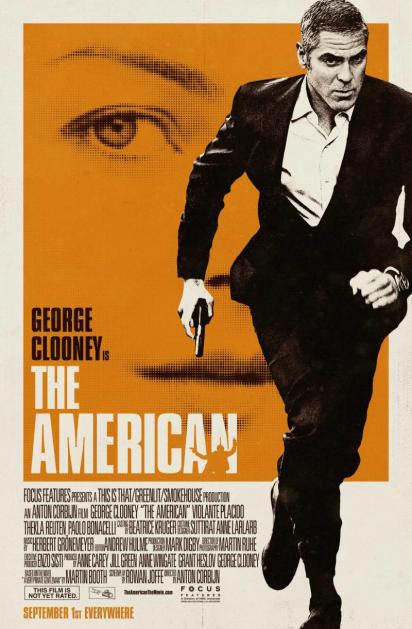
There’s something poetic about The American opening next to Machete, Robert Rodriguez’s latest explosion of cheeky violence.  And Machete is certainly not the only case of superfluous violence in recent memory.  The Expendables, Piranha 3D, The A-Team, even Kick-Ass way back in April.  Film this summer hasn’t had much interest in subtlety or consequences.  Meanwhile Anton Corbijn‘s The American is quietly released, it’s trailer ambiguous and cerebral, it’s only apparent draw for the average movie-goer a shirtless George Clooney.  After an assault of films who hope to stay unrelentingly in your face for a full two hours, The American gently hopes only to do the next best thing: stay in your mind.

Continue reading