
Category Archives: DVD/Blu-Ray

Cave of Forgotten Dreams (2010)

With modern man’s devotion to preserving the past, many of us can claim to have seen something spectacularly old. Something so significant to history, we had no choice but to experience it entirely, to become immersed in the movement of time. This dipping into the past is a momentous adventure, and one you feel inclined to share with those around you, with your family, with anyone. And this, surely, is the impetus for Werner Herzog‘s documentary, Cave of Forgotten Dreams. Herzog desperately wants to share with us the transcendence of his experience, and while he surely takes his audience on a breathtaking journey, it can, on occasion, come at the expense of his film’s harmony.
Continue reading

Breathless (1960)

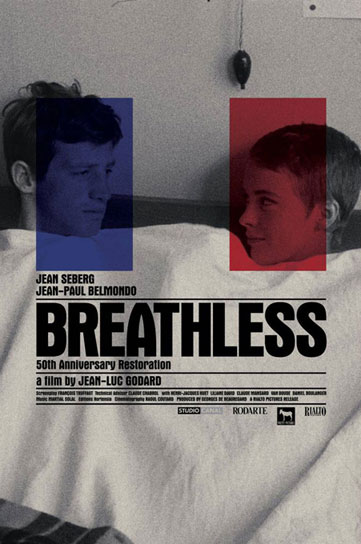
There’s a fine line between the reckless innovation of the New Wave directors and sloppy filmmaking. In the moment, these dramatic departures from the standard must have been thrilling, but with 60 years of film bridging the gap, it’s not hard to see that a film like Breathless is flawed. But it’s also explicitly clear that perfection is besides the point. Apart from the fact that this is Jean-Luc Godard‘s first film, Breathless isn’t meant to be anything more than a joyous expression of youth; an homage to the impulse. It is a bright mélange of joy and frustration, violence and noise, action and reaction, love and longing, and aimlessness; and while no one can deny Godard’s talent behind the camera, there’s something that seems wonderfully serendipitous about his first and most notable film.

Continue reading

Priest (2011)

People will write books about this era of film. To be fair, books will always be written about film, but the past few decades have been dominated by one instrument of change in particular–digital effects. Certainly special effects have always been relevant, and since essentially the beginning of film as a medium have been gradually improving and contributing to it, but nothing has made fantasy in film authentic like digital effects. And not only have digital effects taken film to an entirely new level of imagination, but they have done it with remarkable speed. Personally, I am a massive fan of effects work, to the point of occasionally applauding films that might not have much else going for them (e.g. TRON: Legacy), but as with anything, it can’t all be good. This digital effects renaissance has a flip side, and it is movies like Priest. Movies that are so horridly assembled in every way besides the special effects, they just end up being laughably bad.

Continue reading

Thor (2011)

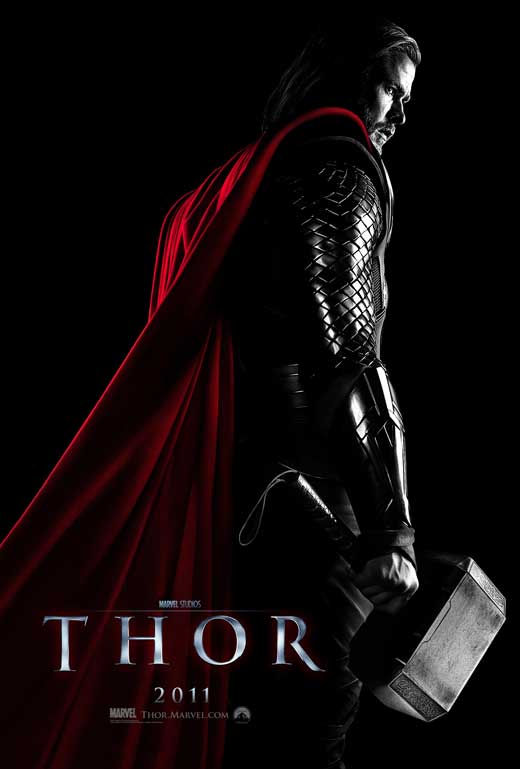
You’re nothing but a boy, trying to prove himself a man,” says a villain in Marvel’s latest swing for the fences, Thor. It’s directed at the titular character, but actor Chris Hemsworth seems to take this challenge personally, spending most of the remaining film convincing the audience that he can be a leading man, with a substantial emphasis on the M-A-N. He growls and bellows, and furrows his impressive brow, all with the intention of out-manning whatever other men happen to be in his company. For the most part, this is what superheroes movies are about: visceral displays of machismo that make an audience want to holler and cheer. If that’s the goal, then Thor is a hearty victory.

Continue reading

Taxi Driver (1976)

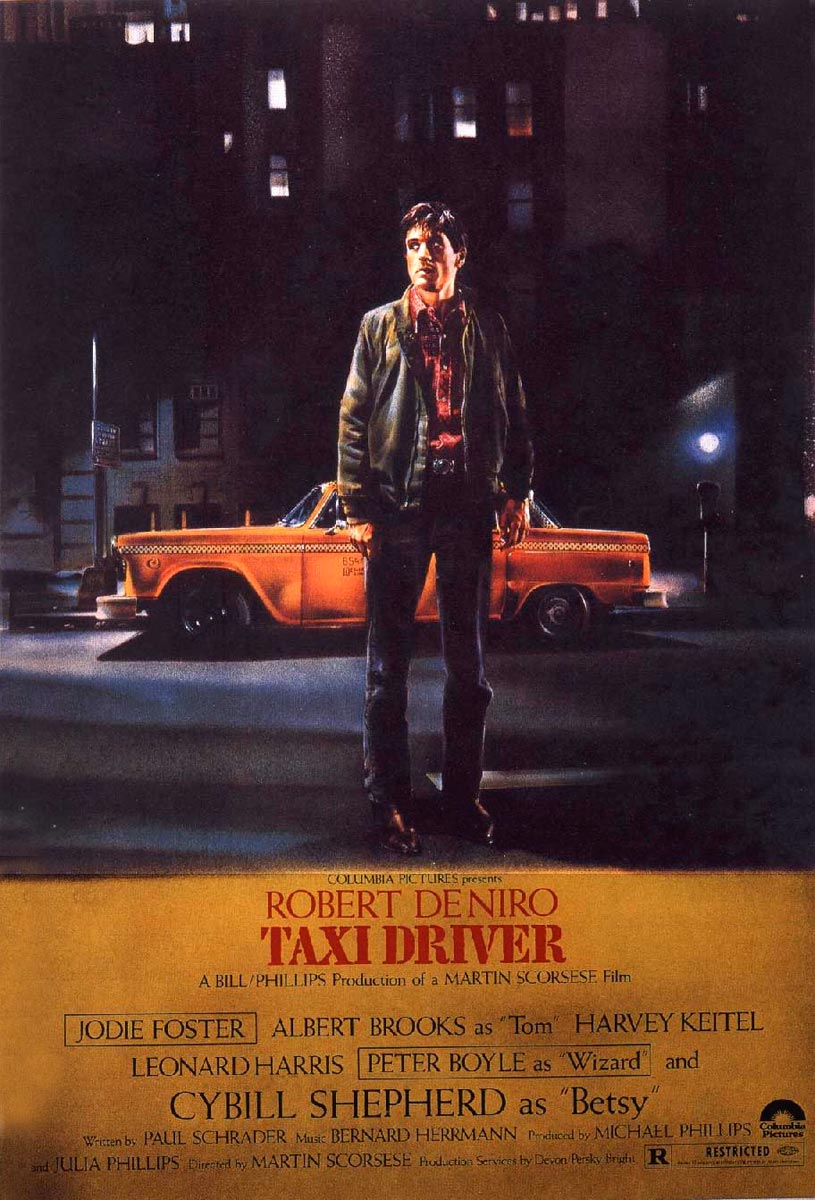
Martin Scorsese and Robert De Niro are New York City guys, through and through. Born there, raised there, and like a couple of Gangster Woody Allens, treating the city as their muse and making their best films there. It’s with this unyielding connection in mind that I found myself struck by Taxi Drivers portrayal of the Apple. New York City is a hellhole, covered in sweat and grime, its streets trafficked by hookers and killers. It is a truly miserable place. This could mean a number of things from the Director’s point of view: it could be the truth of the city’s underworld in the 1970’s, or just the way the city looks to Travis Bickle, or, most probably, it is simply the way Scorsese sees the world. Dark and dirty, with the occasional intimation that people aren’t entirely hopeless.

Continue reading

Eternal Sunshine of the Spotless Mind (2004)

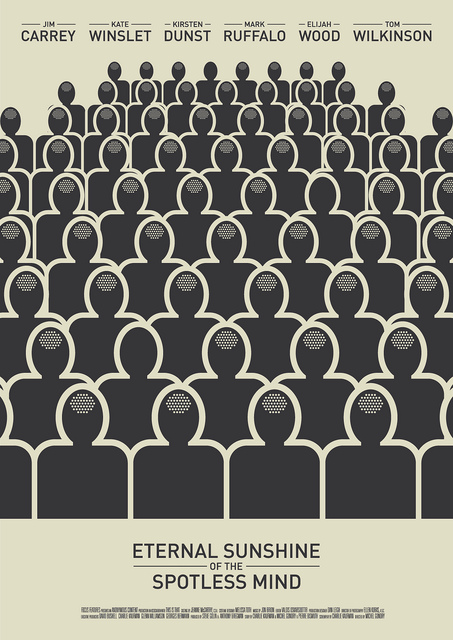
While good films are allowed a few missteps, truly great films are about the confluence of many great things. Great films are about the serendipity of timeless talent doing their best work together. If this can’t be said for Eternal Sunshine of the Spotless Mind, then it can’t be said for any film. As collaborations go, Sunshine sits in the stratosphere with films like Network or Star Wars; moments of such dramatic success that it seems impossible luck wasn’t somehow involved. It’s not precisely that the individuals involved with a movie like Eternal Sunshine will never again achieve a similar success, so much as they can forever after know that they achieved what they set out to do when they decided to make films: produce something timeless, and universal, and thoroughly, unequivocally great.

Continue reading

Win Win (2011)

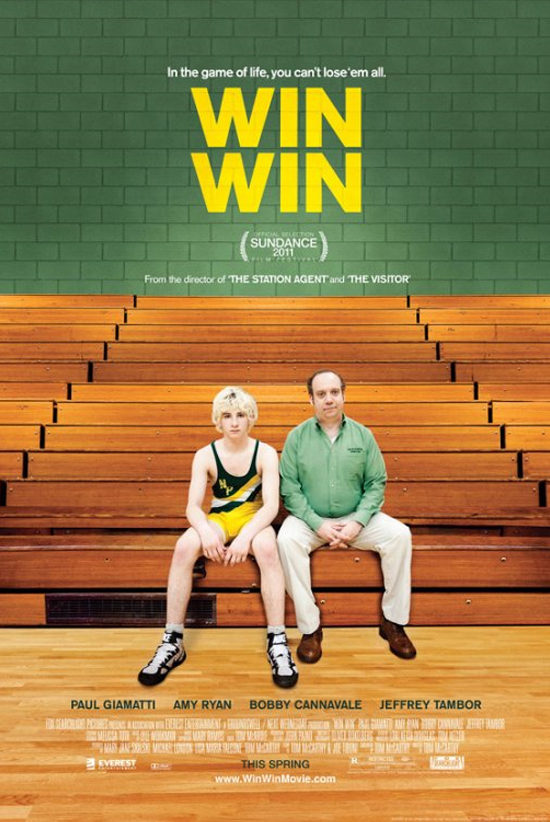
The notion of an anti-hero is so commonplace these days, finding a truly unflawed altruist in a film is nearly impossible. All the genuine heroes are delegated to fantasy, where characters are stereotypes, and often incapable of doing wrong. Win Win though presents us with an anomaly: A thoroughly nice guy, who has always done the right thing simply because he knows it to be right. Taking a character like this one through a moral gambit is the strongest puzzle piece in Director Thomas McCarthy‘s third film. While an audience will always root for a film’s protagonist, it’s hard not to feel personally invested when that protagonist is an authentic nice guy.

Continue reading

Hanna (2011)

You could say that Joe Wright is an energetic director. You wouldn’t be wrong, but you also wouldn’t want to go so far as to compare him to a guy like Danny Boyle, who approaches every shot like he’s directing the X-games. But Wright has certainly established a style, and seems to be honing it in his latest, Hanna. This style is built on a fluid mix of a number of different approaches. Wright often employs deep, throbbing club music in his action, nearly taking away any of the diegetic sound. He also likes to keep his cameras close to his actors and hold his cuts as long as possible, giving the impression that there is always something just off-camera ready to strike. And though he has no problem picking up the pace of his films, Wright is just as prepared to slow things way, way down. What culminates in these choices is a style of filmmaking that never truly allows you to relax. For a film that deals with a 16-year-old girl entering the world for the first time and kicking a whole lot of ass, this could be the most effective choice in a barrel full of good ones.

Continue reading

Source Code (2011)

People like mystery stories because of the satisfaction of solving one. Looking for clues, sizing up characters, watching a film competitively; all require active participation from an audience. Source Code, the second feature-length film from Director Duncan Jones, is emblematic of this, with a meandering plot that misleads as often as it reveals. Assuming the pieces are all in place, this is a thoroughly engaging experience, and leads to the cryptic praise of satisfied watchers who want to tell you everything but simply can’t reveal anything, lest the enumerable unveilings be ruined. Despite the film’s shifting moods, Jones has put together a lively action film that serves double-time as an exhausting mind puzzle.

Continue reading

Rango (2011)

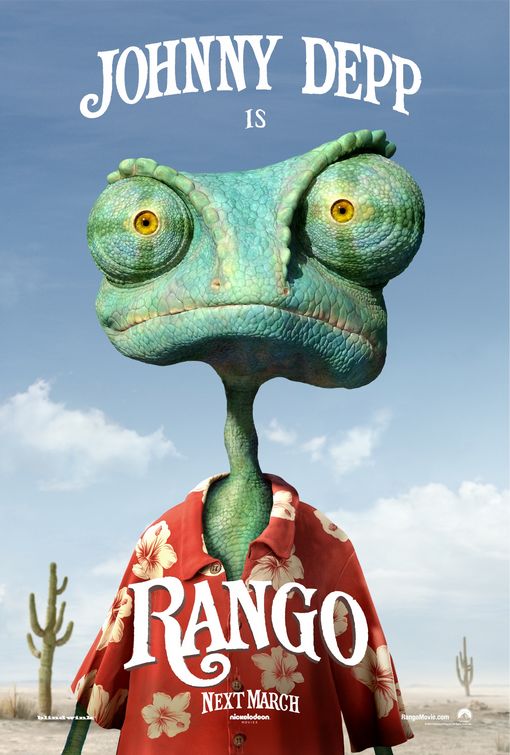
For an animated film to thrive, it has to do something we haven’t seen an animated film do before. Back in the early aughts this was far simpler, as computer-generated animation was still novelty enough to stand more or less alone if needed. But as more and more studios get into the remarkably lucrative game of computer-animated flicks, we’re seeing more and more films that flirt with other themes and genres. Cloudy with a Chance of Meatballs was more screwball comedy then kid’s movie, and the Neil Gaiman-sourced Coraline has a very eery and enjoyable darkness to it. This movement away from the center has not been lost on director Gore Verbinski in his first film in five years that doesn’t have Pirates in the title: Rango.

Continue reading