Tag Archives: Oscar Nominee

The 2012 Wertzies : Part One

2012Wertzies-1

2012 was a year to remember.

An exceptional and exceptionally diverse collection of film makers put together an array of movies that were, more often than not, pretty damn good. It’s years like this that remind a guy why he fell in love with film in the first place.

And with another year comes another Wertzies.

For this, my 3rd annual collection of the year’s Best Movie Stuff, I’ve added a few categories: Part One will include my picks for Best Visual Effects, and Part Three will feature a list of the year’s 10 Best Moments. Otherwise you can expect to see my favorite Screenplays, Directors, Actors & Actresses, the Most Overrated, and of course, the Best Movies of the Year*.

Enjoy.

Continue reading

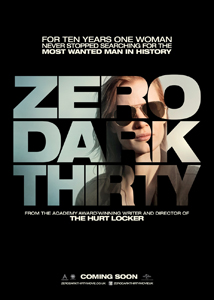
Zero Dark Thirty (2012)

zerodarkposter

fourhalf

We tell ourselves that we deserve to know everything. That we can manage the truth, however burdensome it may be. The reality is that we want to hear a great story, and if the truth is part of it than all the better. Zero Dark Thirty is eager to give us both, revealing the epic tale behind the decade-long hunt for Osama bin Laden, and uncovering just enough gory detail to establish the film’s verisimilitude without melodramatics. Director Kathryn Bigelow and Writer Mark Boal aren’t interested in the mythology of this already mythologized tale, and their composure results in a deeply enthralling story. A story about a woman who spent the better part of her life hunting a man, and the considerable toll that process took.

Continue reading

Silver Linings Playbook (2012)

silverliningsposter

fourhalf

Drawing comparisons between a David O. Russell film and the film of another, more boilerplate Oscar-season director is kind of like comparing the X Games to the Olympics, the latter more prepared to sweep us up in its comforting and controlled familiarity, the former astonishing with its mercurial brilliance. This is not a compliment or critique, but a comment on the thrilling messiness David O. Russell brings as a storyteller. Silver Linings Playbook–Russell’s follow up to the Academy-nominated The Fighter–thrives in this mess, bringing its sundry characters together in a collection of manic fits and starts–appropriate for a film so preoccupied with mental health issues. Playbook is a film with the heart of a romantic comedy and the head of a black comedy, and of this collision is born a visceral, cerebral story about a family with a lot to fix.

Continue reading

Rebecca (1940)

rebeccaposter

four

While plenty of Alfred Hitchcock‘s films deal directly with death and murder, Rebecca is far subtler, exposing the auteur’s affinity for meticulously composed tension and manifest paranoia. Joan Fontaine plays the film’s endearingly naive protagonist, an orphan working as a companion to a haughty socialite (Florence Bates). When she meets the tall, dark, and handsome Maximilian de Winter (Laurence Olivier), the two fall into a whirlwind romance and an impromptu wedding, before journeying to Maxim’s sepulchral Manderley estate in the south of England. Here, happiness is impossible, as the new Mrs. de Winter can’t enter a room or open a drawer without uncovering evidence of Maxim’s late wife, Rebecca. Fontaine’s Mrs. de Winter is a meek innocent, trapped by love and a hostile housekeeper—played with thrilling eccentricity by Judith Anderson— craving nothing but the affection of her mysteriously distant husband.

rebecca1

Rebecca is a laborious tale that unfolds like a film noir, while releasing a steady drip of anxiety that maintains the essence of a thriller. It profits from a strong script and a bevy of grand performances, but is, first and foremost, a Hitchcock film; languishing in the sort of visceral angst that thrives in our everyday fears.

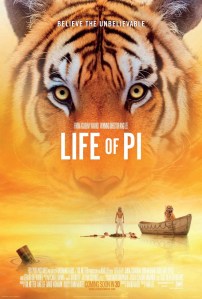
Life of Pi (2012)

There’s something terribly thrilling about a character stranded in a lifeboat, adrift on the perpetual sea. It’s a simple device, yet it contains the potential for all manner of tragedies and comedies, and so often with a necessarily limited number of characters to play out the action. Inside of these stories, the paltry refuge of a lifeboat becomes a metaphor for the world at large, and the characters within tend to serve as archetypes of our basest motives. The idea present in nearly all of these stories is simple: only when we are faced with our own mortality can we come to truly know ourselves. While this notion isn’t unique to the “lifeboat” story, it is rarely depicted with such purity. In Life of Pi, this conceit bears up most of the film, pitting the titular Pi against a Bengal tiger named Richard Parker, as they cling to life and hope, and to each other.

Continue reading

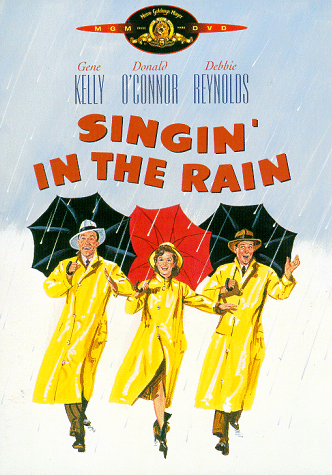
Singin’ in the Rain (1952)

Singin’ in the Rain is not a complicated film. Like a circus or a carnival or a baby’s birthday, it bathes you in its technicolor glow with the sole purpose of bringing a smile to your face. Gene Kelly (a remarkably spry 40-year-old Gene Kelly, at that) plays Don Lockwood, a silent film A-lister unsettled in his success and longing for love. He bounces and grins and sings his heart out, enchantingly dedicated to creating a world where three friends doing an animated musical number at one in the morning is perfectly ordinary. And the result is astounding, as Singin’ in the Rain remains, all these years later, a paradigm of pure, effusive joy. The trio of Kelly and co-stars Donald O’Connor and Debbie Reynolds compliment each other beautifully, with each player’s standout talent given its moment in the spotlight, and each performance as effortlessly executed as it is technically incredible. O’Connor is Cosmo Brown, Lockwood’s cartoon of a best friend and fellow Hollywoodite, and a 19-year-old Debbie Reynolds plays Kathy, the doll-faced innocent whose talent and general abundance of personality (relative to 1952) ensorcel the romantic Don Lockwood.
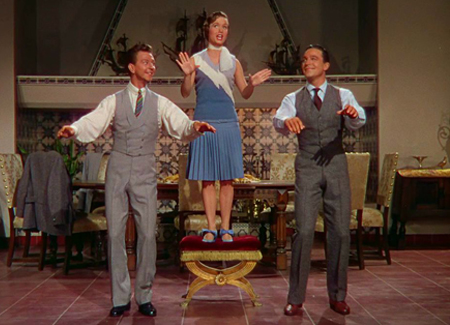
Don and Kathy harmonize their way to a happy ending, and Singin’ in the Rain certainly charms its way into your heart, but the biggest takeaway for a modern audience has to be the joy of watching such deftly executed schmaltz. Like a few other Hollywood relics, this is a high point of an entirely extinct era of film, and remains a thoroughly delightful and utterly timeless flick.

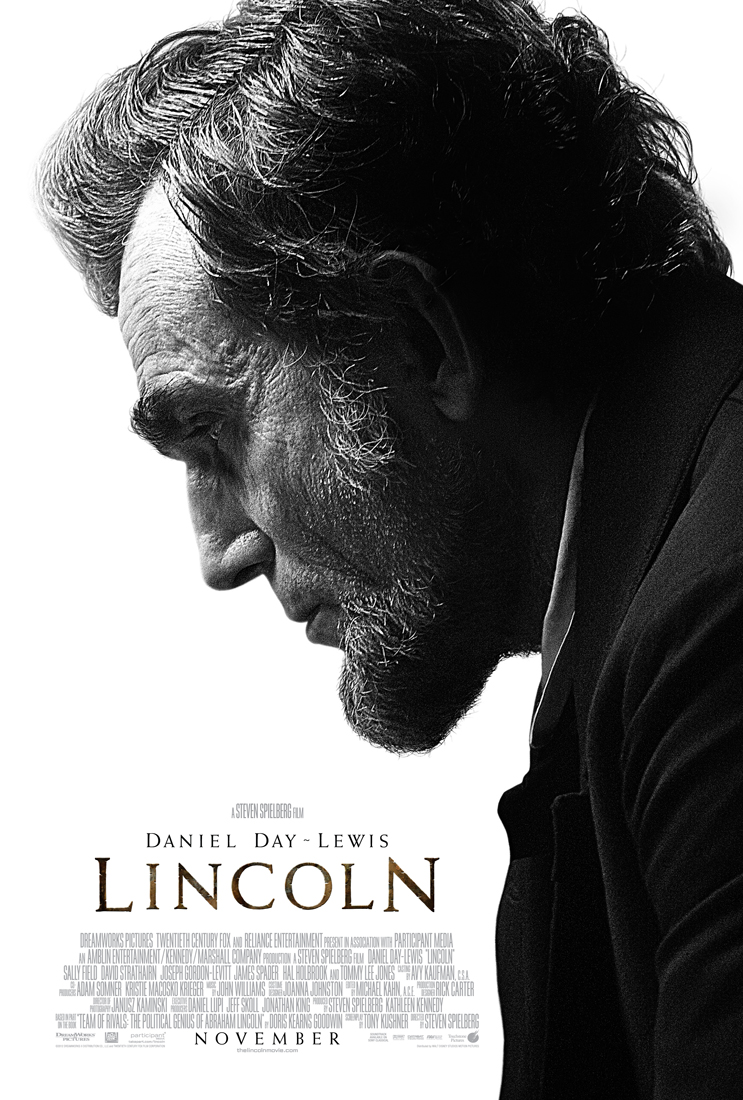
Lincoln (2012)

Telling the story of an historical icon is at once both daunting and simple. Daunting, because icons are owned by the masses, existing disparately in each of our imaginations. We own our icons, and when those icons are so thoroughly tied to our country’s history, we own them from a very young age. Yet this same disconnect between the truth of an individual and the public’s partial idea of that individual makes the task simple–take what you know to be fact and build on it. In LincolnSteven Spielberg has created a picture of the man established in fact, but accommodating of the Director’s own vision; a depiction that articulates the details of our nation’s greatest leader–from his spindly gait and agile mind to his quiet, cogent authority–while fully articulating the political swamp he navigated en route to one of our country’s most pivotal moments: the abolition of slavery with the 13th Amendment.

Continue reading

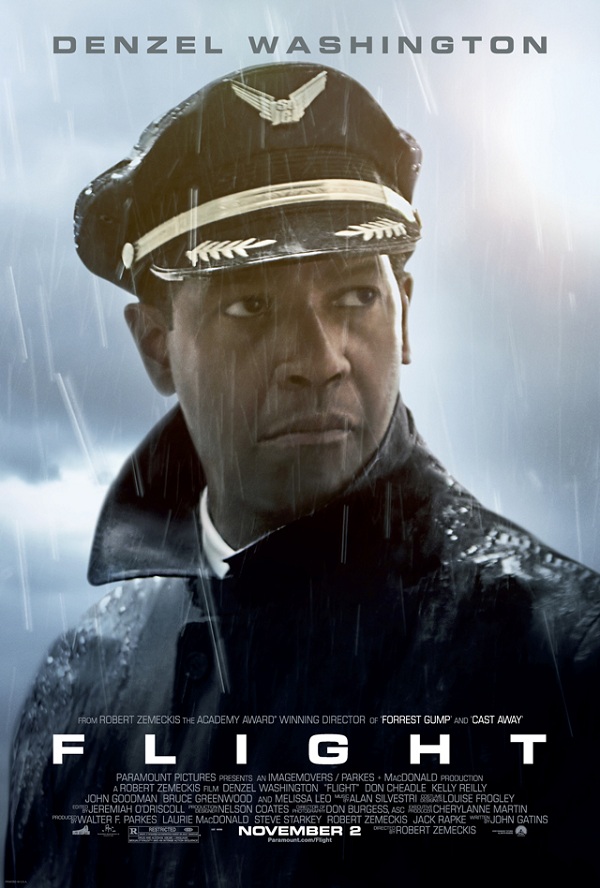
Flight (2012)

Without question, the most affecting moment in Flight is the pivotal crash sequence. Less than 15 minutes into the film we are immersed in the visceral bedlam of an airplane hurtling towards the ground. Director Robert Zemeckis points his camera at any and every element of the terrifying situation, from the malfunctioning engines, to the haywire instrument panels, to the panicked passengers, allowing his pilot protagonist—Whip Whitaker—to serve as the calm center. Frequent flyers will almost certainly recall this scene the next time their plane hits some turbulence—a testament to the pure, horrifying authenticity of Flight‘s instigating moment. Unfortunately, once their plane settles back into the clouds, they’ll be left to ponder the rest of the film, and how a stellar beginning could result in such a lackluster finish.

Continue reading

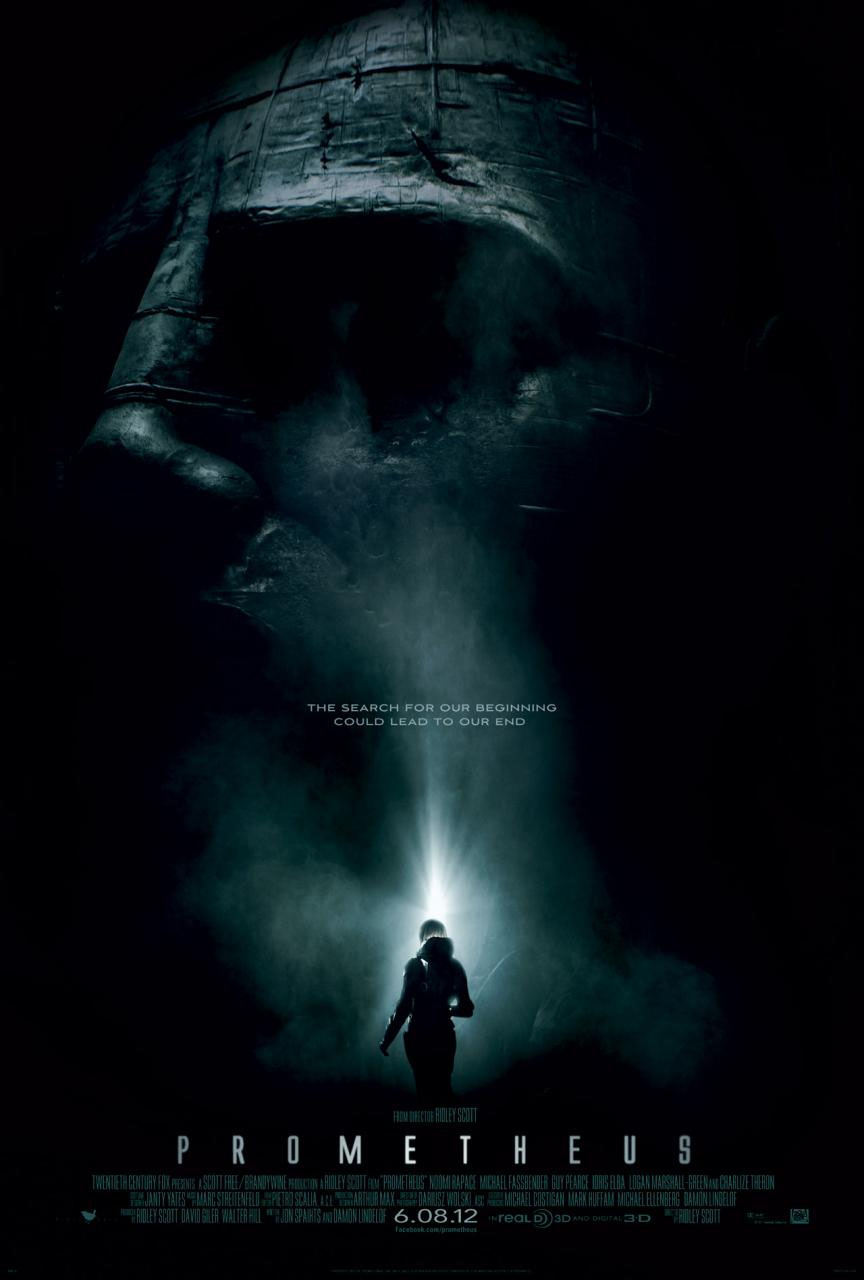
Prometheus (2012)

Playing witness to a long-standing director’s career can be fascinating, especially when said director enters his twilight years. While few of them would ever admit to it, any artist who has found an enduring critical success must eventually look at his oeuvre in terms of “legacy”, measuring his work against that of his peers and cinematic kin. For Ridley Scott, this self-evaluation brought him back to the bleakly-industrial and brilliant Alien, and a desire to see that world augmented. Like any artist with an eye trained on his own mortality, Scott chose to build on his Alien world existentially, and the resulting epic is Prometheus; a film somehow both ceaselessly mesmerizing and utterly baffling.

Continue reading

Argo (2012)

Argo begins with the events at the Iranian US embassy on November 4th, 1979, when protesters—incensed by their country’s inveterate political and societal turmoil—broke through the embassy gates and held the residents there for what would become a 444-day hostage situation. Serving as both setting and character introduction, this opening sequence is one of the most indelible and disquieting beginnings I have seen in the theater in a good long while, and provides us with a trove of useful info, both within the movie and without. Superficially, it pulls us headlong into the story, introducing characters and circumstances in a meticulously edited prologue, while building to a truly frightening climax that sets the whole picture in motion. Incidental to the exposition the scene provides is the realization that this is a seminal moment for Ben Affleck as a director. Argo is a strong film in many ways, yet this opening sequence suggests a caliber of talent not just absent from his first two titles, but altogether unaccounted for. It seems that Ben Affleck the Director is the real deal.

Continue reading