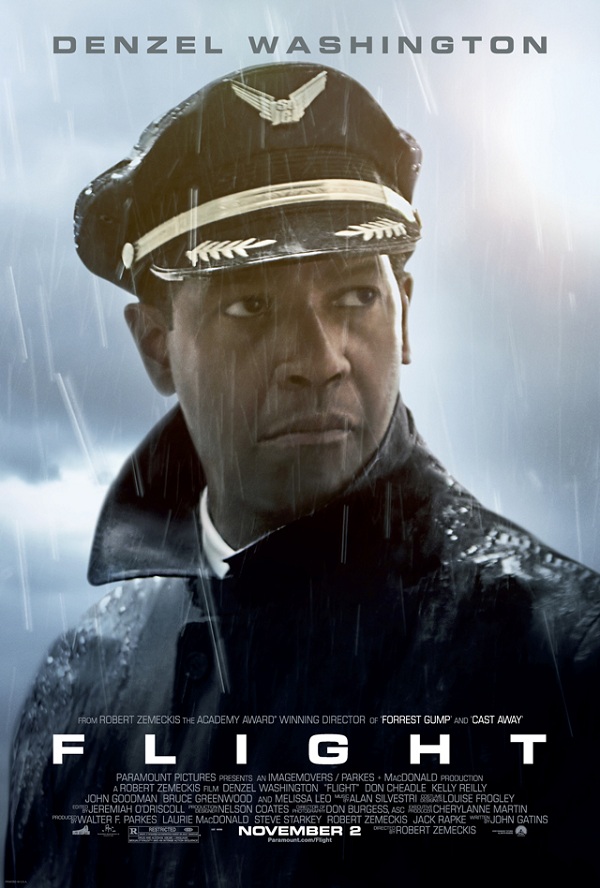

Flight (2012)

Without question, the most affecting moment in Flight is the pivotal crash sequence. Less than 15 minutes into the film we are immersed in the visceral bedlam of an airplane hurtling towards the ground. Director Robert Zemeckis points his camera at any and every element of the terrifying situation, from the malfunctioning engines, to the haywire instrument panels, to the panicked passengers, allowing his pilot protagonist—Whip Whitaker—to serve as the calm center. Frequent flyers will almost certainly recall this scene the next time their plane hits some turbulence—a testament to the pure, horrifying authenticity of Flight‘s instigating moment. Unfortunately, once their plane settles back into the clouds, they’ll be left to ponder the rest of the film, and how a stellar beginning could result in such a lackluster finish.


Continue reading

Cloud Atlas (2012)

People don’t tend to like it much when you wear your heart on your sleeve. This isn’t universally true, but seems to be a relatively persistent trend in modern culture. Pessimism is easier than optimism, and there’s something admittedly thrilling about a blasé cynic, which for me explains the tepid response to Cloud Atlas, an epic adaptation with three directors and a hearty interest in the workings of the heart. That’s not to say there aren’t valid criticisms to be made about Cloud Atlas, or that the general ambivalence around the film is coming exclusively from the heartless. But there’s a common refrain in these assessments—“It just didn’t work for me.”—that reveals a structural weakness: intellectual critiques of sentiment are inherently weak, because sentiment is not an intellectual mechanism. Whether or not you respond to it isn’t a a matter of what you think, but what you truly feel, and post-Cloud Atlas, I felt a great deal.

Continue reading

Prometheus (2012)

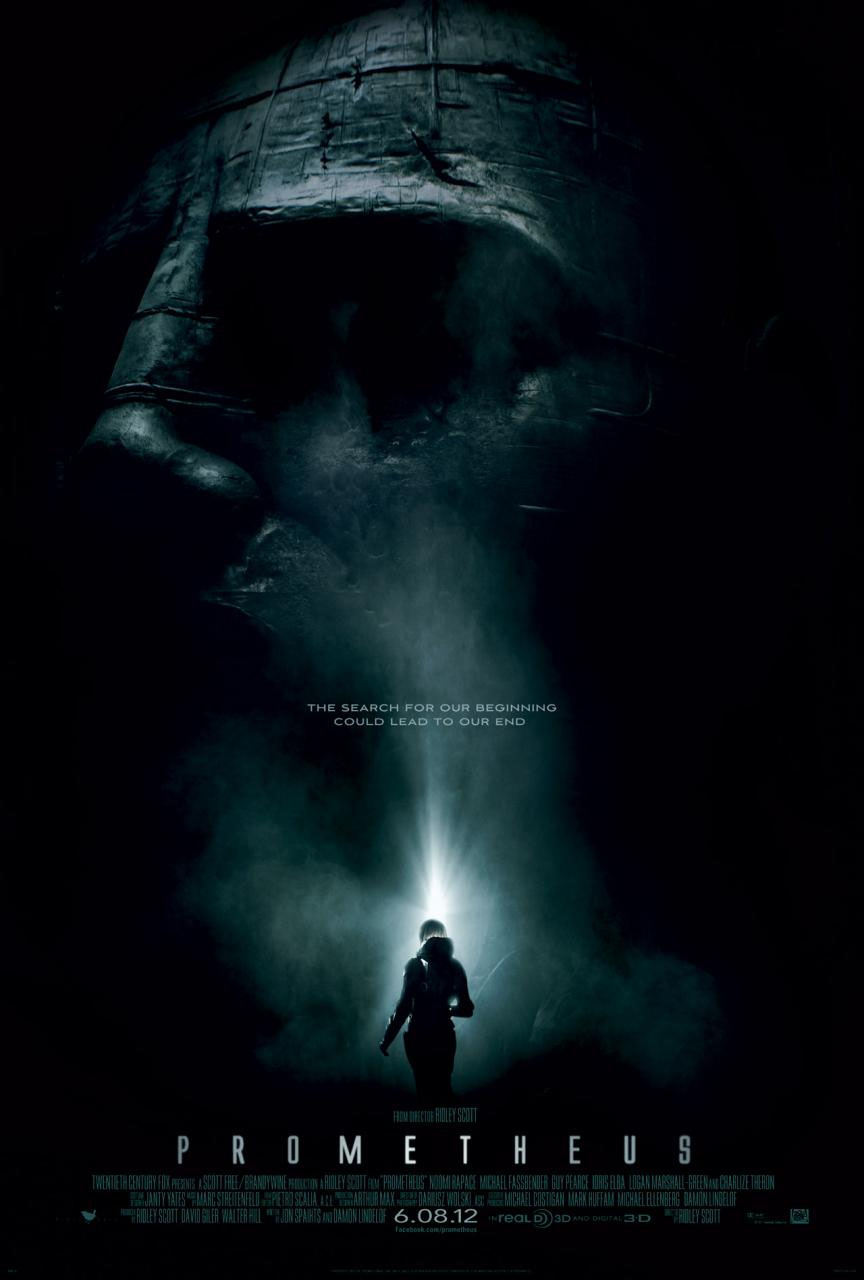
Playing witness to a long-standing director’s career can be fascinating, especially when said director enters his twilight years. While few of them would ever admit to it, any artist who has found an enduring critical success must eventually look at his oeuvre in terms of “legacy”, measuring his work against that of his peers and cinematic kin. For Ridley Scott, this self-evaluation brought him back to the bleakly-industrial and brilliant Alien, and a desire to see that world augmented. Like any artist with an eye trained on his own mortality, Scott chose to build on his Alien world existentially, and the resulting epic is Prometheus; a film somehow both ceaselessly mesmerizing and utterly baffling.

Continue reading

Argo (2012)

Argo begins with the events at the Iranian US embassy on November 4th, 1979, when protesters—incensed by their country’s inveterate political and societal turmoil—broke through the embassy gates and held the residents there for what would become a 444-day hostage situation. Serving as both setting and character introduction, this opening sequence is one of the most indelible and disquieting beginnings I have seen in the theater in a good long while, and provides us with a trove of useful info, both within the movie and without. Superficially, it pulls us headlong into the story, introducing characters and circumstances in a meticulously edited prologue, while building to a truly frightening climax that sets the whole picture in motion. Incidental to the exposition the scene provides is the realization that this is a seminal moment for Ben Affleck as a director. Argo is a strong film in many ways, yet this opening sequence suggests a caliber of talent not just absent from his first two titles, but altogether unaccounted for. It seems that Ben Affleck the Director is the real deal.

Continue reading

Indiana Jones: The Complete Adventures

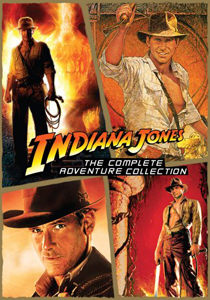
The “hero” as a concept or storytelling device is, and always has been, fluid. Some of us prefer the pure altruist—the Superman who does right simply because he knows what right is. Others need their heroes to be flawed or tragic, like Hamlet—angling for the light even as their blemishes define them. Others hanker for antiheroes, preferring Taxi Driver’s Travis Bickle, a psychotic knight in rusty armor. Indiana Jones is enigmatic in his heroism; vacillating between all heroic traits, occasionally embodying all at once. His position as an archaeologist leads him to scour the globe in the interest of saving and protecting precious antiquities. Yet isn’t the quest for history-defining curios inherently a quest of self-triumph? Dr. Jones, over the course of his story, is at once selfless and selfish, motivated one minute by his moral compass, and the next by the fame and glory latent in uncovering history’s secrets.

Continue reading

Looper (2012)

It’s a small fraternity of directors that have taken on the formidable task of helming a time travel movie. Between the potential for audience alienation that comes with heavy duty science fiction, and the third rail of time travel physics, it’s a wonder the group isn’t even smaller—which it is, when you amend the qualification to successful time travel movies. Measuring success in a time travel movie means measuring the success of the explanation of time travel alongside all the other stuff that a movie has to do well. It means walking a tightrope; a tightrope that Director Rian Johnson describes thusly, On one hand, the sci-fi nerd in me feels there’s a danger not explaining [the time travel], because it can look like plot holes. On the other hand, the story guy in me is like, ‘You know why that’s there, and that’s not what’s important to the story.'”  This is the central dilemma for Looper as a film, this balance between saying too much and not saying enough. Because while Johnson spends much of the film’s duration astounding the audience with an exceptional grasp of storytelling and world-building, his ambivalence about the film’s central device ends up blurring the whole.

Continue reading

The Master (2012)

Lead or follow. At one time or another some puffed up authority figure has pointed to these as your two options in life. Not both, and certainly not neither. With this edict comes the implication that a leader is what you should want to be. Leaders are powerful and impressive, and followers are simply everyone else. While the world tends to consist of only leaders and followers, the idea that we can and should choose our path is tradition. The Master is flooded with followers and the leaders who lead them, but even more so with the notion that these roles are changeable. In every leader resides a follower, and vice versa, and the side we show is ultimately a product of the other person in the room. This may seem like a minor epiphany, but as Paul Thomas Anderson proves in his latest opus, it can change the way you view the world, and it can change the way the world views you.

Continue reading

The Amazing Spider-Man (2012)

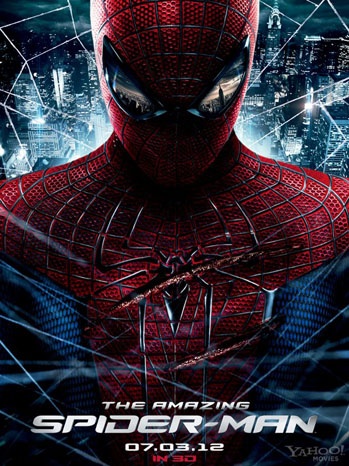
It’s not really possible to judge The Amazing Spider-Man on its own merits. That would be nice, but anybody older than 15 who sees Director Marc Webb‘s reboot must have also seen the original trilogy, which turns this all into a game of comparisons. And by comparison, Webb’s Amazing Spider-Man is mostly superior to Sam Raimi’s original film. How could it not be? In addition to having essentially none of the hurdles that Raimi dealt with, Marc Webb had the luxury of making a superhero flick in a post-Dark Knight world (more on this later). Past that, both fans and technology are more advanced then they were a decade ago, and the film that wowed us in 2002 simply hasn’t aged well. So, fine, Webb’s Webslinger wins, but does this victory deserve an asterisk? Depends on how you look at it.

Continue reading

Moonrise Kingdom (2012)

There’s a particular sect of artists of which Wes Anderson is almost certainly a member. A group of individual creatives defined almost exclusively by their style, while their substance grudgingly takes a backseat. This “style-first” aggregate often bears long-lasting fruit, as consumers have no trouble making quick reads on the group members’ products, and establish their obsessive fandom at the earliest possible stages of a career. Artists like Andy Warhol, David Bowie, Andy Kaufman, Dave Eggers, Nicki Minaj, et al, laid the foundation of their careers with a style that, at first glance, is primarily distinct for its “newness.” Certainly the question of content is raised, though only after plenty of gushing conversations about the artist’s “distinctive voice.” This has always been the dilemma for Wes Anderson, a director known universally for his visual style. Because while audiences spend countless hours discussing the color palettes and the symmetry and the fluid sets, a collection of wonderfully human characters parades right by them.

Continue reading

Modern Times (1936)

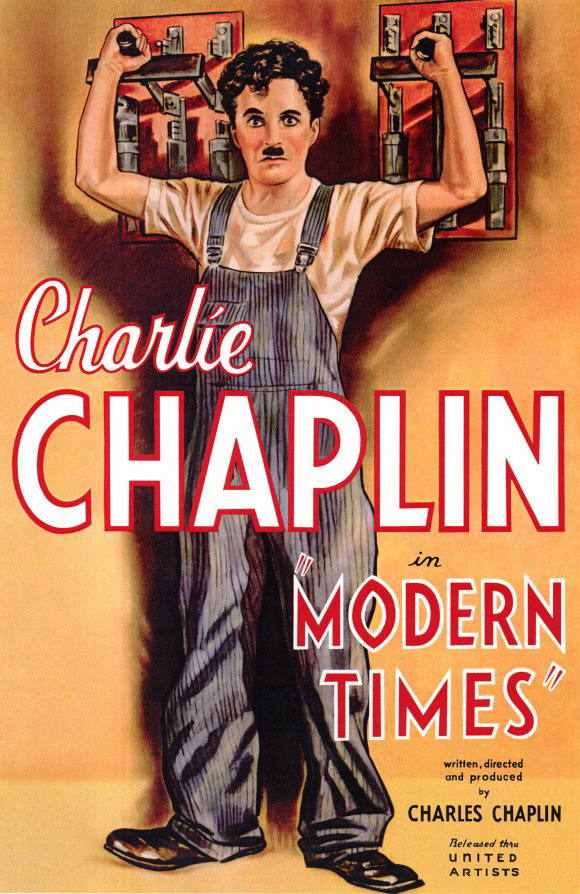
By 1930, “Talkies” were a Hollywood staple; a game-changing technology that slowly but surely eclipsed the landscape of film. Yet in 1936, Charlie Chaplin released Modern Timesan antediluvian “silent” film, and moreover, a thinly-veiled critique of the country’s capitalist devotion to industry; for the times, a brazen choice. Of the decision to avoid recorded dialogue Chaplin said: “Action is more generally understood than words. Like Chinese symbolism, it will mean different things according to its scenic connotation.” While not terribly poetic, this devotion to action effectively reveals Chaplin’s philosophy as a filmmaker. And it certainly jives with Chaplin the Performer, who spent years winning over audiences with his balletic pratfalls and boozer’s grace. As for Modern Times, it is a beautiful depiction of Chaplin’s one of a kind “action,” depicting an artist and performer deeply in his prime. For those of us more familiar with contemporary cinema (i.e. more talking in our movies), Modern Times is a wonderful introduction to a bygone era, and the waddling genius who will forever be associated with it.

Continue reading