Tag Archives: Oscar Nominee

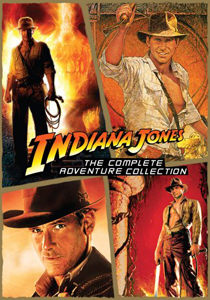
Indiana Jones: The Complete Adventures

The “hero” as a concept or storytelling device is, and always has been, fluid. Some of us prefer the pure altruist—the Superman who does right simply because he knows what right is. Others need their heroes to be flawed or tragic, like Hamlet—angling for the light even as their blemishes define them. Others hanker for antiheroes, preferring Taxi Driver’s Travis Bickle, a psychotic knight in rusty armor. Indiana Jones is enigmatic in his heroism; vacillating between all heroic traits, occasionally embodying all at once. His position as an archaeologist leads him to scour the globe in the interest of saving and protecting precious antiquities. Yet isn’t the quest for history-defining curios inherently a quest of self-triumph? Dr. Jones, over the course of his story, is at once selfless and selfish, motivated one minute by his moral compass, and the next by the fame and glory latent in uncovering history’s secrets.


Continue reading

The Master (2012)

Lead or follow. At one time or another some puffed up authority figure has pointed to these as your two options in life. Not both, and certainly not neither. With this edict comes the implication that a leader is what you should want to be. Leaders are powerful and impressive, and followers are simply everyone else. While the world tends to consist of only leaders and followers, the idea that we can and should choose our path is tradition. The Master is flooded with followers and the leaders who lead them, but even more so with the notion that these roles are changeable. In every leader resides a follower, and vice versa, and the side we show is ultimately a product of the other person in the room. This may seem like a minor epiphany, but as Paul Thomas Anderson proves in his latest opus, it can change the way you view the world, and it can change the way the world views you.

Continue reading

Moonrise Kingdom (2012)

There’s a particular sect of artists of which Wes Anderson is almost certainly a member. A group of individual creatives defined almost exclusively by their style, while their substance grudgingly takes a backseat. This “style-first” aggregate often bears long-lasting fruit, as consumers have no trouble making quick reads on the group members’ products, and establish their obsessive fandom at the earliest possible stages of a career. Artists like Andy Warhol, David Bowie, Andy Kaufman, Dave Eggers, Nicki Minaj, et al, laid the foundation of their careers with a style that, at first glance, is primarily distinct for its “newness.” Certainly the question of content is raised, though only after plenty of gushing conversations about the artist’s “distinctive voice.” This has always been the dilemma for Wes Anderson, a director known universally for his visual style. Because while audiences spend countless hours discussing the color palettes and the symmetry and the fluid sets, a collection of wonderfully human characters parades right by them.

Continue reading

The Avengers (2012)

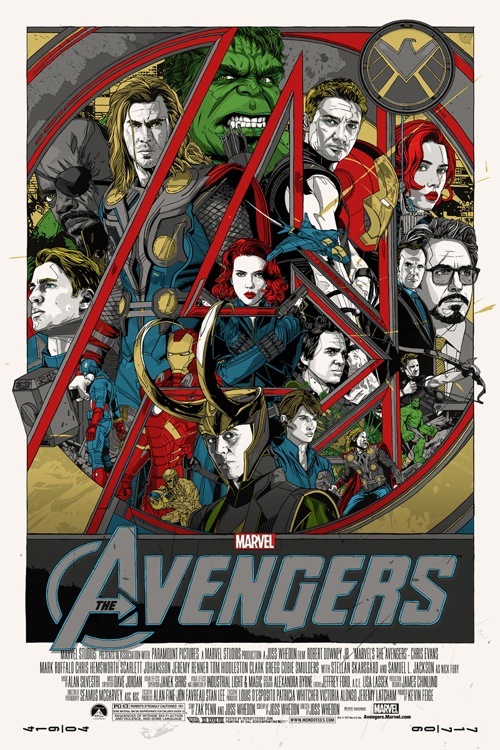
There’s no scenario where Joss Whedon gets the credit he deserves for The Avengers. Certainly he’ll be lauded for the cash this box-office bogart is already piling up, and critics seem impressed enough with the film to plant it firmly in the upper echelon of “comic book” movies. But the success Whedon has achieved is far loftier than that, encompassing years of Marvel canon, hoards of characters beloved to fans, and unparalleled expectations. Put another way: making this movie was an unprecedented challenge. And The Avengers isn’t perfect, though that was never really an option in the first place; there are far too many elements that would have to be handled flawlessly, far too much scrutiny from far too many directions to ever truly be called “perfect.” It is, however, as good as it was ever going to be, and considering the circumstances, that’s pretty damn good.

Continue reading

The Help (2011)

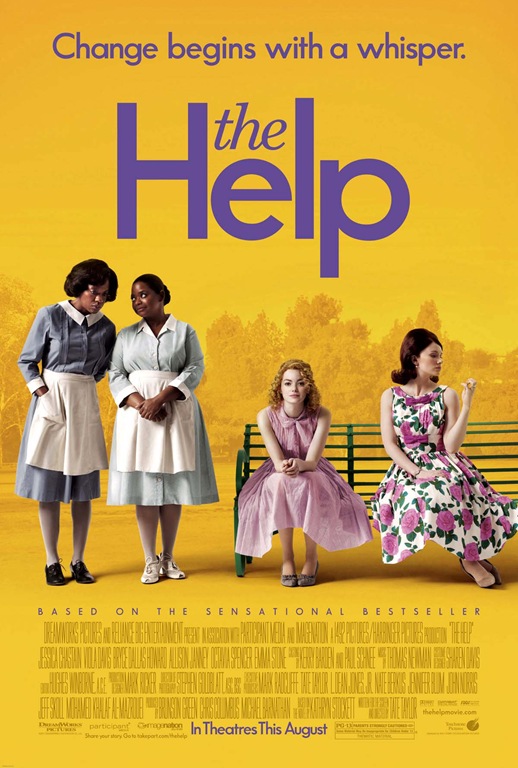
There are very few people anymore who can claim authentic, first hand knowledge of the Civil Rights movement. In the same way that I wouldn’t pretend to possess any particular insight into the fall of the Berlin Wall, having been alive during the 60s doesn’t grant you special insight into the race struggle. The only people who can really say that they were a part of things weren’t just alive in the 60s, but were decision-making adults with the self-awareness to adopt a position on one side or the other, and their numbers are dwindling. Which must explain why The Help, a film that simplifies and exploits one of this country’s most strained periods, and does so with broad, stereotypical character types and exchanges, has been nominated for Best Picture. Or it could just be that Viola Davis can make anybody like anything.

Continue reading

Extremely Loud & Incredibly Close (2011)

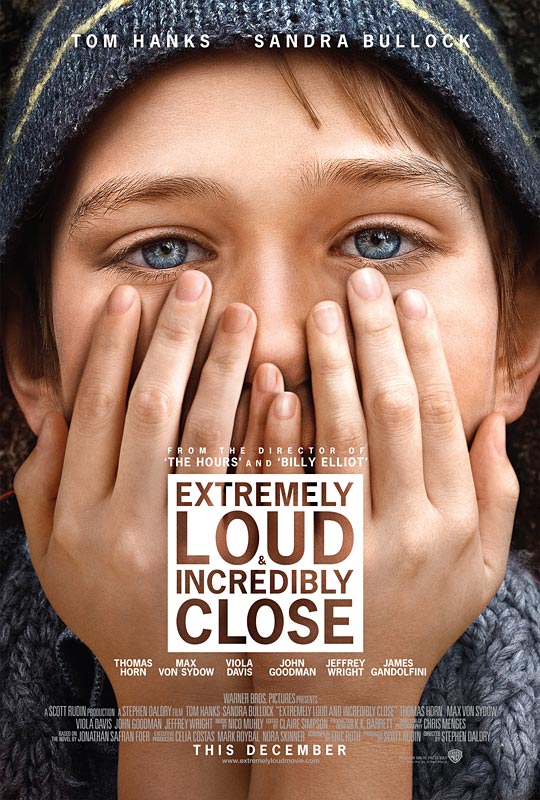
There should be a list somewhere of books that should never be adapted to film. While plenty of literature can make the leap from page to screen without much or any alteration, far more often a book is a book for a reason. Because while a book allows you to reach an emotional conclusion on your own, a movie forces you towards one. Which is unquestionably the case with Jonathan Safran Foer‘s 2005 novel; a narrative that, at a glance, is vibrant in the same way as a Little Miss Sunshine, with a host of quirky characters and a comical, yet emotionally-resonant tone. In a host of other ways however, Extremely Loud & Incredibly Close is a story far more inclined towards the written word than the big screen, and has pulled an Oscar nomination mostly on the weight of its dramatically moving and frustratingly manipulative approach.

Continue reading

Tinker Tailor Soldier Spy (2011)

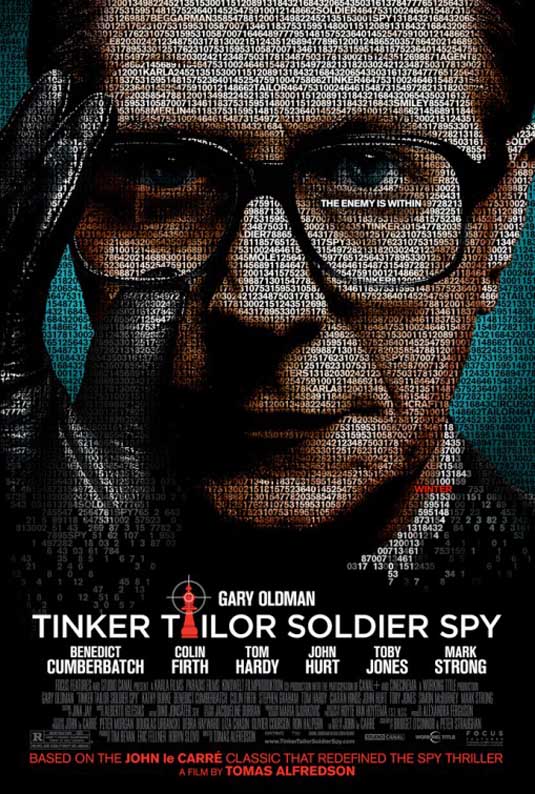
More and more the template for a spy film is “action first, story later–if at all.” This has mostly to do with the new opportunities provided by technology, but it also says something about contemporary audiences. Old school spy stories are intended to be convoluted, meandering whodunits, and vagueness doesn’t sit well with modern viewers, myself included. That said, anybody who puts Tinker Tailor Soldier Spy next to, for instance, Mission Impossible – Ghost Protocol will quickly come to appreciate the nuanced origins of the spy thriller. Tinker Tailor–Tomas Alfredson‘s follow-up to the critically successful and successfully recycled for American audiences Let the Right One In--is moody and stylish, recalling the lost art of skillful ambiguity.

Continue reading

The 2011 Wertzies : Part Three

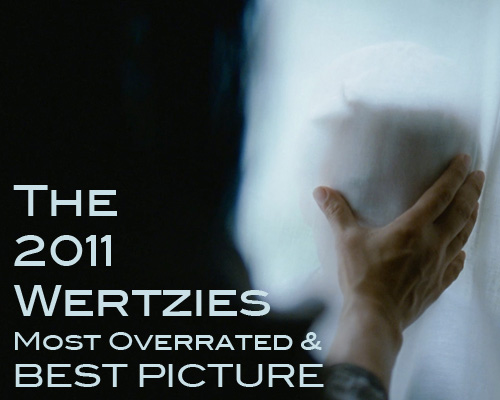
And finally, Part Three of the 2011 Wertzies. This post includes not only my thoughts on the Best Pictures of the year, but a new section looking at the year’s Most Overrated films.

Enjoy.

Continue reading

The 2011 Wertzies : Part Two

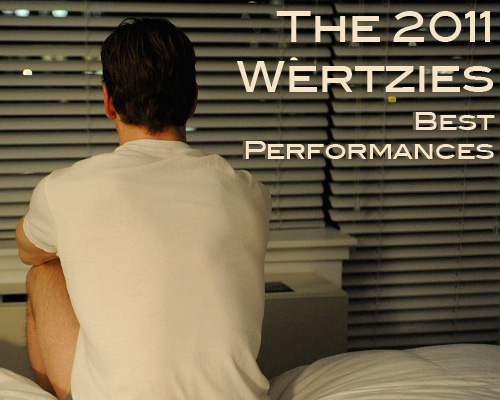
Here then is Part Two of the 2011 Wertzies. My thoughts on the year’s best performances. As a reminder, all Runners Up are featured in ascending order, with the Winner of each category coming at the end.

Enjoy.

Continue reading

The 2011 Wertzies : Part One

And so, the 2nd Annual Wertzies; my picks for the year’s best of nearly everything. I’m taking a slightly different tack this year, with expanded coverage of my picks and the Awards divided over three posts. Additionally, the format has altered a bit, with Runners Up revealed in ascending order, and each category ending with the Winner.

To be clear, I haven’t seen everything, nor do I consider these awards to be anything more than my humble opinion as an amateur film reviewer. Elaborate and considered these thoughts may be, but they are nonetheless informed as much by individual preference as real objectivity. And with that in mind, I eagerly await your supplemental thoughts and heated contradictions.

Enjoy.

Continue reading