Tag Archives: Oscar Nominee

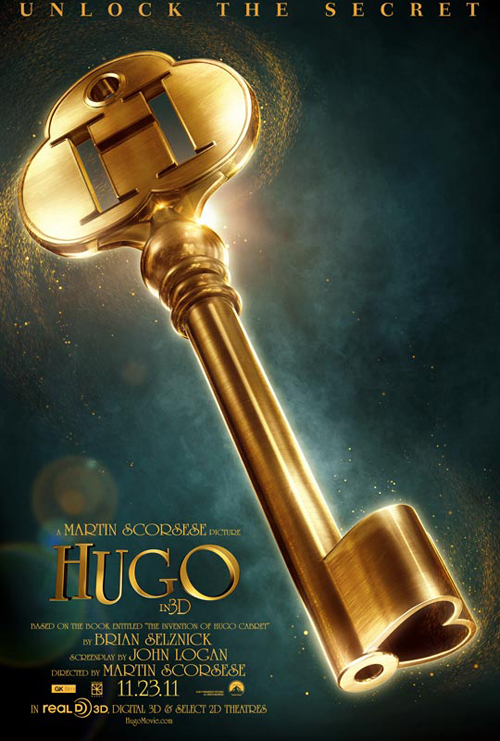
Hugo (2011)

This might be an adventure!” exclaims Chloë Moretz’s earnest Isabelle, shortly after meeting the titular Hugo in Martin Scorsese’s latest. And it’s true, Hugo certainly holds an adventure for its two lead characters. But that moment holds a deeper truth: the awareness that, for children, the world is still a magical place, capable of anything. There’s a kinetic excitement to being young and away from your parents, because possibility has an unknowable depth, and you haven’t yet been infected by the rot of cynicism. Scorsese, like many directors before him, plainly adores this moment in time, because for him it is connected unequivocally with the magic of the cinema.

Continue reading

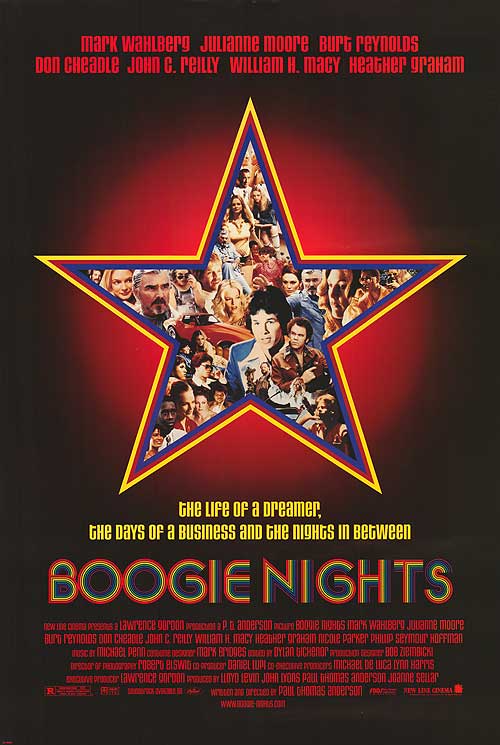
Boogie Nights (1997)

For my part, Paul Thomas Anderson is the most exciting director working today. I’ll even go so far as to say that he could end up one of the best directors of all time. Now you and I both know how absurd it is to make this claim about any director, and that it’s nothing more than an opinion. Still, it gives a pretty clear indication of my feelings on the man and his work. In fifteen years, P.T. has directed five features; one a solid genre flick which nobody has seen, another holds the clear frontrunner for Adam Sandler’s best performance of all time, and the other three are Oscar nominees, the last of which won two, despite losing Best Picture. It’s hard to appreciate this sort of success while still in the heart of a man’s career, but assuming the trajectory holds we’ll all surely be talking about it years from now. Anderson may fly a bit under the radar of the standard film goer; he doesn’t have the recognizable aesthetic of a Wes Anderson, or the Tarantino excess of personality. But there’s no denying that these are his contemporaries, and making a case for P.T. as the best of the bunch isn’t terribly difficult. That case would surely begin with an examination of Boogie Nights, Anderson’s dark and hilarious pornographic melodrama. In the shadow of his later, better films, Boogie Nights is only slightly less fantastic, less impressive, less finished. Nonetheless, it is an alarmingly great flick from a sophomore director, and properly kicks off the career of our generation’s Martin Scorcese.

Continue reading

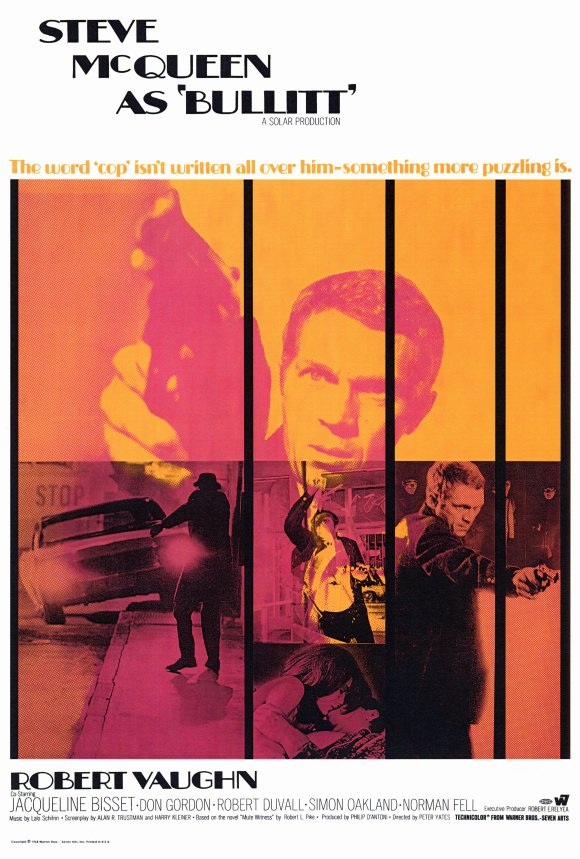
Bullitt (1968)

Though quantifying “cool” is and will always be more guesswork than anything, we seem to nonetheless know it when we see it. Certainly people knew it’s presence in Steve McQueen, the penultimate “cool guy” of the late 60s/early 70s. McQueen was nonchalant and effortlessly charming both in his films and real life, and with his affinity for cars and bikes, became the figurehead for celebrity leisure. Like James Dean before him, McQueen seemed to get by mostly on not giving a fuck, though McQueen’s mellow aloofness seems more natural than Dean’s cultivated independence. With Bullitt, McQueen and Director Peter Yates seem intent on bottling this charm and pouring it in large doses over the entirety of the film; a style that works pretty well, until you start worrying about those pesky little nuances like plot and character.

Continue reading

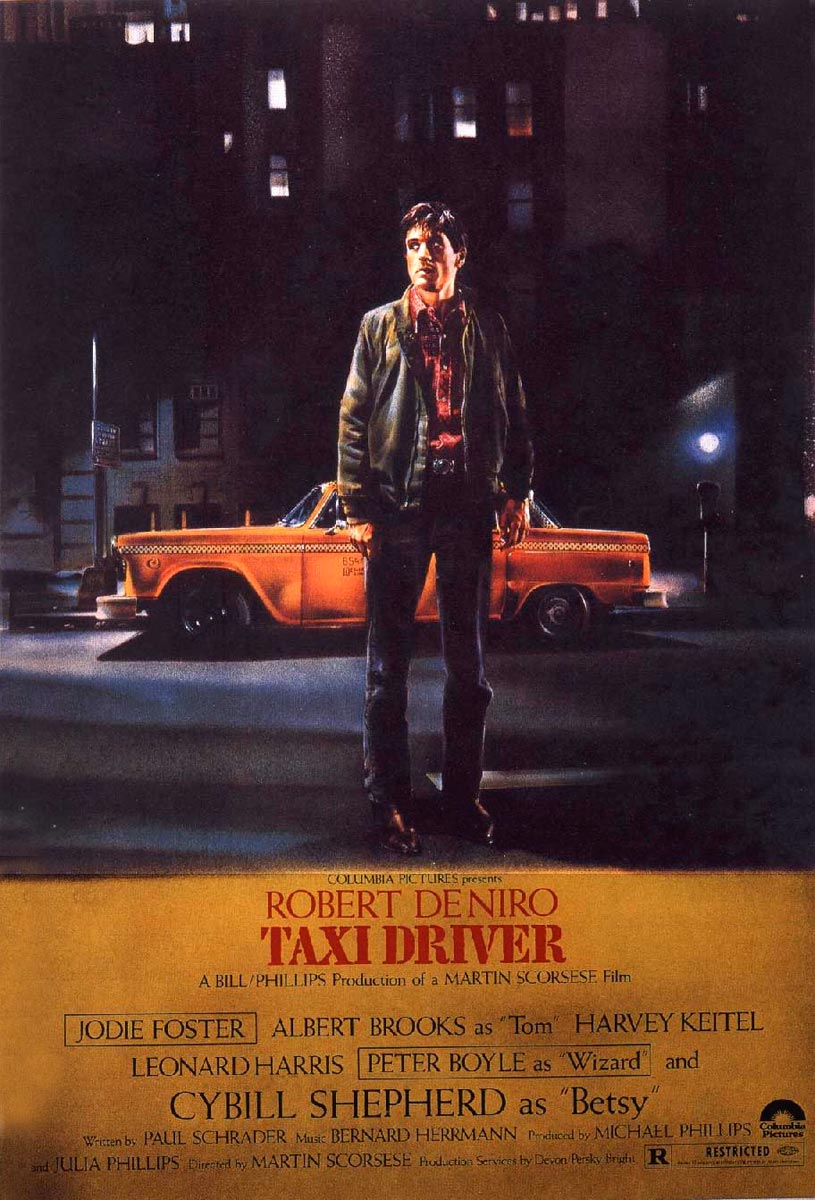
Taxi Driver (1976)

Martin Scorsese and Robert De Niro are New York City guys, through and through. Born there, raised there, and like a couple of Gangster Woody Allens, treating the city as their muse and making their best films there. It’s with this unyielding connection in mind that I found myself struck by Taxi Drivers portrayal of the Apple. New York City is a hellhole, covered in sweat and grime, its streets trafficked by hookers and killers. It is a truly miserable place. This could mean a number of things from the Director’s point of view: it could be the truth of the city’s underworld in the 1970’s, or just the way the city looks to Travis Bickle, or, most probably, it is simply the way Scorsese sees the world. Dark and dirty, with the occasional intimation that people aren’t entirely hopeless.

Continue reading

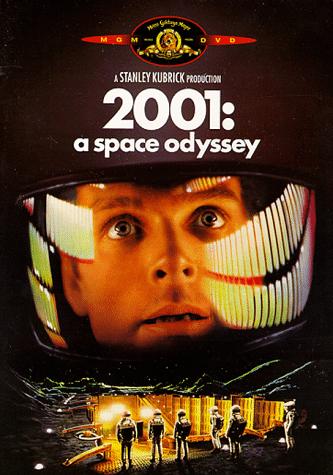
2001: A Space Odyssey (1968)

There are films that you watch and there are films that you experience, and in almost every case, a Stanley Kubrick film will fall into that second category. This becomes clearer when you tell somebody that you recently watched one of his films and they ask you what it was about. Try and answer. Sure, you can give a plot summary, but trying to articulate what the film was about is like trying to describe color to a blind person. There’s simply too much there. Never is this truer than in 2001: A Space Odyssey, Kubrick’s legendary masterpiece devoted to the majesty and mystery of our universe. Kubrick himself said in a 1968 interview, “You’re free to speculate as you wish about the philosophical and allegorical meaning of the film—and such speculation is one indication that it has succeeded in gripping the audience at a deep level—but I don’t want to spell out a verbal road map for 2001 that every viewer will feel obligated to pursue or else fear he’s missed the point.” His purpose was not to tell us what to feel, but simply to make us feel something immense. If, somehow, you come out on the other side of this remarkable piece of cinema without being moved, without feeling something, then friend, you’re doing it wrong.

Continue reading

Citizen Kane (1941)

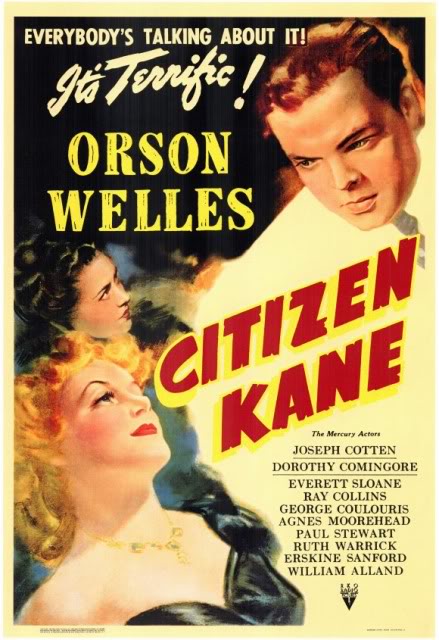
My latest viewing of Orson Welles‘ career-defining masterpiece was a palette cleanser, pulling me with great finality out of the quicksand of the 2011 Oscar race and refocusing my scope. Sometimes it takes a great film to do this, and through most of my career as a watcher I’ve used tent-pole titles to widen my perspective. This is a necessary joy at times, but Citizen Kane is, obviously, far more than just a refreshing film from another era. It is a complex portrait of one of this country’s most successful and monstrous businessmen, and the starting gun of a media war. It is the shining achievement of Welles’ career, as well as his undoing. It is considered by many to be the greatest film of all time.

Continue reading

The Town (2010)

60 Second Reviews

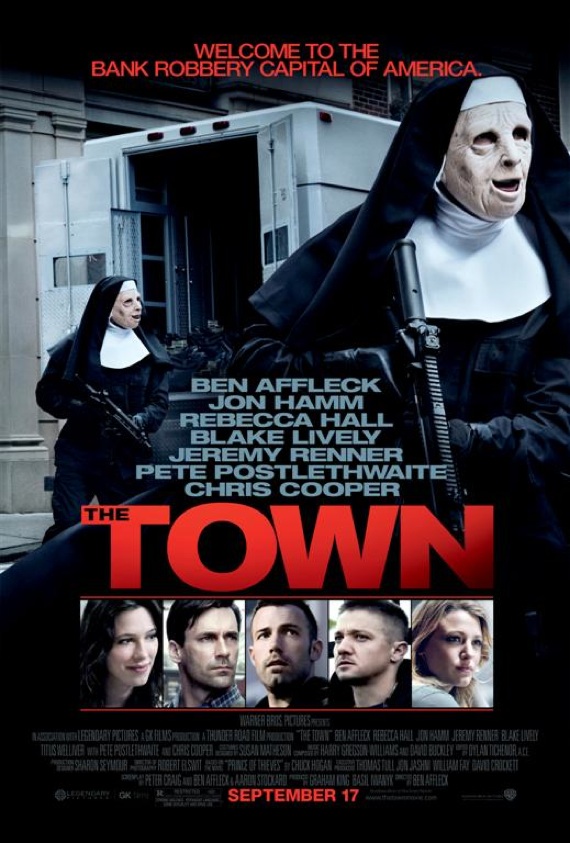
The night after my viewing of The Town, I had a dream that Jon Hamm was after me. It wasn’t a complex dream and I’ve mostly forgotten it, but I woke up feeling particularly tense. That dread feeling is what Ben Affleck‘s strongest film to date does so well; tension and anxiety and excitement, all are relevant adjectives for The Town, and all are present throughout. While Affleck may be a bit up-and-down as an actor, he seems to be finding a real niche as a director.

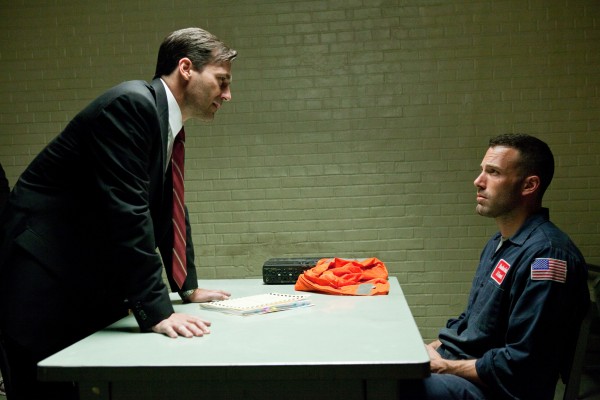
Ben Affleck is Doug MacRay, the leader of a professional foursome of thieves. Their heists are flawlessly executed, even on the occasion when MacRay’s partner James (Jeremy Renner) loses his head. In hot pursuit of Doug and his boys is Special Agent Adam Frawley (Hamm). Despite his better judgment, and a glimpse at a future with the charming Claire (Rebecca Hall), MacRay can’t get clear of the claws of local don The Florist (Pete Postlethwaite), or the depth of his Charlestown roots.

With his nomination, I assumed Jeremy Renner would be a scene-stealer, but the film’s biggest achievement is its ensemble. Renner is, as always, fabulous. He has a persistent restraint, a remarkable way of playing intense scenes at a slow-burn, and not just discharging his anger. Renner though, is hardly the key performance. Jon Hamm takes what could have been a rote “good guy” antagonist, and makes him a genuine villain. His Frawley is interested solely in bringing justice, and seems capable of literally anything to get at it. Meanwhile, plenty of smaller parts are delivered maximally. Blake Lively gets well outside of her comfort zone as a slutty addict; Postlethwaite is, as ever, a supreme talent and ominous creep; and Chris Cooper shows up for all of two minutes to steal a scene. As it turns out though, Affleck is perhaps the biggest surprise. Something about his performance here suggests he is finally coming into himself. A decade ago Affleck’s Doug MacRay would have been louder and sillier and more melodramatic, but here he is disciplined and subtle, and in complete ownership of one of his best roles.
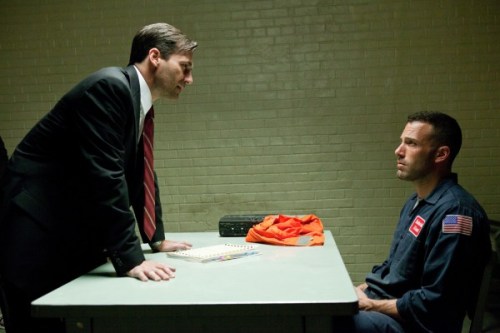
After The Town, it’s clear that Ben Affleck is on the rise. Though perhaps a bit long in coming, maturity seems to have arrived in time to make him a genuinely exciting filmmaker.

Animal Kingdom (2010)

60 Second Reviews

What Animal Kingdom does best is shock you. The violence of Director David Michôd‘s Australian gangster film is mostly sudden and stark. It comes out of nowhere, and once it has passed the film returns to an even-keeled plod, as though nothing has happened. This is certainly intentional, and the pie piece that makes Animal Kingdom worth watching.

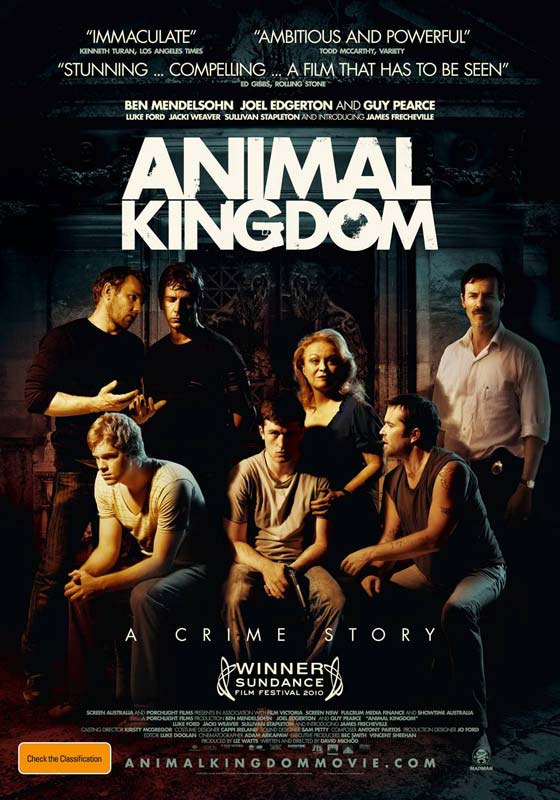
Newcomer James Frecheville plays Josh “J” Cody, the nephew of the notorious Cody brothers; bank robbers, drug dealers, nice guy villains. As the local law close in on the Cody family, J finds himself caught in the middle, despite being essentially nonexistent in every interaction he has. Frecheville, presumably at the direction of Michôd, plays J with precisely the kind of permeating detachment you expect from a teenager. While this is an excellent theoretical choice for the tone of the film, it ends up leaving J a hard character to care about.

As J’s eerily manipulative Grandma Janine and the matriarch of this nuclear crime syndicate, Jacki Weaver has leapt out with an Oscar nomination as the most notable member of this cast. Certainly her performance is strong, though it takes awhile to get going, and even once she hits her stride it feels like equal parts performance and direction. A standout nonetheless, Weaver is not the only one in this performance-heavy composition. Guy Pearce, in one of his many recent minimal appearances, is as intriguing as ever. His Detective Leckie seems the only one in opposition to the Codys who has some idea of what’s going on. Meanwhile, Ben Mendelsohn as J’s Uncle Pope Cody is haunting and shadowy. Pope is the family’s active leader (behind its Oz-like grandmother) and his persistent mania keeps him unchallenged. The film’s one chief weakness is how much the story hinges on its final moment. Without revealing anything, this is a slow-paced film with a huge payoff. Without said payoff, it’s not much of a film at all.

Animal Kingdom is a relatively straight-forward genre film, with pacing deliberate and measured, and more than one career-defining performance.

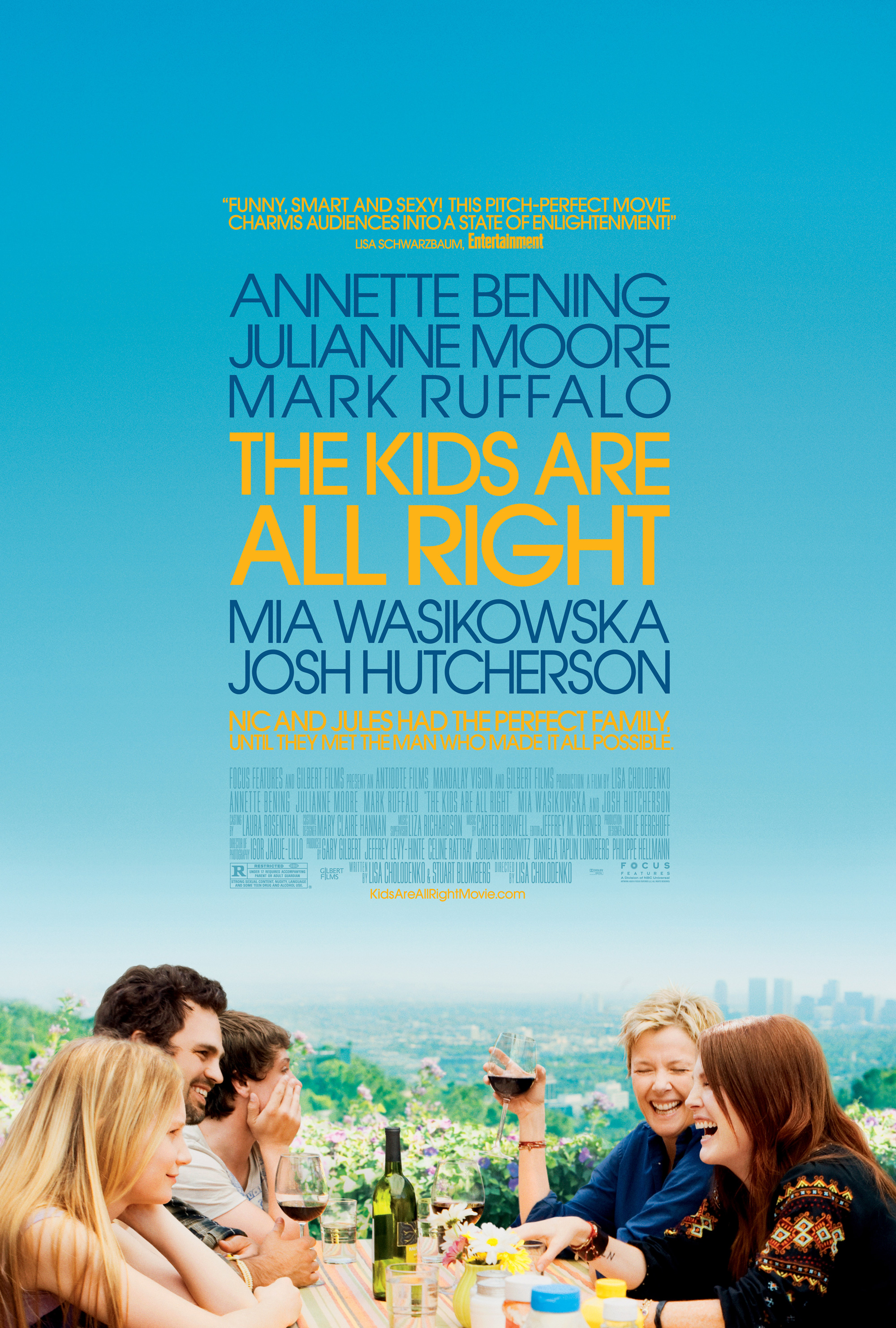
The Kids Are All Right (2010)

It’s a fucking marathon,” says Julianne Moore‘s Jules of marriage in The Kids Are All Right. You stop seeing the other person. You just see weird projections of your own junk.” This is nothing new, this stripped down reveal of the intimacies of marriage. If anything, the big screen is prime real estate for bared souls and uncomfortable break downs. Though Kids centers on a lesbian couple, the big picture problems of this marriage are no different then any other. Nor are the struggles with raising children ultimately any stranger. No, what makes Writer/Director Lisa Cholodenko‘s film worth watching is the monkey wrench of a sperm donor and the complexity of a family making room for one more.

Continue reading

Biutiful (2010)

People always say that movies are a means of escape. Whether science fiction or a love story, the dark of a movie theater allows us a respite from the monotony of everyday life, right? If so, then where does Biutiful fit in? Who could call this an escape? Surely there’s drama here, and a kind of kineticism that’s as exciting as it is alarming, but the grief is almost too much to bear; a degree of sprawling sadness no one could ever be thrilled by or even prepared for. There’s little point to telling a story so heartbreaking that we as the audience are taken past our limits, nor is there much to be said for exercises in extremes. No, to justify doling out anguish with such abandon there must be a point. Grasping the purpose of Biutiful is a bit like pulling out a thoroughly-embedded splinter, and in the end, just as satisfying.

Continue reading