Tag Archives: Entertainment

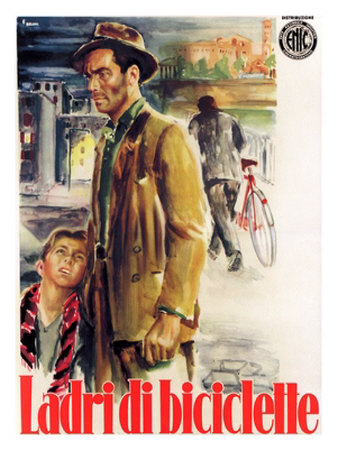
Bicycle Thieves (1948)

Desperation.  A theme found in an endless collection of stories and one that never lessens in it’s ability to impact us.  The power of this theme comes from the consequences of desperation, specifically the dramatic loss of honor that seems so inevitably tied to it.  It’s this universal emotion that allows Vittorio De Sica‘s Bicycle Thieves to remain so consistently effecting.  The story is simple, and not at all burdened with multiple dilemmas.  Just one: survive.  Survive for family, survive for honor, just survive.  Because this, more than anything else, is the point of existence.

Continue reading

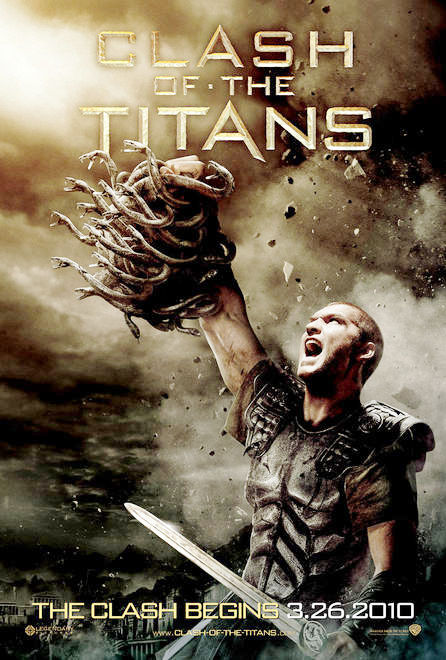
Clash of the Titans (2010)

Clash of the Titans is a train wreck; a 180 million dollar plus train wreck, where the train is painted bright red with flames on the side, and filled with thousands of faceless extras, and the sky is wholly computer generated for no good reason, and Sam Worthington is the conductor, and he’s yelling…a lot.

Continue reading

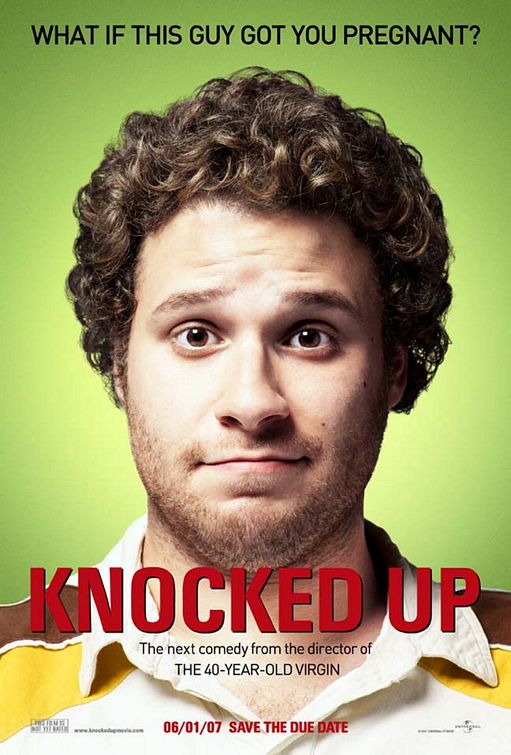
Knocked Up (2007)

The simplest way of putting it is to say that Knocked Up is Judd Apatow‘s best film.  I hesitate to say “best work” as there are so many Freaks and Geeks loyalists out there, including yours truly, but the completeness of Apatow’s second film rivals his prematurely ended and wonderfully nostalgic TV show, and I’m not sure it’s a stretch to say it may be the best thing he ever does.  Don’t get me wrong, I loved Funny People, and I’ll certainly pay eight bucks to see whatever comes next, but following the uncontrolled kookiness of The 40 Year Old Virgin and coming before the pure self-indulgence of his Sandler/mid-life depression/look at my wife vehicle, Knocked Up seems to be a moment of near perfection on the unpredictable trajectory of Judd Apatow’s career.

Continue reading

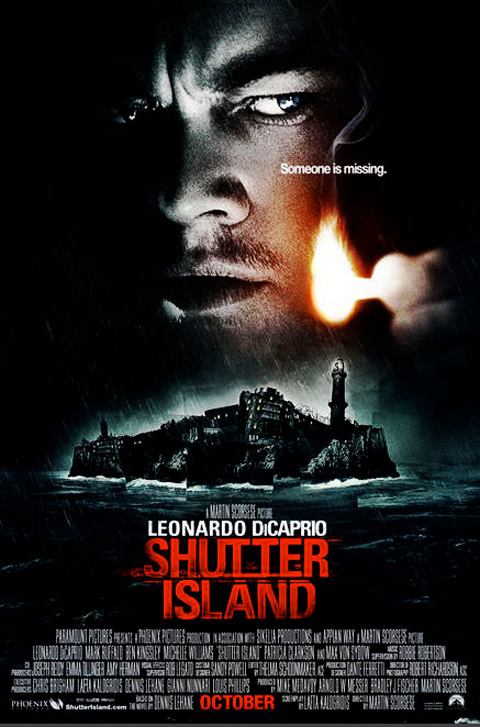
Shutter Island (2010)

There are a number of themes present in Martin Scorsese‘s Shutter Island, but the one most significant to the experience of the film is uncertainty.  From the first moment we meet U.S. Marshal Teddy Daniels (Leonardo DiCaprio) and his partner Chuck (Mark Ruffalo), we’re thrust into a world of pure pandemonium, where it’s not just the chaos of the criminally insane that keeps us intensely uneasy, but also the aloof and decidedly dubious men in charge of the facility on the island.  There’s nothing here to hold on to, and no technique sets an audience on edge quite so effectively.  At one point in the film Teddy comes upon the cell of George Noyce (Jackie Earle Haley), one of the more lucid inmates and a man Teddy has been searching for.  The two men bicker, canvassing their situation while keeping us firmly in the fog, then Noyce comes face to face with the Marshal, “Don’t you get it…?  You’re a rat in a maze.”  He may as well be looking right through the lens, into the audience.

Continue reading

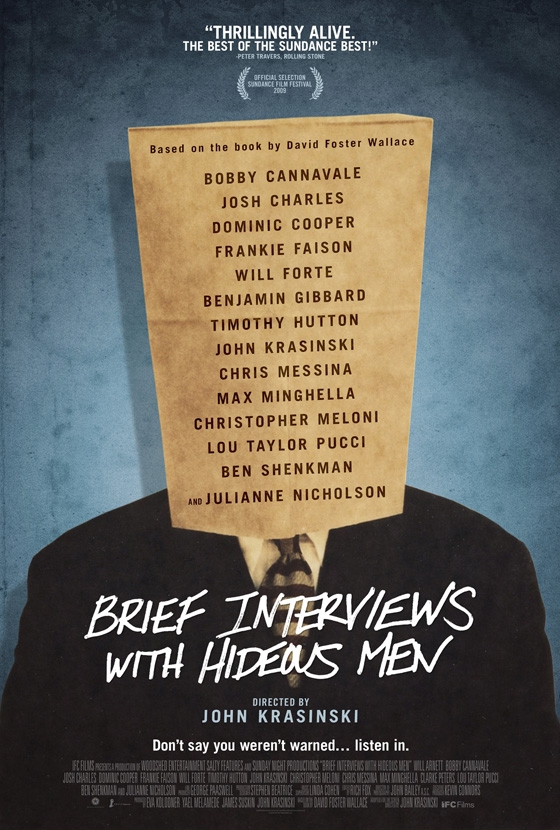
Brief Interviews with Hideous Men (2009)

Most of us have loved a book passionately.  There are at least five or ten that I have read more than twice, and inevitably I end up considering how it might adapt to film.  And for all the things that might work, and for all the things that certainly wouldn’t, the two elements that most often keep a book from serious consideration for adaptation are length and structure.  Books don’t work on a timeline, nor are they constrained by acts.  Regardless of the merits of either genre, the gap between the two feels evident here, as Brief Interviews with Hideous Men seems often confused and unsure of its legs as a motion picture.

Continue reading

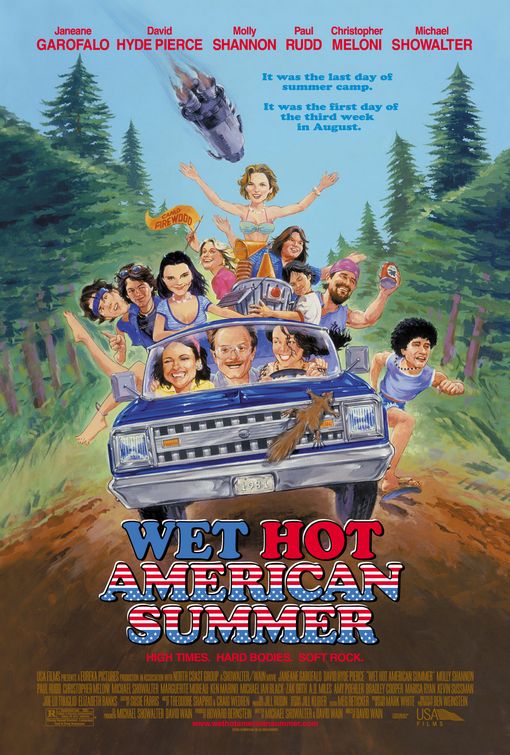
Wet Hot American Summer (2001)

The book of my life would have a good portion devoted to college.  So much of the person I am today was molded by those years of debaucherous youth.  Most of my friendships, most of my favorite memories, many of my firsts.  And as the distance grows, so does the nostalgia.  All the ridiculous moments and inside jokes seem more colorful in hindsight, and if there is anything about David Wain‘s Wet Hot American Summer that seems unflawed, it’s this same concept.  Like almost no other movie, Wet Hot achieves its real distinction in the joy of repeated viewings.  More than twenty if you really want to do it right.  Bizarre absurdity, which much of this movie banks on, becomes less offensive as it grows more familiar.  Not unlike the average college experience.

Continue reading

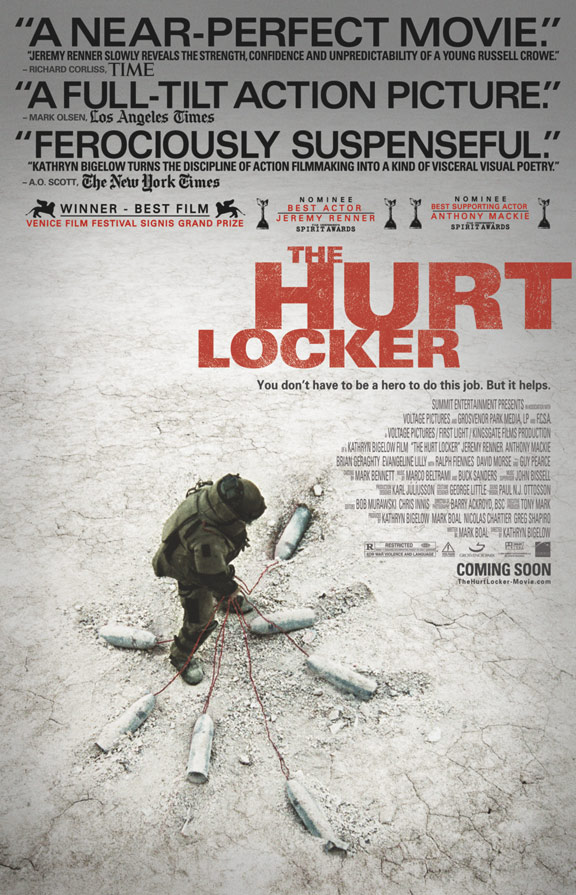
The Hurt Locker (2009)

With The Hurt Locker, I ended up watching a very different film than I intended to.  The plan was to sit down and enjoy a dramatic war movie with nuanced performance and subtlety; an Oscar contender.  By the end though, I was watching a high suspense thriller that happens to take place in Iraq.  It’s not an insignificant difference, and it was one I needed to make before I could fully appreciate what I was watching.  Expectation is often the bane of a viewer’s existence, and that’s never more true than when one finally watches an Academy nominee.  The film was released on June 26th and Oscar-buzz began shortly thereafter.  Ever since then, our unformed opinions have been molded by everything BUT the movie itself.  I hate this for a number of reasons, but mostly because it’s unavoidable.  Either see it opening day, or go live in a cave.  Otherwise you had better be prepared to do battle with the forces of subjective opinion, because brother, they’re a-comin.

Continue reading

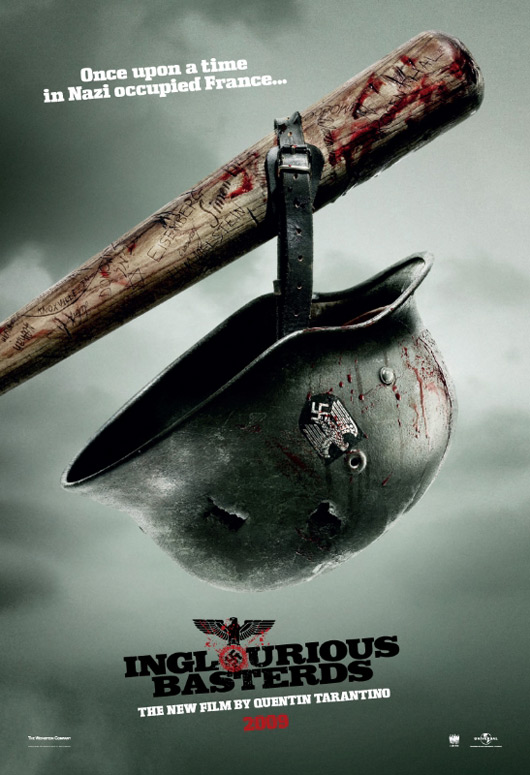
Inglourious Basterds (2009)

The third act of Quentin Tarantino‘s Inglourious Basterds finds the Nazi elite mingling languidly in a quaint and gorgeous theater in Paris.  They are here to witness the debut of Joseph Goebbel’s latest film, Nation’s Pride, an account of Private Frederick Zoller’s (Daniel Brühl) war heroics, wherein he killed hundreds of Americans with only a gun and his German cunning.  From Bormann, to Goebbels, to Hitler himself, the Third Reich’s most distinguished members are in attendance to celebrate a mass slaughter carried out by one of their own.  And he no more than a private in Hitler’s army.  Zoller’s exploits feed their nationalism, their lust for victory, and as the lights in the theater dim and the film rolls, Goebbel’s film finds a ruggedly handsome Frederick Zoller killing one American after the next for an eternity.  The audience is held captive in their delight, their sweaty, angry faces beaming with a rapture both large and terrifying.  For you see, according to Quentin, Nazis are simply irritable nerds, and death is their porn.

Continue reading

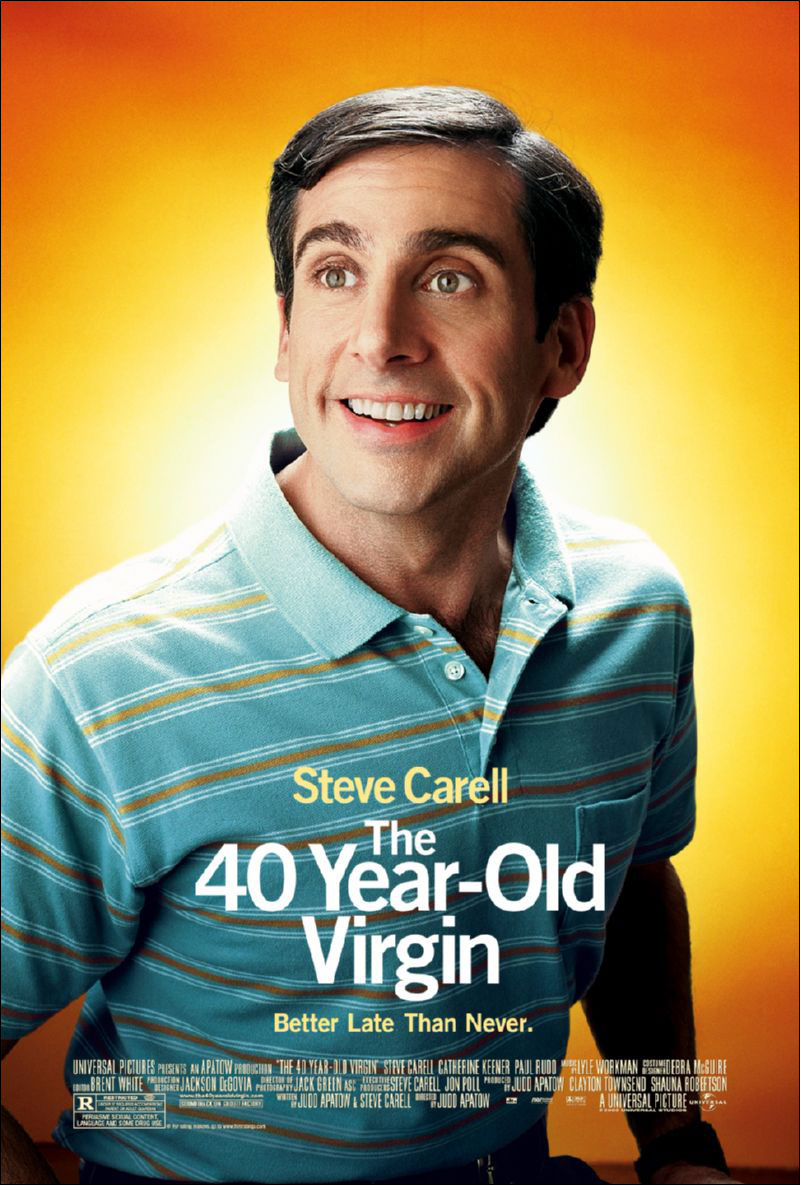
The 40 Year Old Virgin (2005)


Judd Apatow‘s IMDb profile is weighted surprisingly towards films he’s produced.  As of today, he has 38 completed productions with another 10 in development, compared to 8 directorial features and TV shows (including one episode of The Larry Sanders Show).  Even his writing credits number in the mid-20s.  It’s this space between projects that forces the movies he has directed under a magnifying glass.  If he felt like it was good enough to direct and not just throw some money behind then I’m especially curious to see what the fuss is about.  On top of that (and this is a point I’ve made before), Apatow’s directed projects have an element of realism lacking in his productions.  Whether it’s taste, or effort, or simply coincidence, the films he’s directed work on a loftier plane.  In the case of The 40 Year Old Virgin this line, so evident when comparing, for example, Walk Hard to Funny People, seems to bleed a little bit, finding it’s reality through a thick pane of glass fogged by touches of absurdity and breeches of aggression.

Continue reading

Invictus (2009)

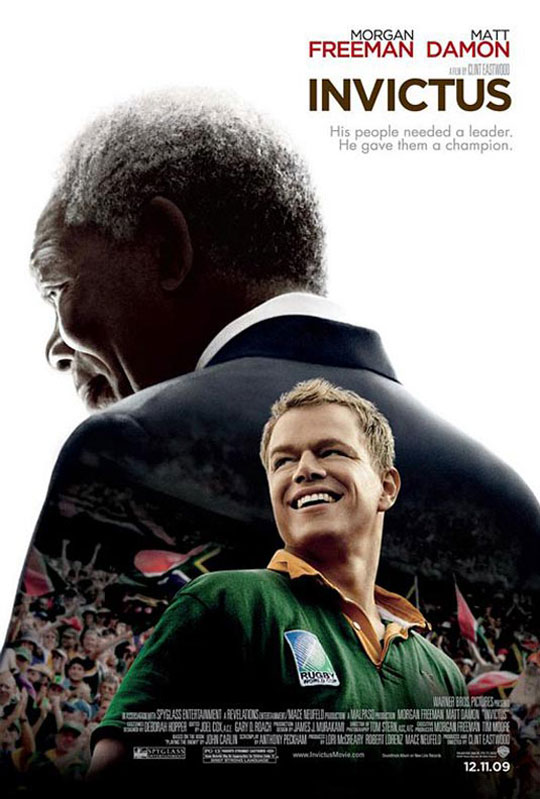
When the World Cup arrives this summer, we’ll see a common banner lining every pitch.  One that reads “SAY NO TO RACISM.”  As a young American, this seems a relatively dated sentiment, but a friend more savvy to the international scene explained it to me: international soccer offers racial tension a passionate arena to catch flame, and all kinds of race resentment is tied into a country’s national pastime.  These already intense matches become entwined with the immensely heated conflict of color, and feverish support of one’s team only fuels the anger.  So the banners seem a sad necessity in a twenty-first century still dealing with the ignorance of the past, and it’s this awareness that motivates Invictus. A story that appraises race relations as the simple matter they can be at heart, while ignoring the complex creature they truly are.

Continue reading