

Tag Archives: Oscar Nominee

Ghostbusters (1984) & Ghostbusters II (1989)

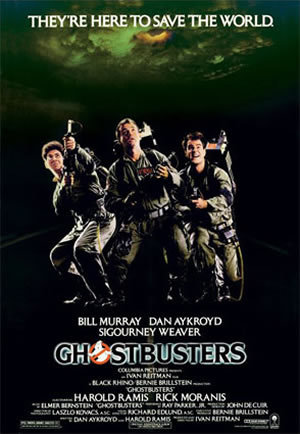
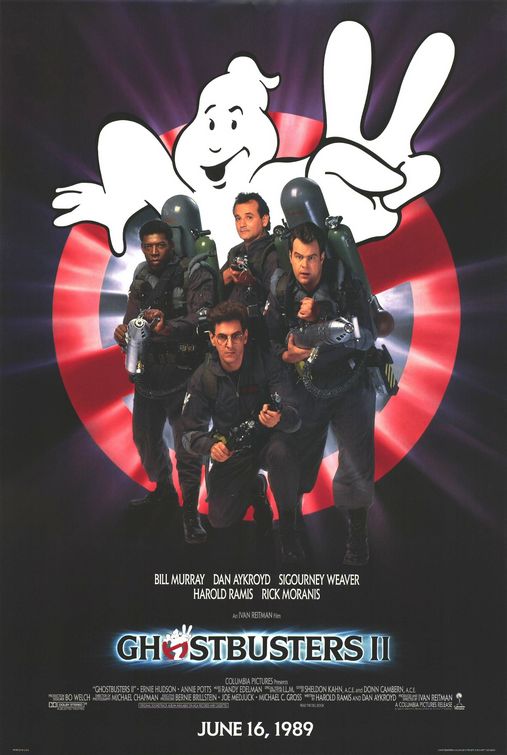
Ghostbusters.  Oh Ghostbusters.  It’s like remembering the first girl you ever had a crush on, your best friend, and most of your favorite toys, all at once.  Also, there was Ecto-Cooler.  These two movies were easily the most viewed of my childhood, along with the cartoon, and of course any merchandise was a must have.  Looking back it’s hard to say just what it was about this story that pulled me in so utterly.  I was fascinated by ghosts, though there’s very little in the movies that could be considered anything other than spectral slapstick.  I certainly appreciate Bill Murray, though watching the films now I see just how much of his performance the kid version of me didn’t register.  I suppose it could have been simply a “right place, right time” situation, or my parents bringing a movie to me that we could all appreciate together, or even just all the amazing toys.  Whatever the case, the Ghostbusters franchise has been with me since near birth, and watching these films again as an adult, with hopefully a more critical eye, I think it’s safe to say I’ll be talking about them until the day I die.
Continue reading

The Hurt Locker (2009)

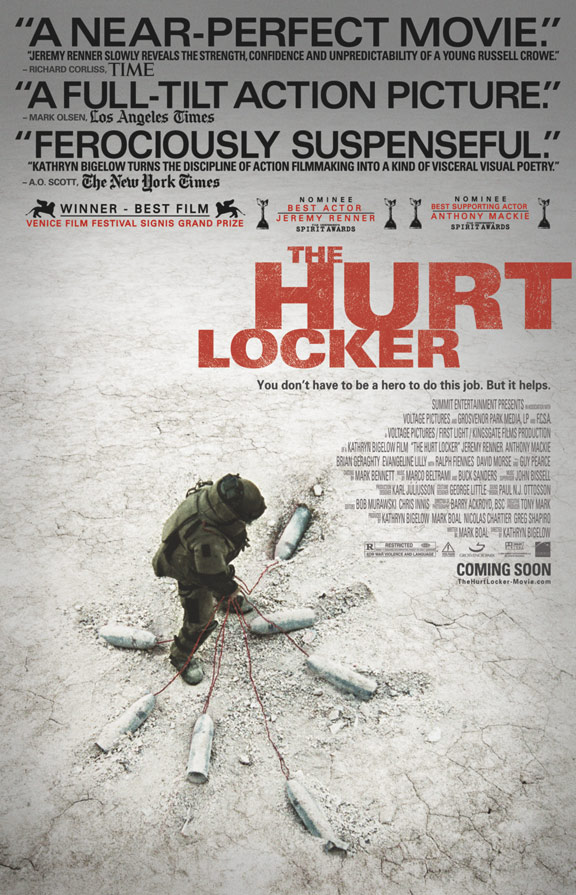
With The Hurt Locker, I ended up watching a very different film than I intended to.  The plan was to sit down and enjoy a dramatic war movie with nuanced performance and subtlety; an Oscar contender.  By the end though, I was watching a high suspense thriller that happens to take place in Iraq.  It’s not an insignificant difference, and it was one I needed to make before I could fully appreciate what I was watching.  Expectation is often the bane of a viewer’s existence, and that’s never more true than when one finally watches an Academy nominee.  The film was released on June 26th and Oscar-buzz began shortly thereafter.  Ever since then, our unformed opinions have been molded by everything BUT the movie itself.  I hate this for a number of reasons, but mostly because it’s unavoidable.  Either see it opening day, or go live in a cave.  Otherwise you had better be prepared to do battle with the forces of subjective opinion, because brother, they’re a-comin.

Continue reading

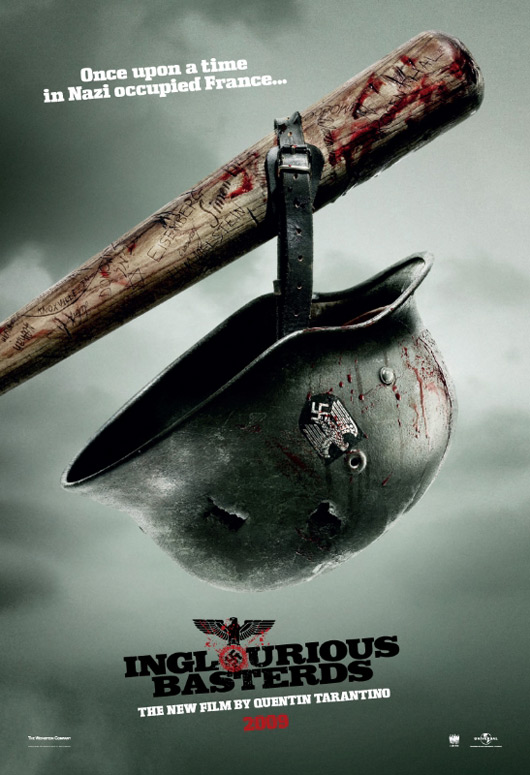
Inglourious Basterds (2009)

The third act of Quentin Tarantino‘s Inglourious Basterds finds the Nazi elite mingling languidly in a quaint and gorgeous theater in Paris.  They are here to witness the debut of Joseph Goebbel’s latest film, Nation’s Pride, an account of Private Frederick Zoller’s (Daniel Brühl) war heroics, wherein he killed hundreds of Americans with only a gun and his German cunning.  From Bormann, to Goebbels, to Hitler himself, the Third Reich’s most distinguished members are in attendance to celebrate a mass slaughter carried out by one of their own.  And he no more than a private in Hitler’s army.  Zoller’s exploits feed their nationalism, their lust for victory, and as the lights in the theater dim and the film rolls, Goebbel’s film finds a ruggedly handsome Frederick Zoller killing one American after the next for an eternity.  The audience is held captive in their delight, their sweaty, angry faces beaming with a rapture both large and terrifying.  For you see, according to Quentin, Nazis are simply irritable nerds, and death is their porn.

Continue reading

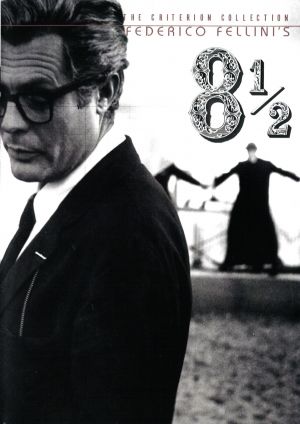
8½ (1963)

The characters of Federico Fellini‘s are obsessed with age.  Apart from the occasional young person who somehow finds their way into a scene and is simply too naive to know any better, or to care, the chief characters range in age from their late 30s to nearly bedridden and all of them are desperate to regain that which is lost.  The men all have mistresses far younger than they, the women make themselves up literally and with feigned indifference.  While this is not the point of , it is significant to it.  This film is about the fear of commitment, both artistic and emotional.  Allowing age to run rampant in the way it does here, with barrages of the elderly ambling about in the sunlight (in a place so strongly resembling the afterlife it’s no wonder nothing gets done) and women whose usefulness runs out around the age of 55, suggests to the audience that time is fleeting and commitment is an anchor.  Freedom to pursue whatever you want comes at the cost of not being tied down.  To what?  Your producer, your crew, your cast, your friends, your wife, your mistress, your ideas, your ideals, yourself.

Continue reading

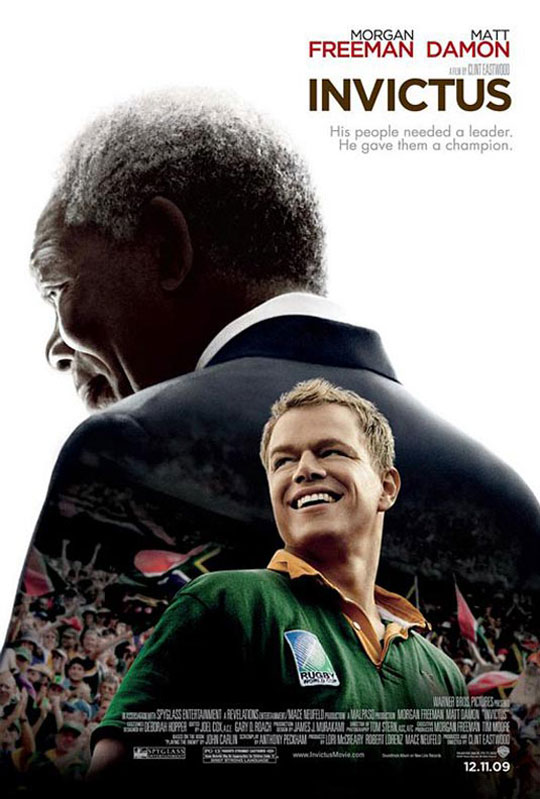
Invictus (2009)

When the World Cup arrives this summer, we’ll see a common banner lining every pitch.  One that reads “SAY NO TO RACISM.”  As a young American, this seems a relatively dated sentiment, but a friend more savvy to the international scene explained it to me: international soccer offers racial tension a passionate arena to catch flame, and all kinds of race resentment is tied into a country’s national pastime.  These already intense matches become entwined with the immensely heated conflict of color, and feverish support of one’s team only fuels the anger.  So the banners seem a sad necessity in a twenty-first century still dealing with the ignorance of the past, and it’s this awareness that motivates Invictus. A story that appraises race relations as the simple matter they can be at heart, while ignoring the complex creature they truly are.

Continue reading

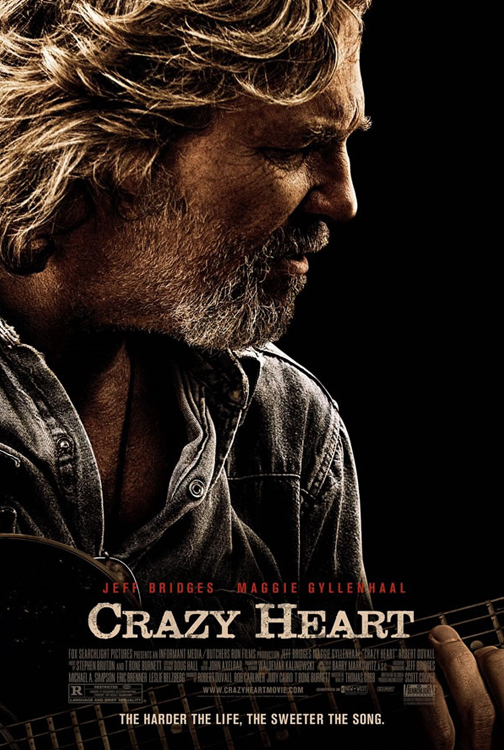
Crazy Heart (2009)

As much as Country Western music is derided, there’s something romantic about its weathered subject matter.  An ambling loner in a bar, a whiskey and a beer, a battered jukebox.  It’s cliche, but it’s also purely American, and this is I think is what allows it to transcend a genre so many people love to hate.  This archetype forms the basis of Crazy Heart, written and directed by Scott Cooper in his debut behind the camera.  Following that lone figure through the travails of his older years, the film surveys the modern American West lifestyle as well as the broader themes of a washed-up musician, tiredly yearning for his glory days.

Continue reading

The Royal Tenenbaums (2001)

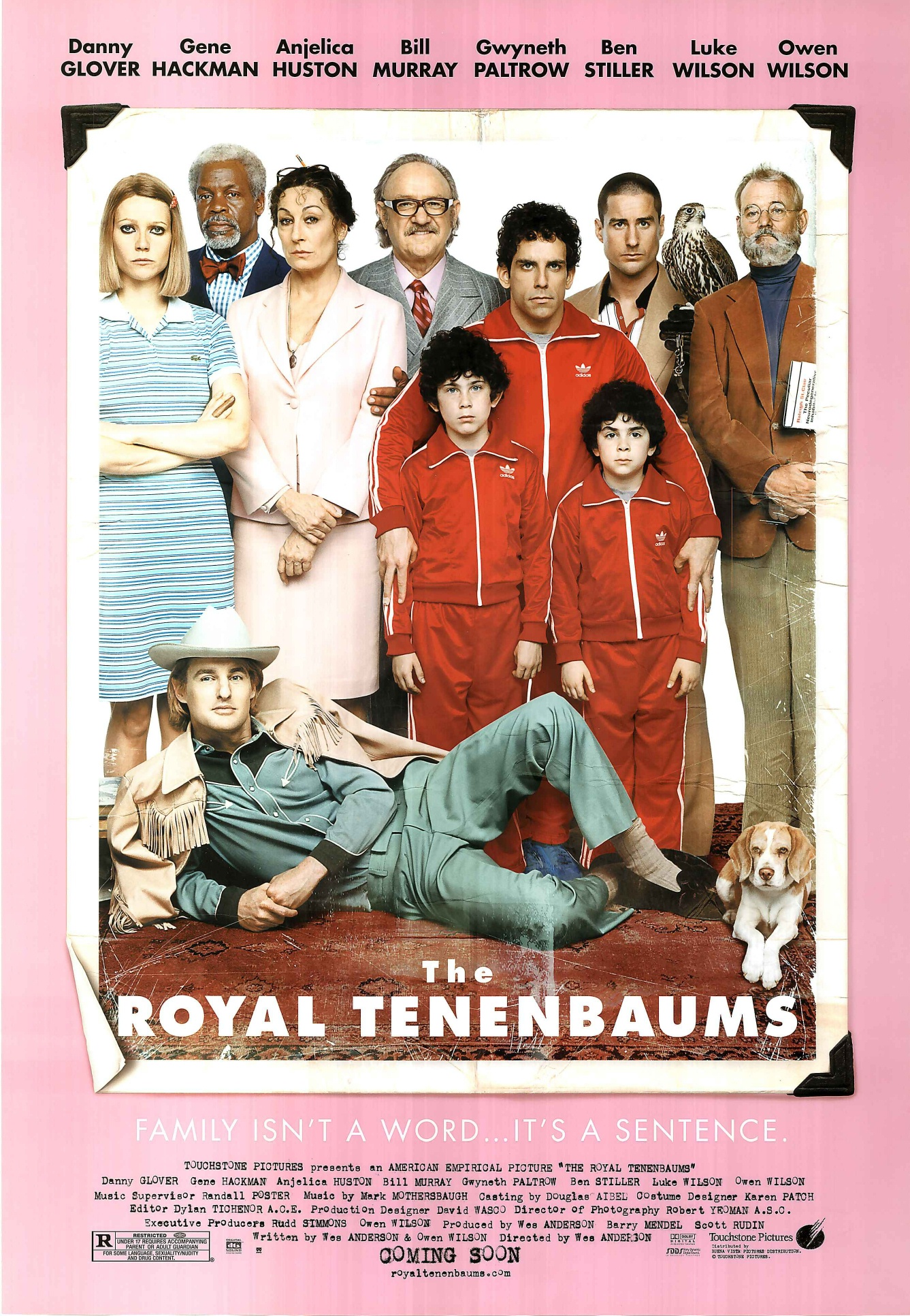
Something happens in that moment when Margot Tenenbaum (Gwyneth Paltrow) steps off the Green Line bus and the soft strum of Nico’s “These Days” flutters.  Light suddenly fills her space, and time drags as she comes back to Richie (Luke Wilson), the brother she hasn’t seen in years.  Each step feels eternal and Richie watches unmoving, his impassive gaze telling us far more than any dialogue or exposition.  It’s a towering moment, showing us a director with, among many, many other talents, the ability to construct beautiful cinema.  Character, setting, light, sound, time; all just elements that Wes Anderson has blended to a moment glancing at perfection.  It can take your breath away.

Continue reading

Up (2009)

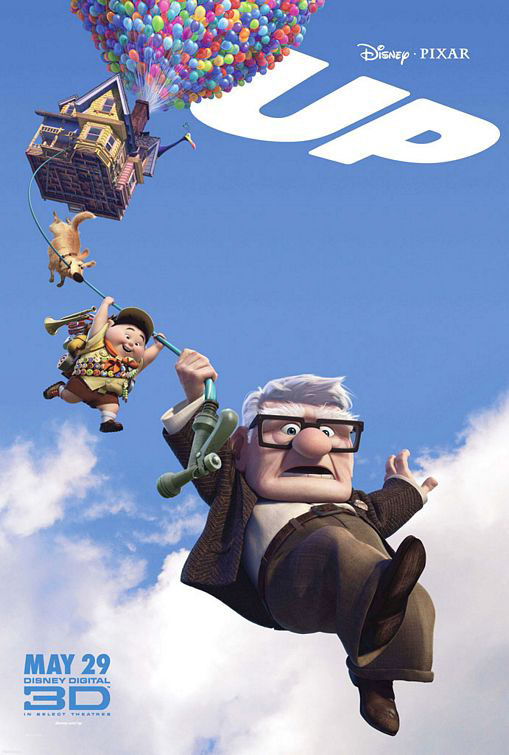
There are elements of story, structure and general film making concepts that are universally heralded or criticized.  Conflict is good, artificial dialogue is bad.  Character development is good, cliche is bad.  And so it goes.  But there are also enumerable aspects of a film which can’t truly be judged in the same way.  Special effects come to mind as something that can at once be either terribly off-putting or the outstanding piece of the puzzle.  Similarly, an adaptation can fill seats or turn viewers off based solely on it’s faithfulness to the original material.  With Up, this dilemma presents itself in the form of sentimentality.  There’s no lack of emotional resonance here, no shortage of moments that bring a visceral response…that is, if you’re into that sort of thing. Continue reading

The Imaginarium of Dr. Parnassus (2009)

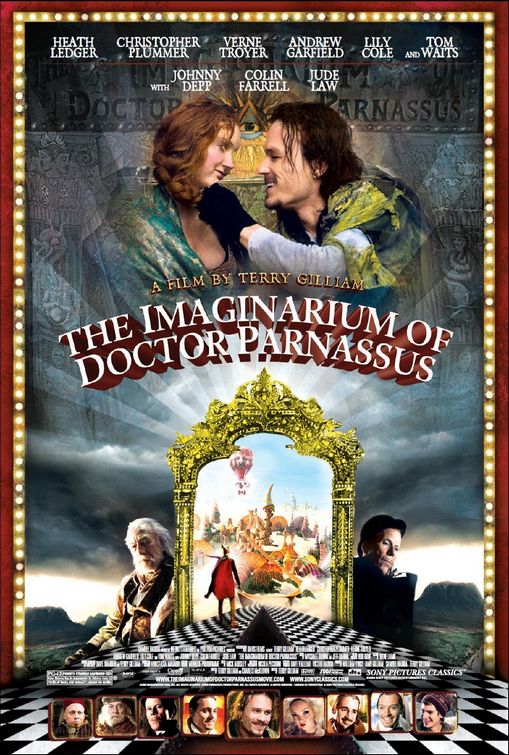
When Heath Ledger died back in January 2008, talk inevitably shifted to The Dark Knight, Ledger’s “final” performance.  There was already an insane amount of hype surrounding the film and Ledger’s portrayal of the Joker, but suddenly the phrase “posthumous Oscar” was being thrown around.  Ledger’s Joker was magnificent, and the Oscar deserved if only as recognition of all the work he did prior to his death, and had The Dark Knight truly been Heath Ledger’s final onscreen performance it would have been a worthy end to his short career.  Unfortunately it wasn’t.  Ledger was halfway through filming on Parnassus when he died, and so this is now his final performance as an actor.  A baffling, psychedelic Frankenstein of a film that frustrates both with its overreaching and lack of polish.

Continue reading

Avatar (2009)

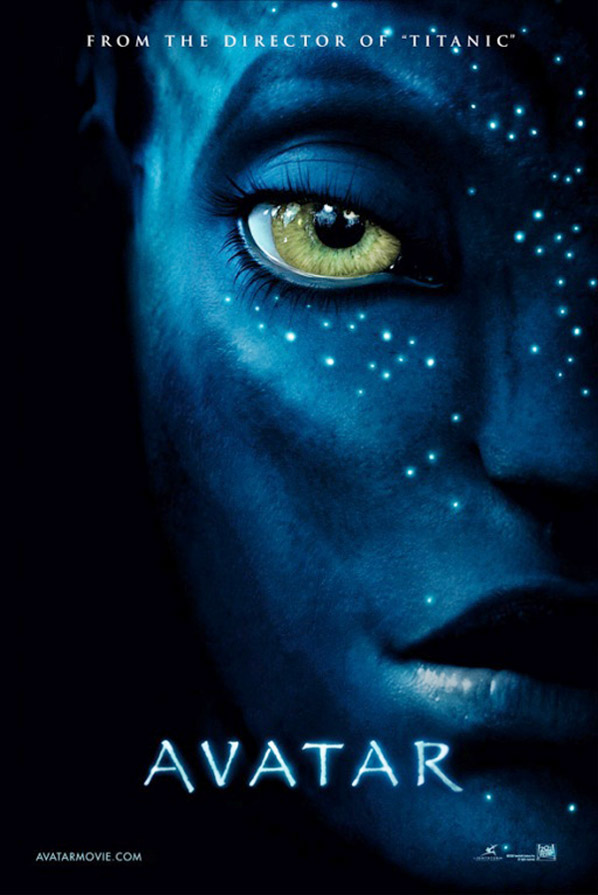
A glance at James Cameron‘s filmography reveals a Director mildly obsessed with doing things on an epic scale.  The only names that come to mind who might epic him out of the top spot would be Bay and Bruckheimer, and those guys don’t generally hold a lot of water with critical minds.  Cameron however seems to ride that line between over the top and elegant.  The distinction most probably lies with Cameron’s credits as a Director and a Writer.  While technology and visual magnificence hold his regard, I don’t believe they do so exclusively.  Particularly with his last few films, James Cameron has shone an eye for story that allows him to do the remarkable things he can do visually while not bombarding his audience with absurd or scoff-worthy moments.  This is not to say that Cameron isn’t melodramatic, but coupling melodrama with compelling characters, complex situations and, again, astonishing visual effects, might just be the perfect recipe for the epic of the new millennium.

Continue reading