Category Archives: Oscar Nominee

True Grit (2010)

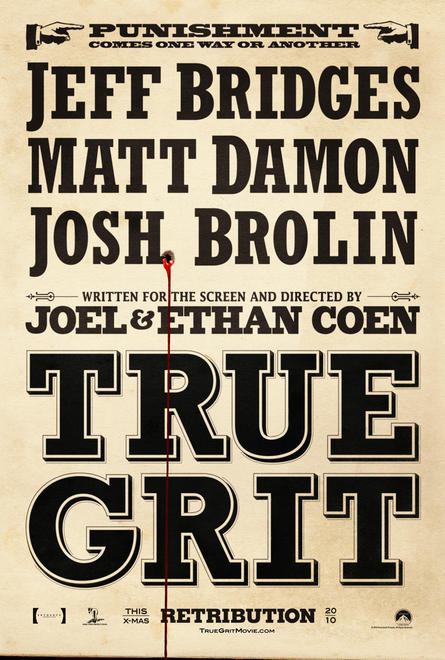
I don’t think there’s such a thing as a bad Coen Brothers movie.  Now, I haven’t seen them all, so I can’t say that with all confidence, but as they somehow gain more and more momentum with the passing years, and the veneer on their product keeps getting shinier, it’s hard to imagine them making any really evident mistakes.  Not only is this impressive when considering their startling prolificacy, but also because, frankly, the Coens don’t play it safe.  They’re not churning out standby material with rote characters and tested plots.  They change it up every single time. If I were an aspiring director I wouldn’t even bother trying to emulate them, because there’s just no way you’re going to do the things they’ve done.  True Grit is the latest example of that consistently inconsistent greatness; a cocky and witty western from a pair of legitimate talents in their apparently never ending prime.

Continue reading

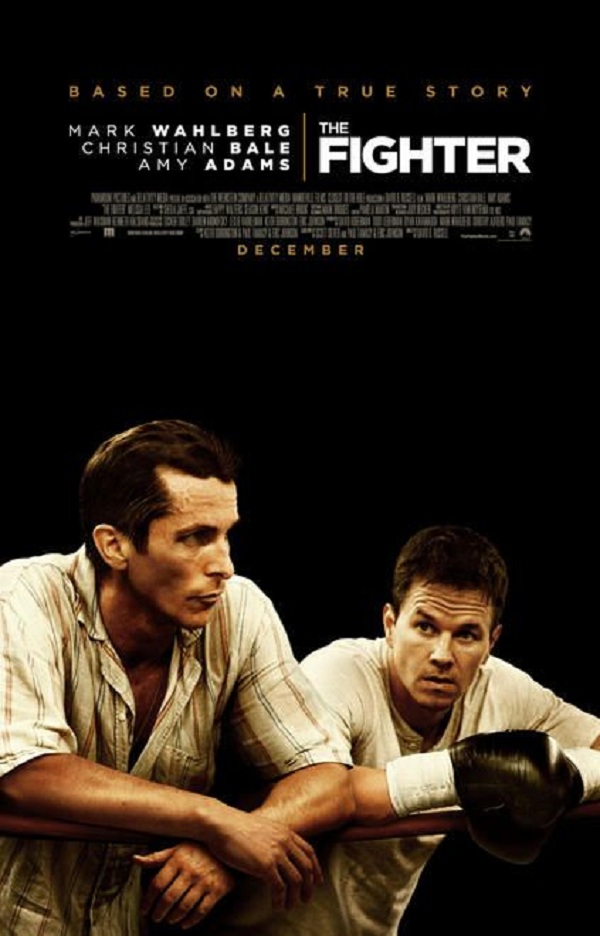
The Fighter (2010)

It seems that every year there’s a film like this.  A film that ends up feeling weighted more towards character portrayal than big picture.  A film with at least one performance almost guaranteed to bring home the Oscar.  Last year it was Jeff Bridges in Crazy Heart. Before that Heath Ledger in The Dark Knight. Before that Daniel Day-Lewis in There Will Be Blood.  The list goes on.  It’s not that David O. Russell‘s The Fighter is an incomplete film as much as it’s so entirely driven by its actors.  This based-on-a-true-story is clean and concise, and doesn’t require much sifting to get at a core comprised of an underdog vs. the world and the massive weight of his family.

Continue reading

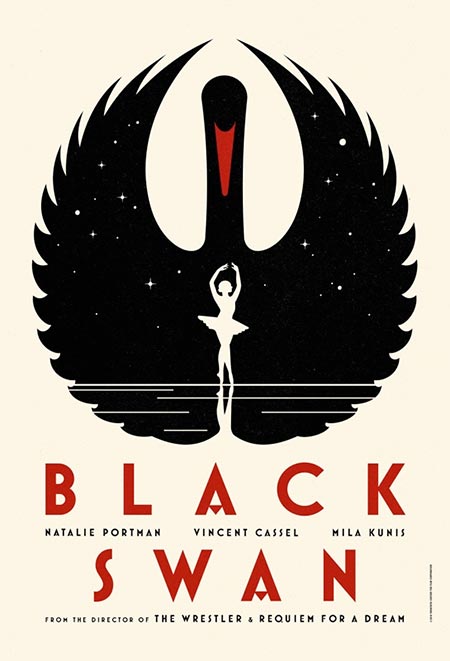
Black Swan (2010)

Preparing for a Darren Aronofsky feature is sort of like preparing for a break up or a funeral.  That’s not to say that every last Aronofsky tale is a saga of desolation or exhausting melancholy, but when you look at the man’s filmography, one of the common elements is a darkness that permeates.  The difference, though, between his earlier works (Pi, Requiem for a Dream) and his more recent (The Fountain, The Wrestler), is a respect for subtlety.  In Requiem, Aronofsky thrust the grotesque into the faces of his audience with an almost mean-spirited bravado.  It’s a film that, despite its high quality, is simply too awful for repeated viewings.  Lately though, Aronofsky has coupled that signature bleakness with a real human beauty.  He has found a balance in his method, and with his last three films, The Fountain, The Wrestler and now Black Swan, he has shown the kind of forward momentum that ensures real longevity.

Continue reading

127 Hours (2010)

127 Hours as a film was always going to be harrowing, intense, remarkable, hard to watch and so on.  Aron Ralston’s story is just too astonishing and too simple for it not to be effective.  It absolutely insists on empathy and as the audience filters out of the theater, the first and only question on everyone’s lips will be, “Could you do that?”  If you don’t know what “that” is then you haven’t been paying attention.  Ralston’s story has been all over the news in recent weeks, and before that his bestseller Between a Rock and a Hard Place did well enough to pierce the social consciousness.  However, to avoid from the start any ambiguity, this is a story about a man whose arm gets trapped under a rock, and the choice he makes to cut it off.  With any Top 25 Director and any Top 10 Face behind this story, you’re almost guaranteed serious Oscar contention.  It must be for this reason then that I ended up feeling underwhelmed by Danny Boyle’s latest.  Of course I was moved, because the reality of this situation is moving, but despite how successful this thing was always going to be, Danny Boyle somehow was able to get in his own way.  His style and his choices, so often exciting and strong, end up being frustratingly omnipresent and controlling.  Somehow he ended up over-telling a story that was fully prepared to tell itself.

Continue reading

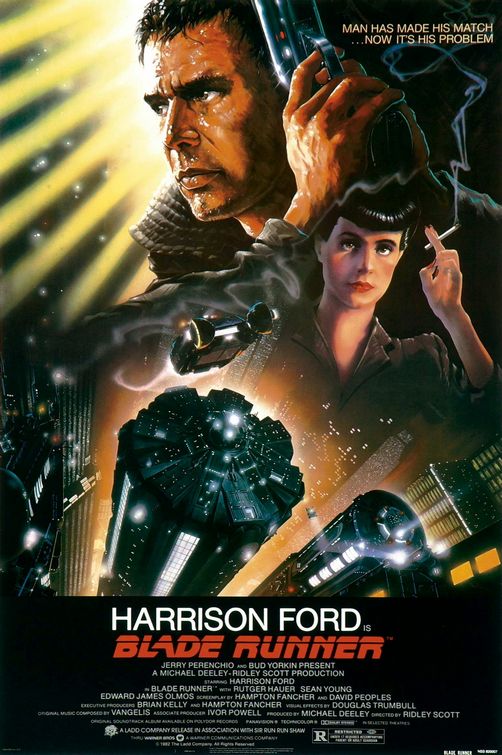
Blade Runner (1982)

What makes us human?” is one of those base existentialisms that we’re all a bit too cynical to actually consider.  It’s the type of query that for us to truly acknowledge the significance of, must be presented subtly and in the guise of “art.”  It is thusly that Ridley Scott‘s masterpiece Blade Runner is so successful in its theme.  Only once you have parted the curtains of a neo-noir and dystopic 2019 Los Angeles, only once you have passed through the door that is Scott’s and Douglas Trumbull’s remarkable achievement in visual effects, only once you’ve tiptoed past Vangelis’ eerily sinister neo-classical score do you arrive at the heart of this Philip K. Dick adaptation.  Blade Runner is precisely an interrogation of what it means to be human, or perhaps more specifically, what it means to question this humanity.

Continue reading

Toy Story (1995)

It’s ironic how entirely nostalgic it is viewing Toy Story for the first time in a decade.  Though I suppose that nostalgia shouldn’t surprise me, as nearly any Disney title awakens vivid memories of childhood and the wonder of animated cinema.  Obviously the world of Disney pre-Pixar is iconic, particularly for those of us lucky enough to grow up during their late 80s/early 90s renaissance.  My particular favorite was Aladdin, but I’ve never been picky, and would gladly sit through a viewing of The Little Mermaid or Beauty and the Beast. Heck, I’d even watch Pocahontas. Still, while Disney’s astounding talent for inserting themselves into childhood is something I’m grateful for, it’s only part of what makes my adult viewing of Toy Story ironic.  The more relevant aspect of that irony is the reality that Toy Story is a movie about nostalgia.  Or at the very least it’s a movie that recognizes the heft of it.  Memories of childhood are either beautiful or awful, and rarely of the mundane; what trauma or drama is there in the tedium of childhood?  Though we catch only glimpses of the story from adolescent Andy’s perspective, the one requirement for enjoying this film is to have been that age, and to have loved those toys.  Perhaps one of Disney’s, Pixar’s and director John Lasseter‘s most charming notions is imagining that those toys could love you back.

Continue reading

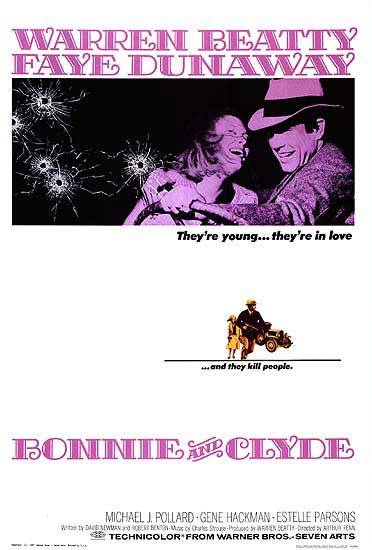
Bonnie and Clyde (1967)

The American Film Institute lists Bonnie and Clyde at number 5 on their list of the top ten gangster films of all time, and 42 on their “100 Years…100 Movies” collection.  IMDb holds it at 218 on their top five hundred.  For the older film generation this will come as no surprise.  Bonnie and Clyde‘s release was loud and unforgettable, and represented a jump to the “New Hollywood.”  Violence and sex were no longer suggestions, and the previously established style of filmmaking was beginning to unravel.  In hindsight the film still distinguishes itself from it’s peers, along with The Graduate, a fellow Best Picture nominee from that year.  But the unfortunate truth of Bonnie and Clyde‘s place in modern day cinema is it’s senescence.  The film simply hasn’t aged well.  It’s legacy lives in it’s forward momentum, and less and less in it’s quality.  It glimpses at things to come, but is by no means an example of transitional perfection.  A brave film that comes from a time where progress was as significant as caliber.

Continue reading

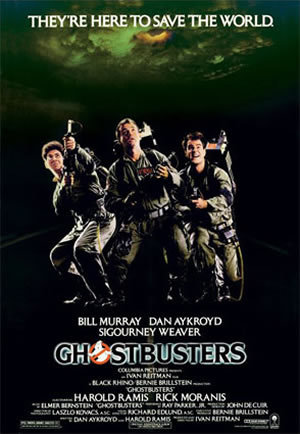
Ghostbusters (1984) & Ghostbusters II (1989)

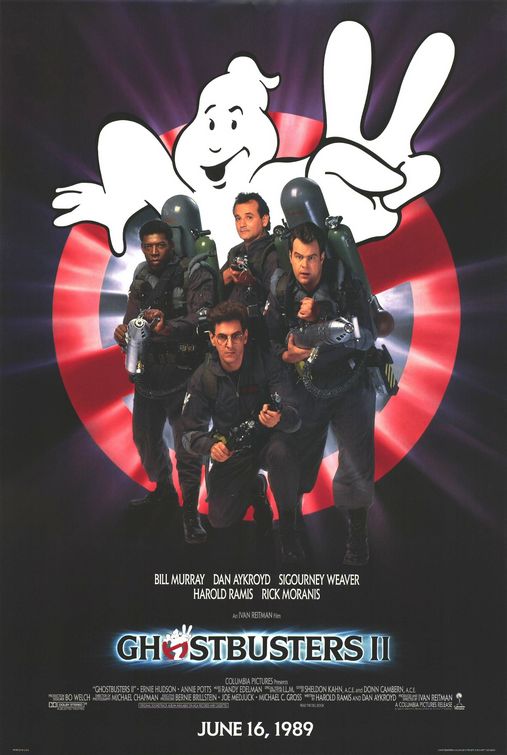
Ghostbusters.  Oh Ghostbusters.  It’s like remembering the first girl you ever had a crush on, your best friend, and most of your favorite toys, all at once.  Also, there was Ecto-Cooler.  These two movies were easily the most viewed of my childhood, along with the cartoon, and of course any merchandise was a must have.  Looking back it’s hard to say just what it was about this story that pulled me in so utterly.  I was fascinated by ghosts, though there’s very little in the movies that could be considered anything other than spectral slapstick.  I certainly appreciate Bill Murray, though watching the films now I see just how much of his performance the kid version of me didn’t register.  I suppose it could have been simply a “right place, right time” situation, or my parents bringing a movie to me that we could all appreciate together, or even just all the amazing toys.  Whatever the case, the Ghostbusters franchise has been with me since near birth, and watching these films again as an adult, with hopefully a more critical eye, I think it’s safe to say I’ll be talking about them until the day I die.

Continue reading

The Hurt Locker (2009)

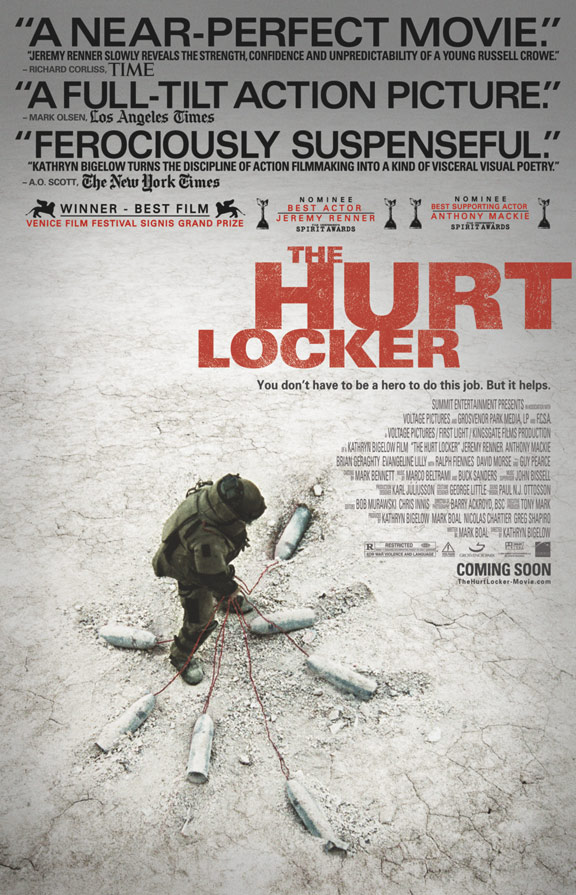
With The Hurt Locker, I ended up watching a very different film than I intended to.  The plan was to sit down and enjoy a dramatic war movie with nuanced performance and subtlety; an Oscar contender.  By the end though, I was watching a high suspense thriller that happens to take place in Iraq.  It’s not an insignificant difference, and it was one I needed to make before I could fully appreciate what I was watching.  Expectation is often the bane of a viewer’s existence, and that’s never more true than when one finally watches an Academy nominee.  The film was released on June 26th and Oscar-buzz began shortly thereafter.  Ever since then, our unformed opinions have been molded by everything BUT the movie itself.  I hate this for a number of reasons, but mostly because it’s unavoidable.  Either see it opening day, or go live in a cave.  Otherwise you had better be prepared to do battle with the forces of subjective opinion, because brother, they’re a-comin.

Continue reading

Inglourious Basterds (2009)

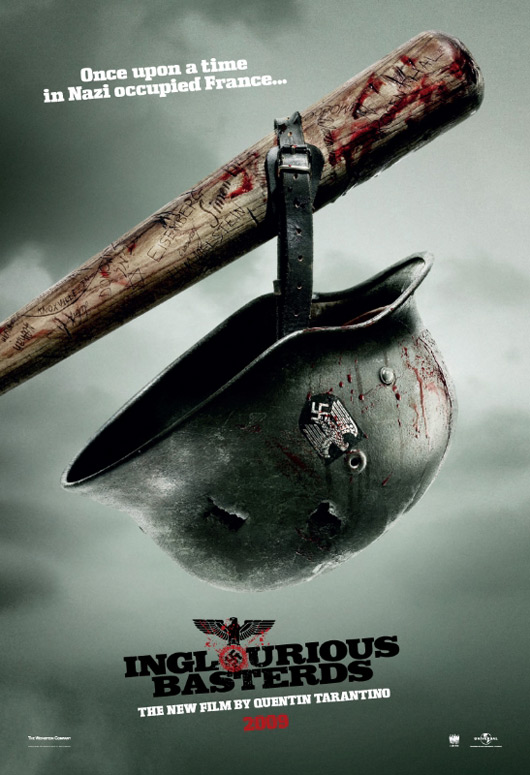
The third act of Quentin Tarantino‘s Inglourious Basterds finds the Nazi elite mingling languidly in a quaint and gorgeous theater in Paris.  They are here to witness the debut of Joseph Goebbel’s latest film, Nation’s Pride, an account of Private Frederick Zoller’s (Daniel Brühl) war heroics, wherein he killed hundreds of Americans with only a gun and his German cunning.  From Bormann, to Goebbels, to Hitler himself, the Third Reich’s most distinguished members are in attendance to celebrate a mass slaughter carried out by one of their own.  And he no more than a private in Hitler’s army.  Zoller’s exploits feed their nationalism, their lust for victory, and as the lights in the theater dim and the film rolls, Goebbel’s film finds a ruggedly handsome Frederick Zoller killing one American after the next for an eternity.  The audience is held captive in their delight, their sweaty, angry faces beaming with a rapture both large and terrifying.  For you see, according to Quentin, Nazis are simply irritable nerds, and death is their porn.

Continue reading